


By TheDailyNewsHub
Countries around the world are moving to restrict children’s access to social media, with Australia already enforcing an under-16 age restriction and several European countries either proposing similar measures or considering tougher rules.
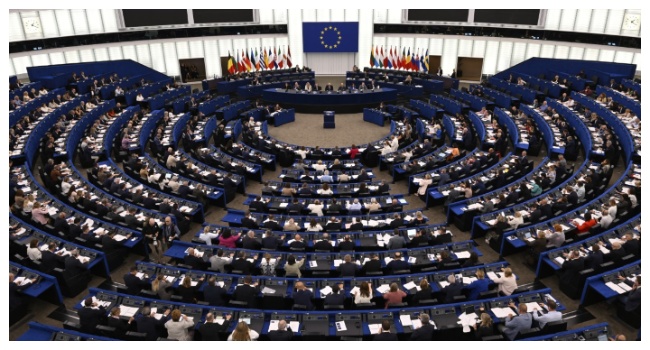
The latest development came on Wednesday, September 16, 2026, when European Commission President Ursula von der Leyen announced plans for a new EU Kids Act, which would introduce age-based restrictions on social media across the European Union.
Speaking during her State of the European Union address in Strasbourg, von der Leyen said the proposed framework would prohibit social media access for children under 13. Young people aged 13 to under 15 would only be allowed to use supervised “mini accounts” created by parents or guardians, with restricted features and a one-hour daily limit. From age 15, young people would be allowed personal accounts, while platforms would have to apply stronger safety measures to users aged 15 to 18.
The European Commission is scheduled to formally present the EU Kids Act on September 17. The proposal will still have to go through the EU legislative process and negotiations between member states and the European Parliament before it can become law.
The proposed EU rules follow growing international efforts to limit children’s exposure to social media and other online services. Australia became the first country to introduce a nationwide restriction preventing major social media platforms from allowing under-16s to maintain accounts. The Australian rules took effect on December 10, 2025.
Australia’s system currently covers platforms including Facebook, Instagram, TikTok, Snapchat, X, YouTube, Reddit, Twitch, Threads and Kick. Companies are required to take reasonable steps to prevent Australians under 16 from creating or keeping accounts on the affected platforms.
The Australian experience has also become a reference point for other governments. In the United Kingdom, the government announced in June that it plans to ban social media for children under 16, with implementation expected in spring 2027. The proposed UK restrictions would also address features such as livestreaming and contact from strangers on other online services.
Norway is also considering an age limit that would prevent children from accessing social media until the year they turn 16. A draft law notified to the European Commission would introduce age verification while considering exemptions for services such as certain educational and leisure groups and messaging services.
In August, Slovakia’s government approved a bill proposing to prohibit children under 16 from creating social-media accounts. The proposal includes age verification and is still subject to parliamentary approval.
France has taken a different path. President Emmanuel Macron has called for an EU-wide ban on social media for children under 15 after France’s Constitutional Council struck down a national law that was intended to introduce such restrictions. Macron has said France would work on revised national legislation while pushing for a common European approach.
Outside Europe, the debate is also intensifying in the United States. California recently enacted legislation prohibiting social media platforms from exposing users under 16 to certain behaviourally addictive features, including infinite scrolling and algorithmic autoplay. The state also adopted other measures targeting technology-related risks to children.
The measures vary considerably. Some governments are proposing outright age restrictions, while others are targeting specific features such as algorithmic recommendations, addictive design, livestreaming, age-inappropriate content and contact with strangers.
Age verification remains one of the central challenges. Regulators want platforms to determine whether users meet minimum age requirements, but stronger verification can involve privacy concerns and the collection or processing of additional personal information. The EU proposal would require platforms to verify children’s ages when accounts are created.
The push has also intensified amid concerns about the effects of social media on children’s wellbeing and exposure to harmful content. At the same time, critics of blanket restrictions have warned about privacy, freedom of expression, unintended consequences and the possibility of children moving to less regulated online spaces. The UK Parliament’s House of Commons Library noted that supporters see bans as a way to reduce children’s exposure to online harms, while opponents have raised concerns about unintended effects and access to online communities.
The global trend therefore does not amount to a single worldwide social-media ban for children. Instead, governments are adopting different approaches and age thresholds, with Australia already enforcing an under-16 restriction and countries including the UK, Norway and Slovakia pursuing their own measures, while the EU moves toward a bloc-wide framework.