


By Femi Mustapha in Kaduna
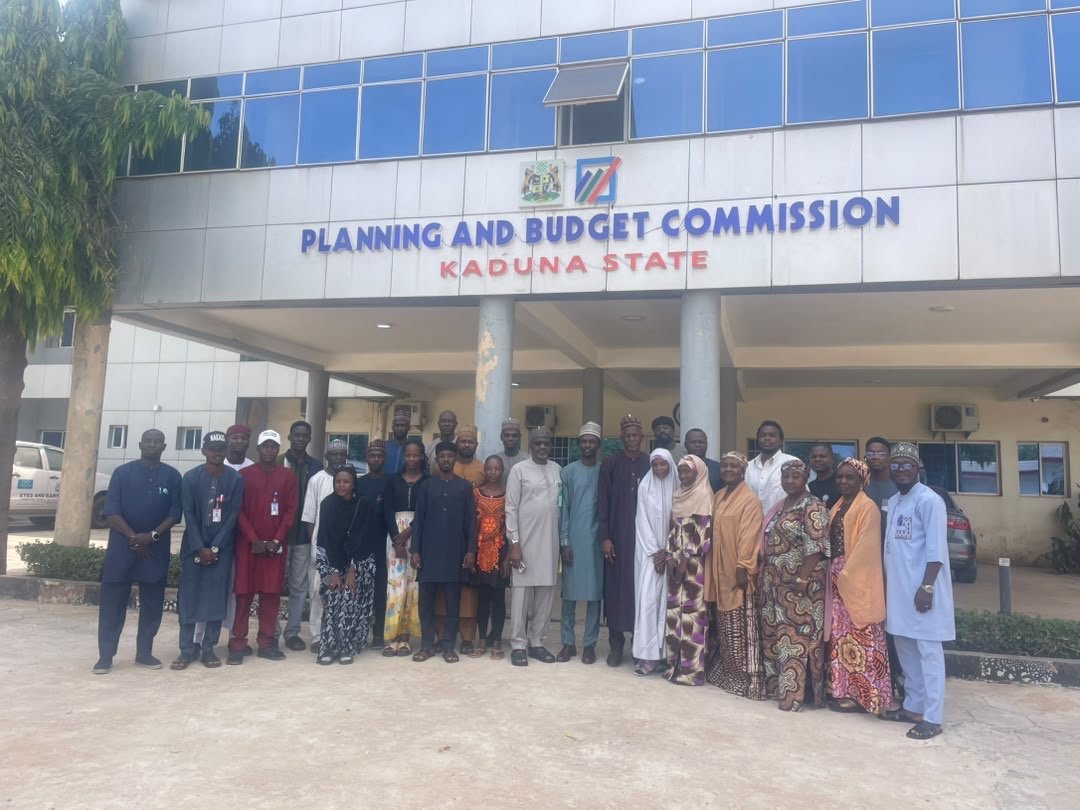
The Civic Impact for Sustainable Development Foundation has commended the Kaduna State Government, and particularly the Planning and Budget Commission, for opening its doors to young people to learn how the State plans, budgets and tracks public money.
The commendation is contained in a communiqué issued at the end of a learning visit by Fellows of the Budget and Civic Engagement Academy to the Planning and Budget Commission in Kaduna on Tuesday, 24th November 2026, and signed by Luke Seth Kuyet, Head of Program and Monitoring and Evaluation, Civic Impact for Sustainable Development Foundation, Mus’ab Muh’d Adam, Secretary, Civic Engagement Academy, and Vincent Odigo, Fellow, Civic Engagement Academy.
According to the signatories, the Foundation is equipping student and youth-led organizations with practical skills to analyze the Kaduna State budget, track its implementation, and use evidence for effective advocacy before, during, and after the 2027 Budget Townhall and Public Hearing, and as part of this effort, it led the Fellows on the learning visit to the Commission.
During the visit, the Fellows learned firsthand from practitioners how the State plans, budgets, monitors, and evaluates implementation, how it coordinates with development and donor partners, and how it is delivering on the Sustainable Development Goals (SDGs) and the Open Government Partnership (OGP) commitments.
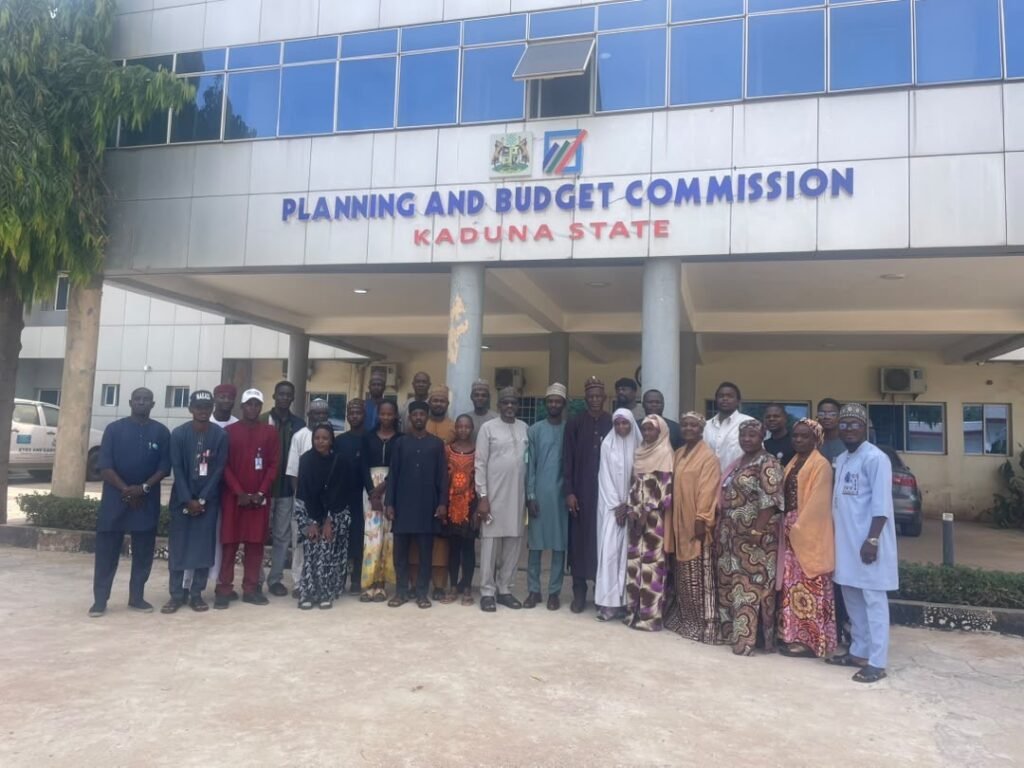
The visit was attended by the Honorable Commissioner, the Permanent Secretary, and Directors, Deputy Directors, and other staff of the Commission, representatives of the Foundation, the Fellows, and the leadership of the National Association of Kaduna State Students, NAKASS.
The signatories said the Commission commended the young people for showing interest in governance, encouraged them to take an interest in politics as well, and urged those in the civic space to collaborate with politicians, since this makes their work more seamless.
The Foundation, in turn, said the gesture is a true reflection of the spirit of OGP, a partnership built on transparency, accountability, citizen participation, and trust. By welcoming citizens into the space, the Commission has shown that governance is not a closed-door affair but a shared responsibility.
The signatories explained that the Commission has evolved from a ministry to a directorate, then to a Bureau of Budget and Planning and Ministry of Economic Planning, and is now the Planning and Budget Commission, comprising five departments, two units, the SDGs and Project Support Unit and the State Corporations Coordination Unit, and two parastatals, the Kaduna State Bureau of Statistics and the Kaduna State Residents Identity Management Agency, KADRIMA.
Its mandate is to advise and support the government in the formulation of economic policies, develop, coordinate, monitor and evaluate the State Development Plan, prepare and monitor the annual budget, monitor state plans and the performance of Ministries, Departments and Agencies (MDAs, and ensure the collection, analysis and storage of all state statistical data, while also working on improving revenue through Zakat and philanthropic contributions to improve service delivery and living conditions.
The Directors of the departments explained the unique and strategic role each plays in the budget process, and highlighted the challenges their departments face and the solutions they propose.
The Fellows were told that the budget is a technical, financial and legal document that captures the government’s priorities for a full year and ensures that resources are allocated toward the State’s targeted goals, guided by the Kaduna State Public Financial (Management and Control) Law 2016, the Kaduna State Fiscal Responsibility Law 2016, Section 23, which provides for the Medium Term Expenditure Framework (MTEF) and budget ceilings, the annual Appropriation Law, and the Kaduna State Public Procurement Law 2016.
They were informed that the budget cycle runs through the year, with the fiscal framework developed from January to May, preparation from January to September, and approval from October to December, while execution runs from January to December of the budget year, monitoring continues all year round, and audits cover the full year.
Several challenges affect the process, including the unpredictability of FAAC revenue and macroeconomic assumptions, unrealistic revenue and IGR targets, late submission of budget proposals by MDAs, lack of capacity to prepare realistic, properly costed estimates, weak alignment of proposals with the State Development Plan and MTEF, political pressure to accommodate projects outside established priorities, and insufficient consideration of previous budget performance.
The Administration and Finance Department provides administrative and financial support so that the Commission has the personnel, funding, logistics and administrative support needed for effective budget preparation and implementation, without taking over the technical budget preparation role of the Budget Department.
Its challenges include limited financial resources, delays in accessing approved funds, shortages of computers and office equipment, delays in approvals and procurement, and inflation-driven price changes that render initial estimates inadequate.
The State has integrated the SDGs into its development plans to align State priorities with the global 2030 Agenda. The SDGs Unit plays a supportive and advisory role in budget preparation, covering policy and strategic alignment; technical support and guidance; resource mobilization and partnership development; advocacy and sensitization; coordination and collaboration; and monitoring, evaluation, and reporting.
A major challenge is that MDAs do not adequately understand SDG targets and indicators, or how to apply them in sectoral planning and budgeting. Early collaboration and regular training were suggested as ways to address this.
The Development Aid Coordination Department attracts, coordinates and aligns foreign and local assistance to the State, processes Memoranda of Understanding with development partners, prevents duplication of partner interventions, and ensures alignment with State policy, but faces challenges as partners do not always disclose their financial resources, some partners are drawing down their presence in the State, and counterpart funds are released late. Similarly, the State Planning Department facilitates the formulation and review of State policy documents, coordinates and integrates local government plans with State plans, and domesticates global and national policies at the State level.
At the same time, monitoring and evaluation (M&E) data helps lawmakers make informed decisions. Still, it is held back by incomplete or delayed data from MDAs, fragmented IT systems, an underfunded M&E unit that cannot conduct sufficient field visits, a shortage of skilled personnel, siloed operations, limited use of M&E findings by decision-makers, and delayed budget releases.
The signatories observed that early preparation and proper planning improve budget performance, effective coordination among departments promotes efficiency, accurate data and realistic estimates are essential for a credible budget, timely release of funds enables effective implementation, transparency and accountability encourage prudent financial management, staff training improves productivity and service delivery, and continuous monitoring helps to identify and address implementation challenges as they arise.
They further observed that clear institutional roles reduce duplication of development partners’ projects, that reliable information supports better decisions, and that ownership by the State and its MDAs is central to implementation. They also observed that sustainability must be considered at the design stage, particularly as some development partners have reduced their support.
At the end of the visit, the Fellows and the Commission’s officials agreed that there should be stronger collaboration between Administration and Finance, Budget, State Planning and other departments, to reduce delays in procurement, approvals and fund releases; that development partners should be encouraged to disclose their financial commitments, even in modest terms, so that the State can plan and do more; and that the State Government should increase its counterpart funding and take ownership of partner-supported programs, since government commitment motivates partners to stay.
They also agreed that MDAs should receive early collaboration and regular training on SDG targets and indicators and their application in sectoral planning and budgeting, that M&E findings should be tied directly to budget approval and citizens empowered as independent monitors, and that the State should invest in integrated digital platforms and protect dedicated funding for M&E.
The visit ended with a question-and-answer session, during which the Directors responded promptly to the Fellows’ questions. The Commission commended the Fellows for their persistence throughout the visit, noting that they had both gained and given value, and urged them to apply the knowledge gained where applicable, while remaining open to the Fellows for further clarification and information that will help improve their knowledge and civic participation. The signatories stated.