


By TheDailyNewsHub News Desk | October 2, 2026
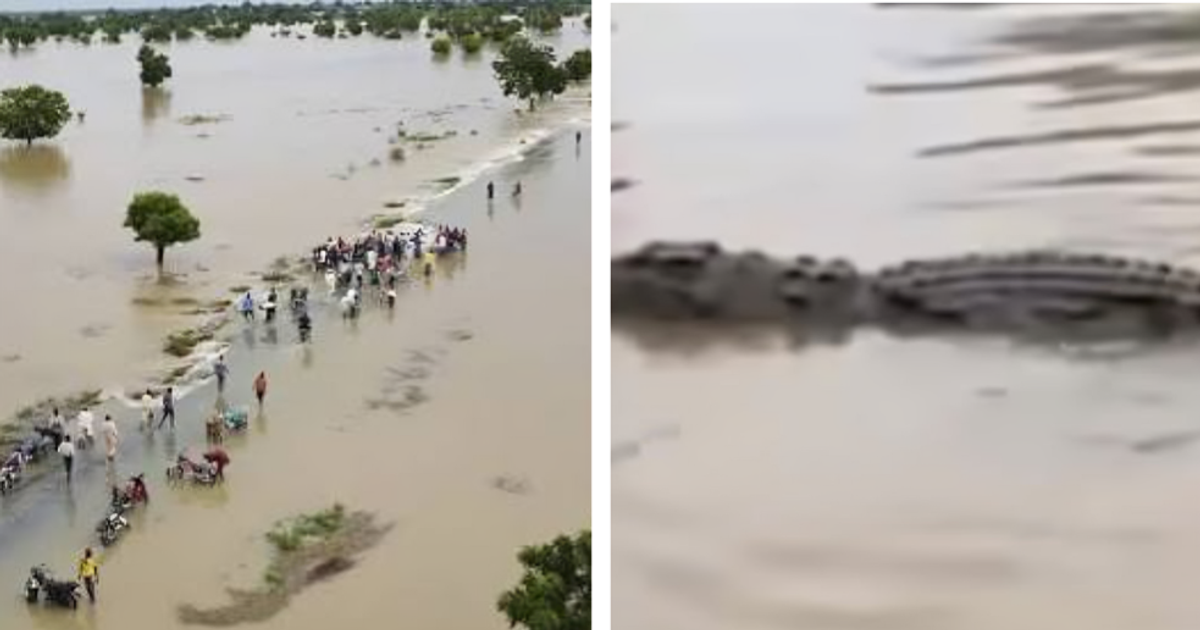
Residents in parts of Rivers State are struggling to cope with severe flooding that has submerged homes, disrupted businesses and forced families to seek shelter elsewhere, with reports of snakes, crocodiles and other reptiles appearing in neighbourhoods covered by floodwater.
The situation has affected communities in Port Harcourt and neighbouring local government areas, including Obio/Akpor, where prolonged rainfall has turned streets and residential compounds into waterways. Some residents say they have never experienced flooding on this scale in the years they have lived in the affected communities.
In Rumuapu, a community in Rukpokwu, Obio/Akpor Local Government Area, residents told the BBC that floodwater had brought dangerous reptiles into their neighbourhood. Their accounts, reported by Pulse Nigeria on September 30, included sightings of snakes, crocodiles and other reptiles swimming through flooded residential areas.
One resident described the extent of the damage, saying household belongings were floating in the water alongside the reptiles. Another woman, who said she had lived in the community for 14 years, reported that she had never witnessed flooding of such severity.
The accounts have heightened concerns about the risks facing residents who may have to move through floodwater to reach safety, retrieve belongings or access essential services. The reported presence of reptiles also adds to the dangers of living in homes and streets that have been inundated.
The flooding has extended beyond Rumuapu. Residents in Eneka, Rumuekini, Choba, Rumuodumanya and other parts of Obio/Akpor have also reported serious disruption. A report by The Guardian on September 29 documented families moving repeatedly between temporary shelters after floodwater entered their homes and businesses.
One of the residents featured in the report, Vivian Onyeije, a mother of four from Rumusita in Eneka, said she had been forced to leave her home with her children after water rose to waist level. She initially moved to her shop and later sought refuge in an uncompleted building, but further flooding forced the family to take shelter in their vehicle.
The flooding has also affected education and commercial activities. Some schools have been forced to close, while businesses and public facilities in affected communities have suspended operations or reduced their activities. Roads have become difficult to navigate, leaving motorists and residents struggling to move around.
The Rivers State Government has acknowledged the crisis and announced intervention measures. During an inspection of affected areas on October 1, Deputy Governor Ngozi Odu said Governor Siminalayi Fubara had directed the state Flood Management and Control Committee to assess the situation and identify measures to address the causes of the flooding.
Odu said the committee had visited several locations, including Jerusalem Estate, where it received reports of drainage problems and attempts to reclaim parts of an existing canal. She also said residents complained that water was being redirected through an improperly channelled drainage system, worsening the flooding.
According to the deputy governor, a resident of Jerusalem Estate reported that more than 1,000 buildings had been submerged in the area. The figure was presented as information supplied to the inspection team and was not an independently verified statewide damage assessment.
Odu said the committee would brief the governor and engage the Ministry of Works, residents and community leaders on corrective measures. She also announced plans to provide immediate palliative assistance to affected households and compile the names of families requiring further support.
The state government had earlier worked with the National Emergency Management Agency (NEMA) on relief interventions for flood-affected communities. In September, the government reported the distribution of relief materials and health-insurance support to affected areas in Ogba/Egbema/Ndoni and Abua/Odual local government areas.
The current flooding has also revived questions about long-term drainage infrastructure, urban planning and the management of waterways in Rivers State. Residents and environmental observers have raised concerns about blocked drainage channels, indiscriminate waste disposal, construction activities and sand-filling around areas that may serve as natural water routes.
The Guardian’s reporting also documented concerns from residents and local observers about development around waterways and the maintenance of drainage systems. These factors may worsen the effects of heavy rainfall, although the precise contribution of each to the current flooding requires technical assessment.
The Nigeria Meteorological Agency (NiMet) has continued to issue flood-related alerts, including a probable flash-flood risk notice covering October 1 to 10, 2026. The warning reinforces the need for residents in vulnerable areas to follow official weather and emergency guidance as rainfall continues.
The flooding has also become a subject of public debate in Rivers State. TheDailyNewsHub previously reported on a call by Democratic Leadership Alliance governorship candidate Warigbani Ezekiel for a permanent state flood-management agency, with a proposed early-warning system and stronger coordination of prevention and emergency response across the state’s 23 local government areas.
For residents whose houses and belongings have been overtaken by water, however, the immediate priorities remain safety, temporary accommodation and access to essential assistance. The scale of disruption has underlined the need for timely relief as well as sustained measures to reduce the risk of further flooding.