


By TheDailyNewsHub News Desk | October 3, 2026
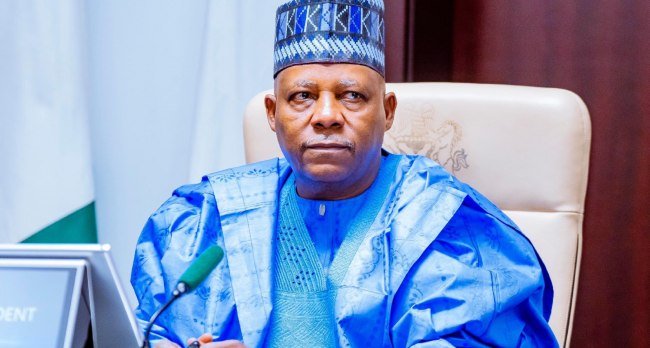
Vice-President Kashim Shettima is expected to launch the Community Investment Fund under the Nigeria for Women Programme Scale-Up in Katsina State on Sunday, October 4, in an intervention projected to provide direct financial support to 57,432 women.
The initiative is designed to improve women’s access to finance, strengthen small businesses and support income-generating activities, particularly among poor and vulnerable households. The initial beneficiaries are expected to come from Daura and Funtua Local Government Areas, according to information released ahead of the launch by the Katsina State Government.
Katsina State Commissioner for Women Affairs, Aisha Aminu Malumfashi, disclosed the planned launch during a press briefing in the state. She said the Community Investment Fund would provide financial assistance through organised women’s groups, allowing participants to invest in productive activities and improve their livelihoods.
The programme operates through Women Affinity Groups, which bring participants together to save collectively, develop financial management skills and access business support. The groups are also intended to help women connect with financial institutions, markets and other economic opportunities.
Michael Ilesanmi, the World Bank’s Senior Social Development Specialist and Task Team Leader for the Nigeria for Women Programme, said the initiative was open to eligible women aged 18 and above, including women living with disabilities.
He explained that beneficiaries would receive support in financial literacy, enterprise development and access to markets and productive resources. The programme also seeks to strengthen women’s ability to withstand climate-related economic pressures through sustainable livelihood activities.
The planned launch comes as Katsina expands the programme beyond its initial pilot locations. According to Ilesanmi, the state has widened implementation from six proposed local government areas to all 34 councils, with the expanded intervention expected to reach nearly 800,000 women.
The distinction between the two figures is important: the 57,432 women are the stated target for direct support under the Community Investment Fund at this stage, while the nearly 800,000 figure represents the projected reach of the wider programme across Katsina State.
Ilesanmi also disclosed that the Katsina State Government had released more than ₦8.5 billion in counterpart funding over the past two years. He said the amount represented funds already released rather than a proposed budget allocation. The World Bank is expected to provide an additional $15 million to support implementation in the state.
The announcement was reported by the News Agency of Nigeria on October 3, following a briefing in Katsina. The financial commitments and projected beneficiary figures were disclosed by programme officials and should be understood as reported programme targets and funding commitments, rather than evidence that all projected beneficiaries have already received money.
The Nigeria for Women Programme is a Federal Government initiative supported by the World Bank and implemented in partnership with participating state governments and other stakeholders. Its approach combines access to finance with group savings, financial education, business development and community-based support.
Katsina had previously reported progress in the programme’s pilot areas. In July, Governor Dikko Umaru Radda said more than 57,094 women across Katsina, Daura and Funtua had collectively saved approximately ₦349 million through their Women Affinity Groups. The state government said the expansion was intended to make the intervention available to women across all 34 local government areas.
The savings recorded by the groups demonstrate participation in the programme, but they should not be confused with the Community Investment Fund or the amount of direct financial support each woman will receive. The latest announcements have not specified the individual grant or financing amount for each beneficiary.
The programme is also expected to connect participants with additional services, including health insurance, according to Ilesanmi. The broader objective is to address some of the barriers women face in accessing finance, productive assets, business skills and markets.
The October 4 event is expected to bring together federal and state government representatives, development partners, financial institutions and women’s organisations. The commencement of the fund’s disbursement will be an important stage in determining how the programme’s commitments translate into practical support for participating groups.
For the intervention to deliver lasting results, its impact will depend not only on the amount of funding released but also on how transparently beneficiaries are selected, how effectively groups manage the support and whether participating women can build sustainable businesses and improve household incomes.