


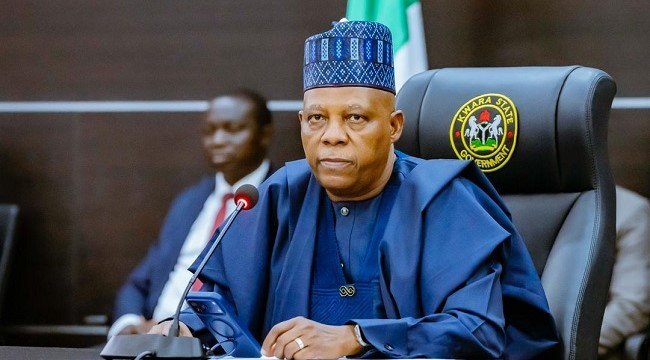
Vice-President Kashim Shettima has urged state governments to take greater responsibility for addressing electricity challenges by establishing functional power markets, attracting private investment and leveraging local energy resources.
Shettima made the call on Wednesday at the National Stakeholders’ Workshop on the Electricity Act 2023, held at the State House Banquet Hall, Presidential Villa, Abuja. He was represented at the event by the Deputy Chief of Staff to the President, Senator Ibrahim Hassan Hadejia.
The Vice-President said Nigeria’s ambition to build a competitive industrial economy would remain constrained unless electricity reforms delivered reliable and affordable power to businesses, households and public institutions.
He explained that the Electricity Act 2023 provides a framework for states to develop and regulate electricity markets within their jurisdictions, allowing them to design solutions suited to their economic needs and available resources.
“Our states must shed the habit of waiting for Abuja to provide every answer,” he said, stressing that electricity supply should become a shared responsibility across the federation.
Shettima identified solar energy potential in Sokoto, Borno and Katsina, natural gas resources in Delta, Rivers and Bayelsa, and hydroelectric opportunities in Niger and Kebbi states. He urged state governments to turn these resources into investments capable of supporting agriculture, manufacturing, healthcare and education.
He also warned that legislation alone would not improve electricity supply, calling on states that had yet to establish electricity regulatory institutions to begin the necessary legislative and administrative processes.
To accelerate implementation, Shettima proposed a voluntary National Electricity Reform Peer Review and Implementation Framework involving the Nigerian Electricity Regulatory Commission (NERC), the Federal Ministry of Power, the Nigeria Governors’ Forum and state electricity regulators.
The proposed framework would enable states to exchange experiences, assess progress, strengthen regulatory capacity and identify solutions to electricity market challenges.
He further emphasised the need for private-sector participation, noting that government funding alone would not be sufficient to finance the infrastructure required to improve electricity access nationwide.
The initiative comes amid ongoing efforts to decentralise Nigeria’s electricity sector and give state governments greater responsibility for power generation, distribution and regulation.