


By TheDailyNewsHub News Desk | October 4, 2026
Iran has called on the United States to pursue a diplomatic solution to the ongoing Middle East conflict, insisting that military action and additional sanctions will not bring lasting peace.
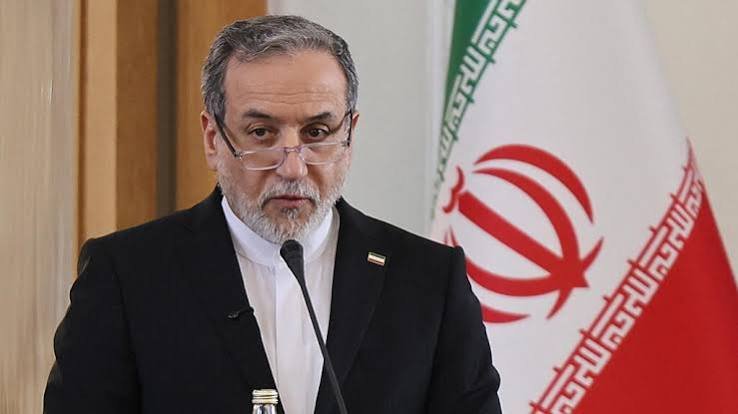
Iranian Foreign Minister Abbas Araghchi made the position clear on Sunday, October 4, while addressing foreign ambassadors in Tehran, as efforts to end the war remained stalled over disagreements involving the Strait of Hormuz, sanctions and maritime security.
“There is no military solution, nor any solution based on new sanctions,” Araghchi said, according to reports of his remarks. He argued that negotiations based on justice and fairness offered the only route to ending the conflict.
However, the Iranian minister coupled his call for diplomacy with a warning that Tehran was prepared to respond forcefully if the United States or its allies resumed military attacks.
“If our enemies again choose the path of military confrontation, our response will be stronger than before, and we will defend ourselves with even more force,” he said.
The remarks come more than seven months after the United States and Israel launched military operations against Iran on February 28, triggering a wider regional confrontation involving missile and drone attacks, disruption to shipping and heightened security concerns across the Middle East.
Although Washington has not carried out strikes against Iran since September 1, tensions have persisted. The United States has continued to apply economic and maritime pressure, while reports indicate that it has also strengthened its military presence in the region.
One of the biggest obstacles to a negotiated settlement remains the Strait of Hormuz, a strategic waterway through which a significant share of the world’s oil and liquefied natural gas supplies passes.
Iran has sought to restrict maritime movement through the strait, while the United States has imposed a counterblockade on Iranian ports. Both sides have accused vessels of violating restrictions, adding to concerns about the safety of international shipping.
The United Kingdom Maritime Trade Operations (UKMTO) agency reported on Sunday that a tanker had been struck by an unidentified projectile while operating in the Strait of Hormuz. The incident caused damage to the vessel’s engine room, but the crew were reported safe and no environmental impact was recorded.
The agency did not immediately disclose the vessel’s origin, destination or the date of the incident. It also did not identify who was responsible for the reported attack.
Diplomatic efforts have continued despite the military and economic confrontation. Iranian and American officials held indirect discussions on the sidelines of the United Nations General Assembly in New York the previous week, with Qatar involved in facilitating communication between the two sides.
Tehran said it presented seven conditions for reopening the Strait of Hormuz. Among its demands were a ceasefire across the Middle East, the release of Iranian assets frozen abroad, the removal of sanctions targeting its oil sector and an end to the American naval blockade.
US President Donald Trump rejected Iran’s proposal but left open the possibility of further negotiations or renewed military action.
Iranian Foreign Ministry spokesman Esmaeil Baqaei said on Sunday that Washington’s latest counterproposal remained focused on nuclear issues, whereas Tehran wanted immediate attention given to the situation in the strategic waterway.
He said Iran’s priority was to end disruptions to its commercial maritime traffic and secure the removal of sanctions affecting the country.
The disagreement reflects the difficulty of reconciling the two governments’ priorities. Washington and Israel have described their military campaign as necessary to prevent Iran from developing nuclear weapons, an ambition Tehran has repeatedly denied.
The June memorandum of understanding between the parties had been intended to provide a framework for a lasting settlement. However, the arrangement failed to produce a permanent resolution, with disputes over the Strait of Hormuz and the wider terms of an agreement undermining progress.
Meanwhile, reports of additional American military deployments have added another dimension to the standoff. Channels Television, citing US media reports, said additional Patriot missile defence systems were being deployed to Saudi Arabia and Qatar, while the USS Theodore Roosevelt and its accompanying strike group were heading towards the Middle East.
The developments have raised concerns about the possibility of renewed military confrontation, even as diplomatic channels remain open.
For international markets, the dispute over the Strait of Hormuz remains particularly significant. Prolonged restrictions or attacks on commercial vessels could disrupt energy supplies, increase transportation costs and place further pressure on global oil and gas prices.
Araghchi’s latest comments therefore present a renewed appeal for negotiations, but his warning of a stronger Iranian response underscores how fragile the situation remains.
For now, neither side has announced a breakthrough capable of resolving the central disagreements, leaving the prospect of a lasting settlement uncertain.