



By Femi Mustapha in Kaduna
The Africa Network for Environment and Economic Justice (ANEEJ) is showcasing its MANTRA model for accountable asset return at the 5th International Expert Meeting on Asset Return and the 2030 Agenda for Sustainable Development in Addis Ababa, Ethiopia.
This was contained in a statement made available to the media in Kaduna on Monday.
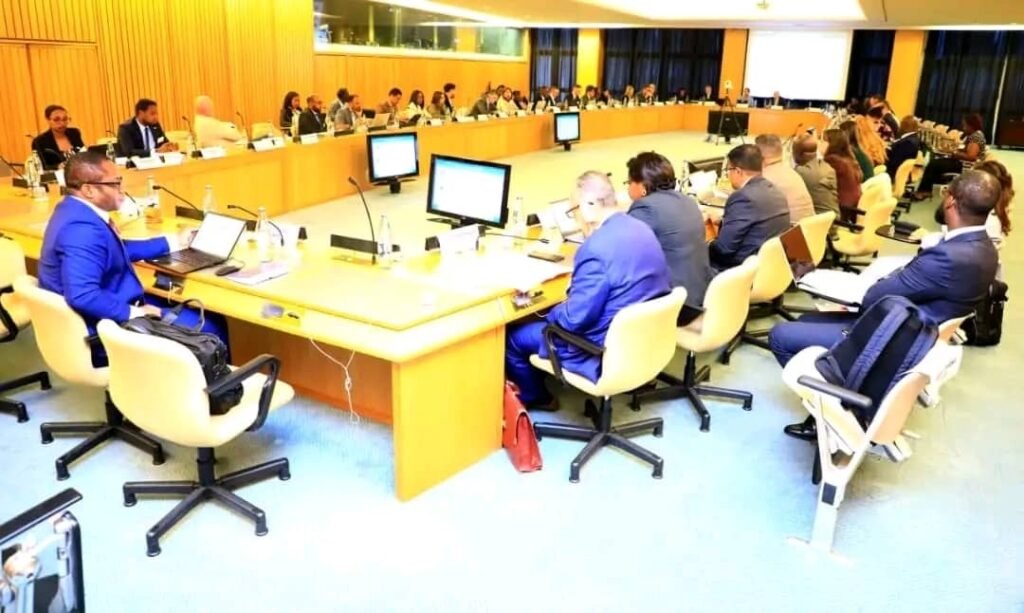
ANEEJ is participating in the three-day meeting, which opened today at the United Nations Conference Center in Addis Ababa and runs from October 6 to 8, 2026.
Ethiopia’s Ministry of Justice co-hosts the meeting, along with the Swiss Federal Department of Foreign Affairs and the United Nations Office on Drugs and Crime (UNODC).
It brings together judges, prosecutors, investigators, financial intelligence experts, civil society representatives, and international organizations under the Addis Process to advance the transparent use of returned assets.
The opening session emphasized international cooperation, responsible restitution, and meaningful civil society participation to ensure that recovered resources benefit citizens.
In his opening remarks, Ethiopia’s State Minister of Justice, H.E. Cherinet Hordofa, outlined his country’s commitment to strengthening asset recovery.
Hordofa highlighted Ethiopia’s Asset Recovery Proclamation No. 1364/2025 and stressed the need for stronger institutions, improved information sharing, and faster responses to mutual legal assistance requests.
He urged participants to develop practical solutions that connect returned assets with sustainable development and the rule of law.
Also speaking, Laure-Hélène Lassus-Martin, head of Switzerland’s Asset Recovery Section, identified three purposes of responsible restitution.
According to her, responsible restitution deters corruption, restores resources to countries that have been deprived of them, and delivers justice to affected populations.
Drawing on experiences from Uzbekistan and Moldova, she highlighted third-party involvement, dedicated accounts, and independent monitoring, while emphasizing civil society’s essential role and the challenges posed by shrinking civic space.
Shervin Majlessi, UNODC’s chief of asset recovery, highlighted the growing importance of asset return within the international development agenda.
Majlessi stressed that technical expertise, political will, and flexible cooperation are needed to translate recovered assets into development outcomes, including progress toward Sustainable Development Goal 16.4.
Participants will examine a draft template agreement for asset return in support of sustainable development and consider draft guidelines for international organizations involved in asset returns.
They will also engage in bilateral and multilateral case discussions to strengthen cooperation.
The Africa Network for Environment and Economic Justice is represented at the meeting by its Executive Director, Rev. David Ugolor.

Rev. Ugolor will present lessons from applying ANEEJ’s MANTRA model to the Bayelsa and Galactica restitution cases, alongside Selimat Lawal of Nigeria’s Federal Ministry of Justice.
Their contribution will be featured in Session II, which focuses on International Cooperation for Asset Return, Sustainable Development, and the Involvement of Civil Society.
Ugolor’s presentation will address the procurement of third-party monitoring, practical implementation challenges, and lessons for strengthening independent oversight, particularly at the subnational level.
For ANEEJ, the meeting provides an opportunity to share Nigeria’s experience and advance approaches that place transparency, accountability, and public benefit at the center of asset restitution.