


By TheDailyNewsHub Reporter
Lagos, October 11, 2026 — The Federal Nigeria Society for the Blind (FNSB) has called on government authorities and employers to strengthen the implementation of policies protecting the rights of persons with visual impairments, warning that gaps in accessibility and employment opportunities continue to limit their participation in society.
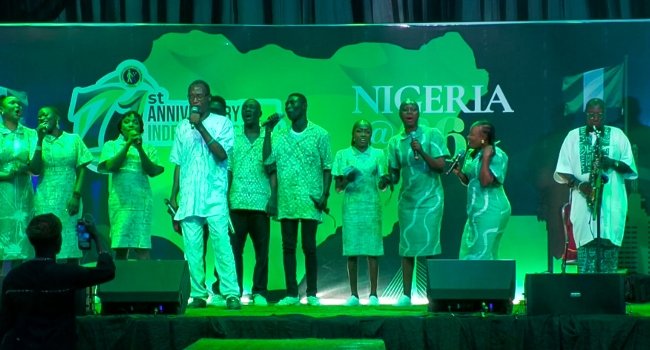
The appeal was made by the society’s Executive Council Chairman, Arit Tunde-Imoyo, during its 71st anniversary celebration and Independence Ball held at the MUSON Centre in Onikan, Lagos, on Friday, October 9.
Tunde-Imoyo called for effective implementation of policies intended to improve employment opportunities for persons with disabilities, stressing that existing provisions must translate into practical benefits for those they are designed to protect.
She also highlighted the need for safer public spaces and greater public awareness of the challenges faced by visually impaired people. She described an inclusive environment as one in which people who are blind can move around independently, including navigating streets and crossing roads safely, with members of the public understanding the significance of a white cane.
Nigeria already has a legal framework for disability inclusion. The Discrimination Against Persons with Disabilities (Prohibition) Act, 2018, prohibits discrimination on the basis of disability and provides for access to public buildings, employment opportunities and participation in public life. The legislation also established the National Commission for Persons with Disabilities to coordinate and promote the protection of disability rights.
Section 29 of the Act provides that public-sector employers should, as far as possible, ensure that persons with disabilities constitute at least five per cent of their workforce. However, the existence of the provision does not by itself establish how consistently it is being implemented across public institutions.
The society’s call therefore places renewed attention on the gap between legal protections and the everyday experiences of people living with visual impairments, particularly in employment, transportation, public infrastructure and access to technology.
Established in 1955, the FNSB operates a vocational training and rehabilitation centre in Oshodi, Lagos, where people who have lost their sight receive support to develop practical skills and rebuild their independence. According to Tunde-Imoyo, the organisation has rehabilitated more than 3,500 people over its 71-year history.
The centre provides training in areas that include computer literacy, Braille reading, mobility, crafts and music. These programmes are designed to help participants acquire skills for employment, entrepreneurship and independent living.
At the anniversary event, Tunde-Imoyo also appealed to individuals, businesses and other organisations to support the society’s work, particularly through funding and the provision of modern assistive technology. She said the centre had the capacity to accommodate 100 trainees annually and wanted to extend its reach to people from across Nigeria.
The need for technological support is increasingly important as digital tools become central to education, communication and employment. Screen-reading software, accessible mobile devices and other assistive technologies can help people with visual impairments use digital services, but access to such tools and appropriate training remains essential.
The event also showcased the abilities of visually impaired people through musical performances, modelling and other activities. Organisers used the occasion to challenge misconceptions about blindness and demonstrate the contributions people with visual impairments can make when given appropriate opportunities and support.
One of the trainees, Motunrayo Apena, described how rehabilitation at the centre had helped her regain confidence after losing her sight. She said the training enabled her to use her phone more confidently and move around independently with the help of a guide cane and other support.
Another trainee, George Okongwu, who said he lost his sight after experiencing glaucoma, also spoke about the difference rehabilitation had made to his life and encouraged others facing similar challenges to seek appropriate support.
Their experiences highlight the role rehabilitation can play in helping people adapt to sight loss. However, individual training programmes cannot replace the need for accessible infrastructure, inclusive workplaces and consistent enforcement of disability rights.
The FNSB’s appeal comes as Nigeria continues to face the challenge of translating disability legislation into practical improvements in public services and everyday life. Accessible walkways, safer road crossings, inclusive recruitment practices and wider access to assistive technology remain important to ensuring that visually impaired people can participate more fully in their communities.
The society said continued partnerships with government agencies, corporate organisations and individuals would help it expand its training services and reach more people who have lost their sight.
Its anniversary message underscored the importance of moving beyond public commitments towards sustained implementation of policies that protect the rights, dignity and independence of persons with visual impairments.