

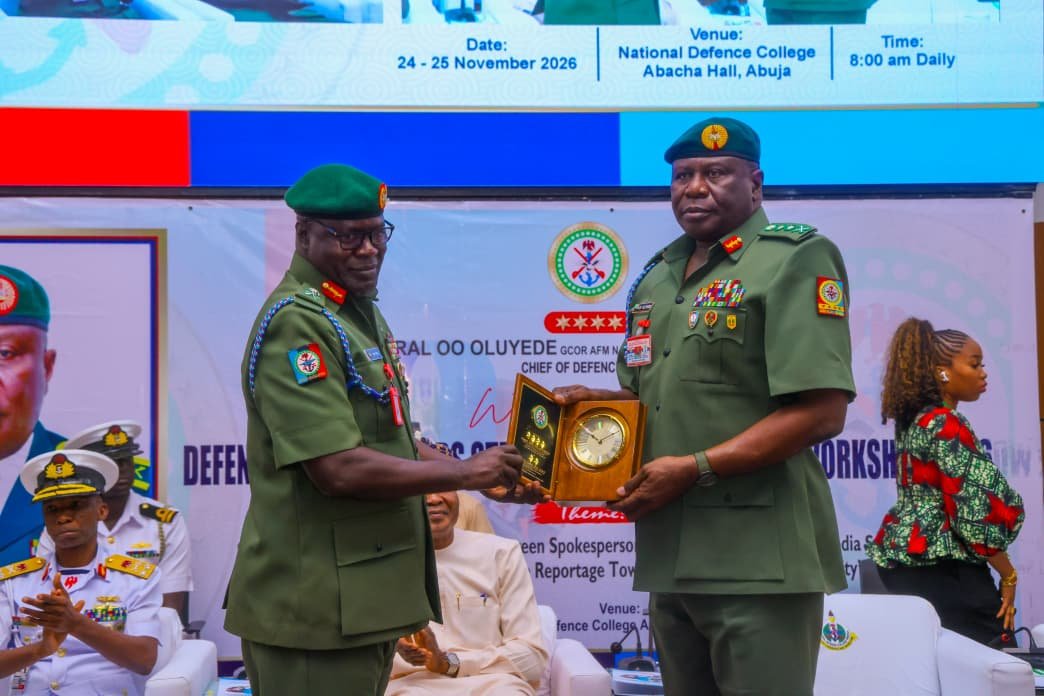
The Chief of Defence Staff (CDS), General Olufemi Oluyede, has called for stronger collaboration between the media and security agencies to address Nigeria’s evolving security challenges and strengthen national security.
General Oluyede made the call on Tuesday, November 24, 2026, while delivering his remarks at the Defence Headquarters Strategic Communication Workshop 2026, held at the National Defence College, Abuja.
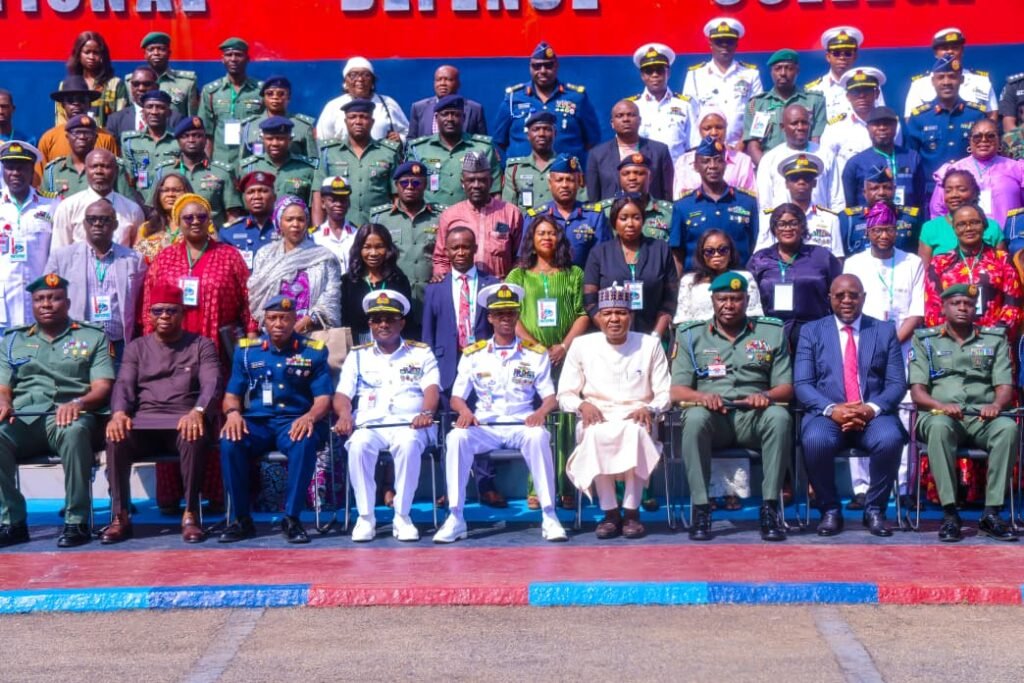
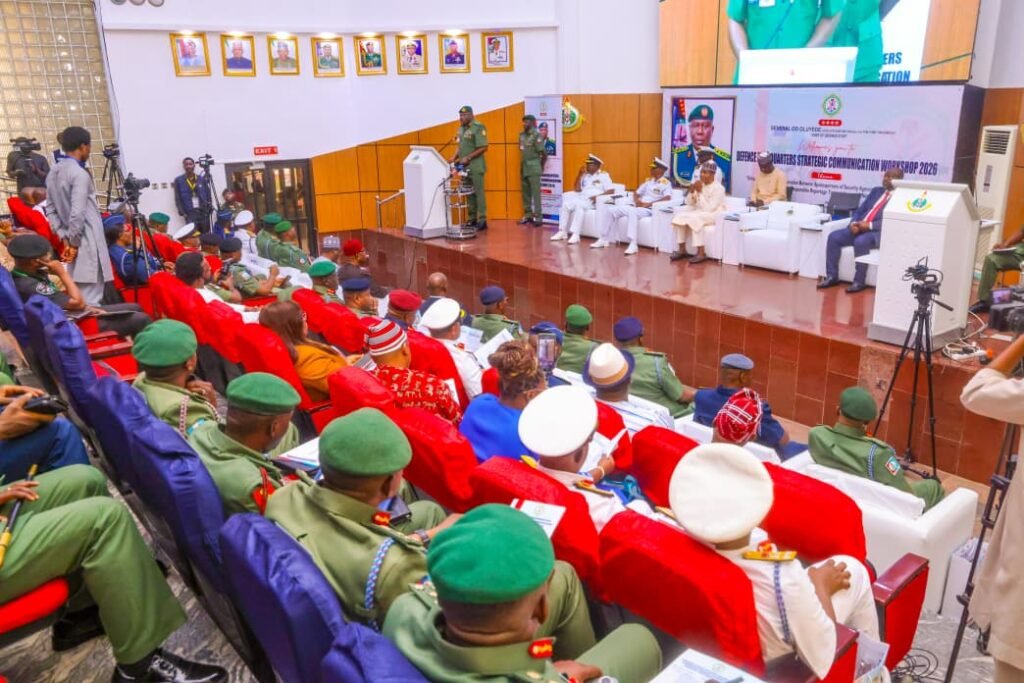
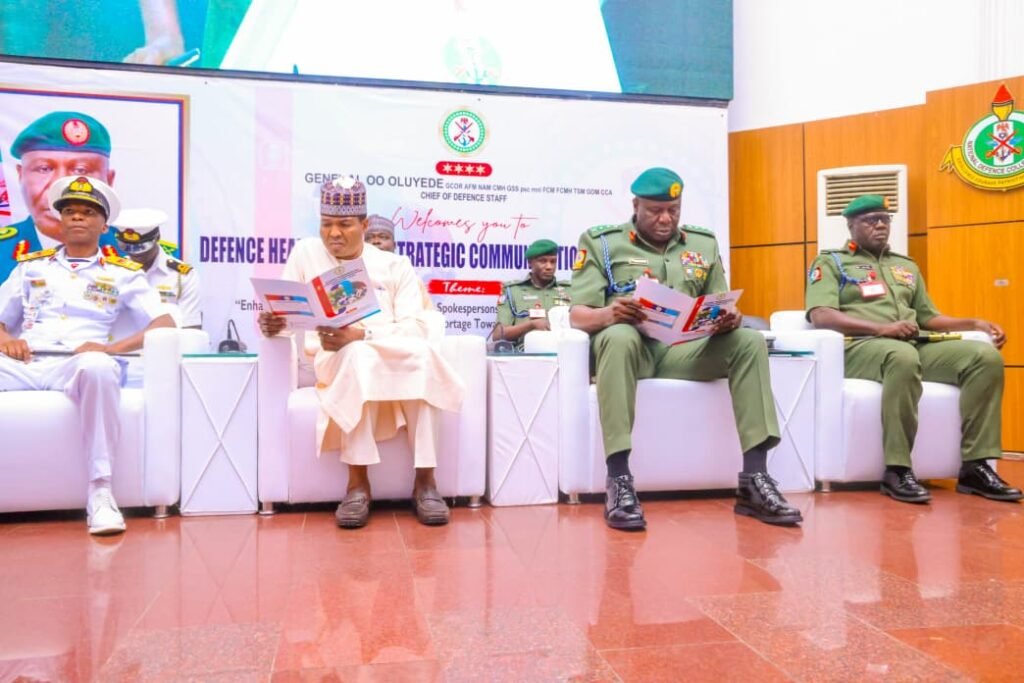
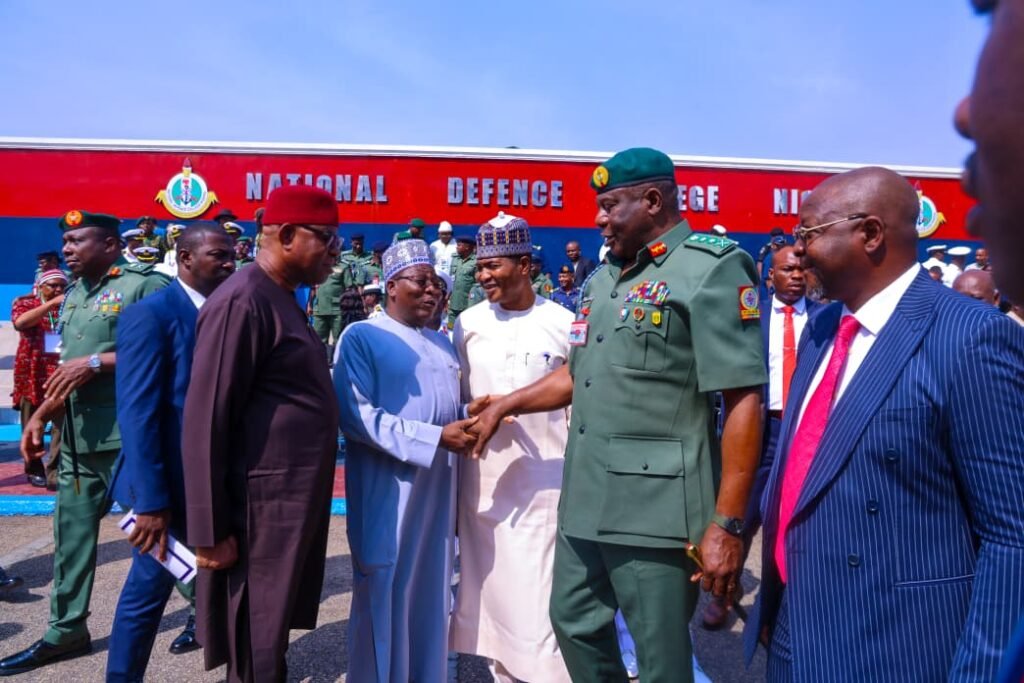
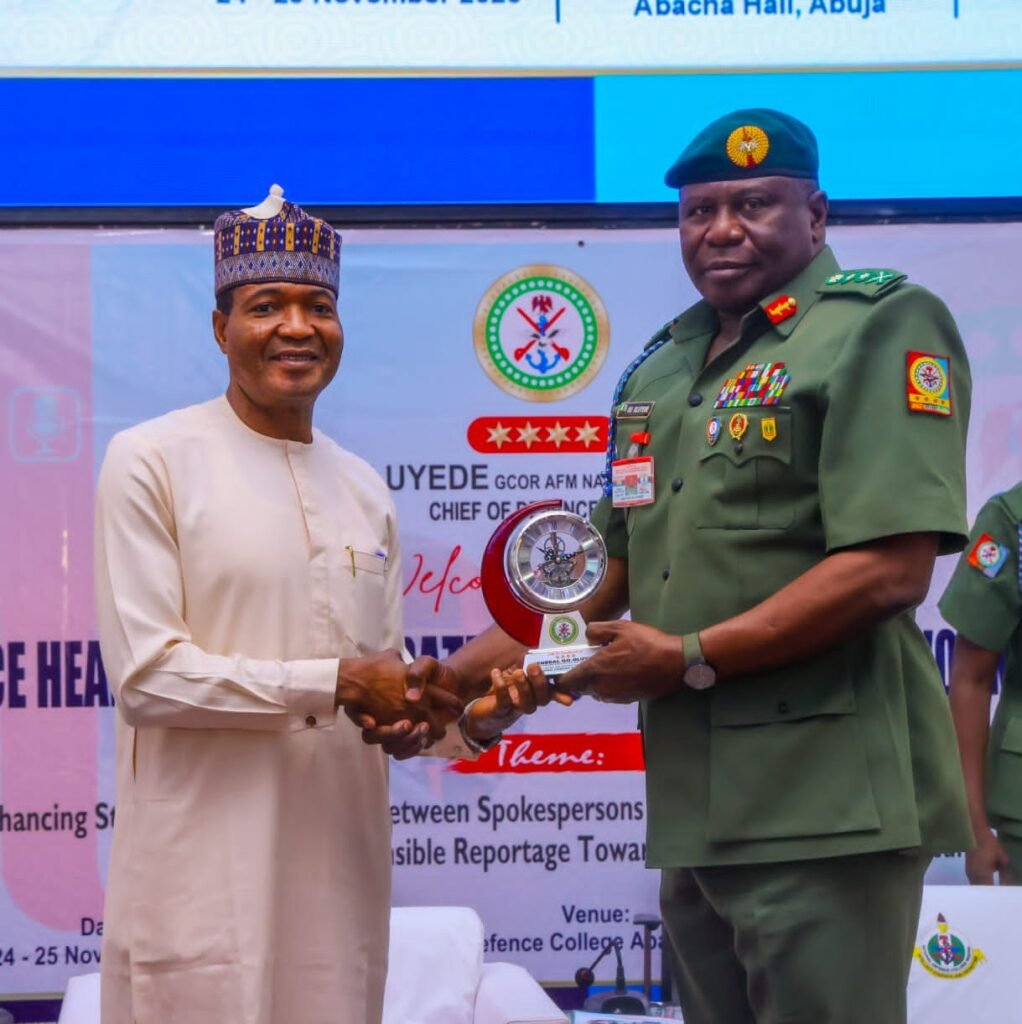
The workshop brought together senior military officers, defence spokespersons, journalists and communication experts to examine how strategic communication can support national security in an age of instant information and instant falsehood.
The CDS noted that the contemporary security environment had expanded beyond conventional military operations to include the information domain, where misinformation, disinformation and emerging artificial intelligence-generated content pose significant threats to national security.
According to him, the battlefield is no longer only in the forests, creeks and border towns. It is also on phones, social media timelines, WhatsApp groups and news headlines — where a single false report can cause panic, demoralise troops or embolden criminals.
He warned that AI-generated images, doctored videos and fabricated casualty figures are now being weaponised to mislead the public and undermine confidence in the Armed Forces.
He urged media organisations to embrace the principle of “verify before amplify,” stressing that accuracy and responsible reporting must take precedence over speed and sensationalism.
In an era where being first often matters more than being right, Oluyede said the media must resist the pressure to publish unverified claims, especially on security operations.
“Accuracy must come before speed. Responsible reporting must come before sensationalism,” he said in essence, urging editors and reporters to double-check facts with credible sources before pushing them to millions of Nigerians.
He also emphasised the need to balance press freedom with operational security, warning that the disclosure of sensitive military information could endanger personnel and compromise ongoing military operations.
The CDS was clear: press freedom is vital to democracy, but it must not be exercised in a way that reveals troop movements, operational plans, or the identities of personnel in active theatres.
Such disclosures, he said, do not just endanger soldiers they hand advantage to terrorists, bandits and kidnappers.
General Oluyede stressed that mutual trust, sustained engagement and effective communication between journalists and security agencies were essential to building public confidence and countering false narratives.
He called for regular briefings, open channels and honest engagement not hostility or suspicion between the military and the media.
When journalists trust the military to give timely, truthful information, and the military trusts journalists to report responsibly, he said, false narratives will have no room to thrive.
Similarly, the Minister of Information and National Orientation, Alhaji Mohammed Idris, represented by the Director-General of Voice of Nigeria, Alhaji Jibrin Baba Ndace, described the relationship between the media and security agencies as critical to national security.
The Minister called for mutual respect, regular communication and professionalism, urging security agencies to provide timely and credible information while encouraging journalists to uphold accuracy, verification and responsible reporting.
He warned that misinformation could trigger public panic, undermine confidence in government institutions and weaken ongoing security efforts.
According to him, effective strategic communication must complement operational efforts in addressing security challenges and ensuring that the public receives credible information.
Both the CDS and the Minister reaffirmed the complementary roles of the media and security agencies, emphasising the need for closer cooperation to promote public trust, counter misinformation and advance Nigeria’s national security objectives.
The message from the National Defence College was unanimous: the military cannot win the war alone, and the media cannot inform the nation without credible access.
In a country battling terrorism, banditry, kidnapping and communal conflicts, the two institutions must work as partners not adversaries if Nigeria is to win both the kinetic war and the war of narratives.