


By TheDailyNewsHub Reporter
The Democratic Republic of the Congo (DRC) has launched a clinical trial to determine whether an existing Ebola vaccine can protect against the Bundibugyo strain responsible for a devastating outbreak, as health authorities intensify efforts to contain the disease.
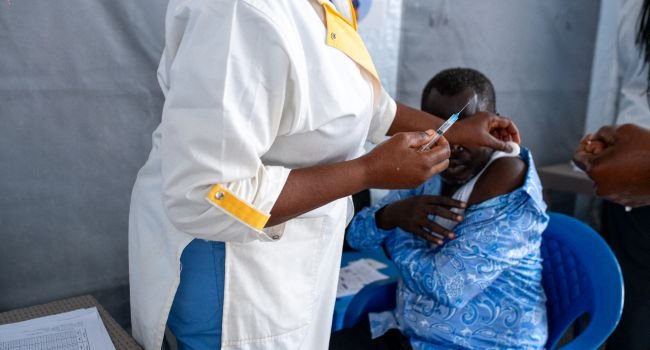
The first participants received vaccinations on Friday, October 23, in Bunia, the capital of Ituri Province, marking the start of the Tumaini trial, whose name means “hope” in Swahili.
World Health Organisation (WHO) Director-General Tedros Adhanom Ghebreyesus announced the development, describing the trial as an important step towards identifying effective protection against the virus.
“Science gives us hope,” Tedros said in a post on X, adding that the study would help researchers determine whether available vaccine candidates could protect against the Bundibugyo virus.
The trial begins as the DRC confronts its worst recorded Ebola outbreak, with reported infections exceeding 9,700 and deaths surpassing 4,600, according to figures cited by international news agencies.
A major challenge facing the response is that no vaccine or specific treatment has been approved for Bundibugyo virus disease. The strain differs from the Zaire ebolavirus targeted by Ervebo, the currently licensed Ebola vaccine.
The Tumaini trial will initially assess Ervebo to determine whether it offers cross-protection against Bundibugyo. Although preliminary laboratory and animal studies have suggested the possibility of some protection, its effectiveness in humans against this strain remains unknown.
The WHO has therefore recommended that Ervebo be used against Bundibugyo only within an approved research protocol until evidence establishes whether it provides protection.
The study will use a ring vaccination approach, in which people identified as contacts of confirmed cases and considered at high risk of infection are offered vaccination. Researchers will assess the safety and performance of the vaccine and gather evidence on whether it can prevent infection.
The trial is designed to accommodate multiple vaccine candidates within a single research framework. Two additional candidates specifically developed for Bundibugyo are expected to join the study after progressing through earlier-stage clinical trials.
One candidate uses the ChAdOx1 adenoviral vector platform and is being developed by the University of Oxford. The other, developed by US biotechnology company Moderna, uses messenger RNA technology.
Both candidates have received support from the Coalition for Epidemic Preparedness Innovations (CEPI), which said the trial would help generate evidence to guide the response to the current outbreak and improve preparedness for future outbreaks.
The study will also include pregnant women and children aged 12 and older, helping researchers obtain evidence for groups that are often underrepresented in clinical research.
WHO emergencies director Chikwe Ihekweazu said the trial was intended to generate rigorous evidence on whether the vaccines could protect people at risk.
If successful, the research could provide the first clear evidence of vaccine effectiveness against Bundibugyo virus in humans, potentially changing how future outbreaks of the disease are managed.
Steve Ahuka-Mundeke, the DRC’s Ebola response incident manager, described the launch as an important step towards addressing the urgent needs of affected communities.
The DRC declared its 17th Ebola outbreak on May 15, 2026. The WHO subsequently declared a public health emergency of international concern as infections spread and response teams faced significant challenges.
The outbreak has raised concerns about regional transmission, with reports indicating that the disease has been detected in four countries across eastern, central and western Africa. This highlights the importance of strengthening cross-border surveillance, regional cooperation and preparedness, particularly as Nigeria has previously reinforced its surveillance and response measures in connection with Ebola-related concerns.
Ebola spreads primarily through direct contact with the blood and other bodily fluids of infected people, as well as contaminated materials. Symptoms can include fever, fatigue, muscle pain, headache and, in severe cases, vomiting, diarrhoea and other complications.
Health authorities have continued to emphasise early detection, contact tracing, infection prevention and supportive medical care while researchers work to establish effective interventions against the Bundibugyo strain.
The launch of the Tumaini trial represents a significant research milestone, but it does not mean an effective vaccine against Bundibugyo has already been established. Researchers must analyse the results before determining whether the vaccine candidates can provide meaningful protection.
The findings could help guide vaccination policy during the current emergency and strengthen preparedness for future outbreaks, particularly in communities where access to healthcare and rapid outbreak response remains difficult.
As the trial progresses, the priority for Congolese authorities and their international partners will be to generate reliable evidence while continuing measures to identify infections, protect healthcare workers and limit further transmission.