


By TheDailyNewsHub Reporter
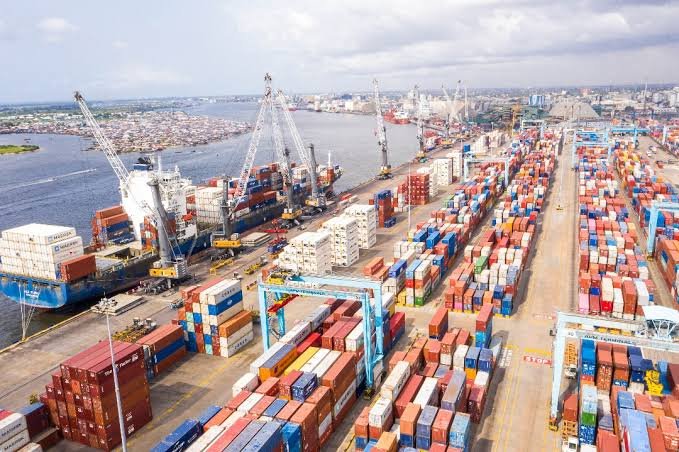
The Federal Government has fixed November 25, 2026, for the commencement of a comprehensive modernisation and rehabilitation programme at the Lagos Port Complex, Apapa, and the Tin-Can Island Port Complex, in a move aimed at addressing longstanding infrastructure challenges and improving Nigeria’s maritime operations.
The Minister of Marine and Blue Economy, Adegboyega Oyetola, is expected to perform the groundbreaking ceremony and official turning of the soil for the two projects in Lagos.
The announcement was made in a statement issued on Monday by the minister’s Special Adviser, Bolaji Akinola, who described the intervention as a major step towards repositioning Nigeria’s maritime sector and strengthening the country’s competitiveness in international trade.
According to the ministry, the two ports jointly handle more than 70 per cent of Nigeria’s non-oil export cargo, making their modernisation important to the country’s export ambitions and broader economic diversification plans.
Akinola said the comprehensive rehabilitation represents the first modernisation initiative of its scale at the facilities in about 50 years. The projects are expected to address ageing infrastructure, operational constraints and other deficiencies affecting activities at the country’s busiest port corridors.
The planned improvements include increased cargo-handling capacity, reduced vessel turnaround time and cargo dwell periods, improved port access and logistics, and stronger safety and security arrangements.
The ministry said the intervention would also create a more efficient operating environment for importers, exporters, shipping companies, investors and other maritime stakeholders.
£746m UK-backed financing for port rehabilitation
The planned overhaul follows a £746 million export finance agreement between Nigeria and the United Kingdom, announced in March 2026 to support the redevelopment of the Apapa and Tin-Can Island port complexes.
The financing is backed by UK Export Finance and arranged through Citibank. The agreement involves the Nigerian Ports Authority and Nigeria’s Federal Ministry of Finance.
Under the arrangement, at least £236 million in supplier contracts is expected to go to British companies. British Steel secured a £70 million contract to supply 120,000 tonnes of steel billets for the project.
The UK Export Finance project documentation identifies the rehabilitation of 20 berths at the existing Lagos and Tin-Can ports as a key component of the works. The planned interventions include repairs to quay walls, replacement of paved areas around the berths, and installation of new fenders and mooring beam structures.
The financing is intended to support the refurbishment of facilities that have experienced significant deterioration, with the aim of enabling the ports to operate at higher capacity.
FG extends port modernisation beyond Lagos
Oyetola said the modernisation programme was part of a broader national strategy to develop a balanced and interconnected port system rather than concentrate maritime activities around Lagos.
He disclosed that the Federal Government had also approved the modernisation and upgrade of four other major seaports outside Lagos: Warri, Onne, Calabar and Rivers ports.
According to the minister, upgrading the additional facilities would expand national cargo-handling capacity, promote regional economic development and provide more opportunities for businesses across different parts of the country.
He said the government’s objective was to establish a modern port network capable of serving different regions while supporting Nigeria’s growing trade requirements.
The programme is also expected to improve connections between seaports, road and rail networks, inland waterways and dry ports. The government believes better integration of these transport systems will make it easier to move goods from production centres to domestic and international markets.
Such improvements could help reduce transportation costs, facilitate exports and strengthen the competitiveness of Nigerian products.
Port efficiency remains a major concern for businesses
The planned rehabilitation comes amid longstanding concerns about congestion, cargo delays, deteriorating infrastructure and the cost of moving goods through Nigeria’s major maritime gateways.
The efficiency of Apapa and Tin-Can ports has significant implications for manufacturers, importers, exporters, freight forwarders and other businesses that depend on timely cargo clearance and delivery.
Recent developments at the ports have also highlighted the importance of operational efficiency and improved trade facilitation. In an earlier report, TheDailyNewsHub covered the Nigeria Customs Service’s announcement that the Apapa Area Command generated more than ₦302.9 billion in revenue in October 2026, alongside measures aimed at streamlining cargo processing and addressing operational bottlenecks.
Similarly, a recent report on a Customs College study tour of the Tin-Can Island Port Command highlighted the role of technology-driven operations, professional capacity and collaboration among port stakeholders in improving service delivery.
The Lagos port rehabilitation is also part of a wider effort to expand Nigeria’s maritime infrastructure. The Federal Government recently flagged off the Bakassi Deep Seaport project in Cross River State, another initiative expected to strengthen maritime trade and create opportunities in the country’s coastal economy.
The November 25 groundbreaking will formally mark the start of the latest phase of the Federal Government’s efforts to upgrade the two Lagos port complexes.
However, the impact of the programme will ultimately depend on the timely execution of the rehabilitation works, effective project supervision and improvements to the wider transport and logistics infrastructure connecting the ports to businesses and markets.