


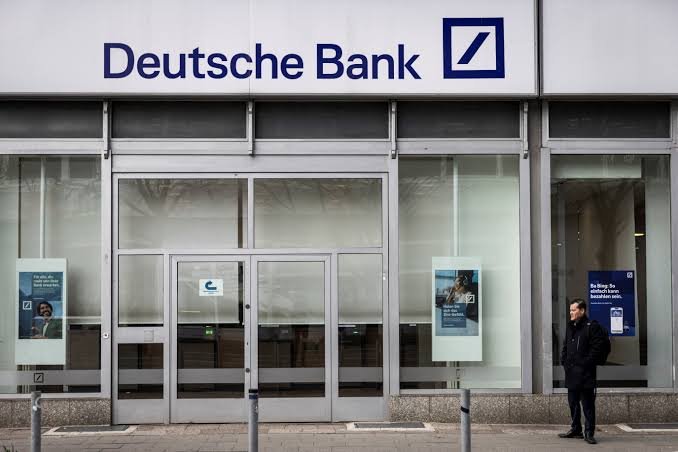
Germany’s government has demanded greater transparency from Deutsche Bank following the disclosure of millions of internal documents that have raised questions about the lender’s past business practices, compliance controls and handling of sensitive information.
Finance Minister and Vice Chancellor Lars Klingbeil said the bank must explain how it addressed previous shortcomings in its internal controls and what measures it has taken to prevent similar problems in the future.
The controversy follows an international investigative report based on approximately 15 million internal Deutsche Bank documents, including more than nine million emails, reportedly obtained from whistleblowers and examined by journalists from several international media organisations.
The documents reportedly cover the bank’s activities over roughly two decades and contain information relating to its dealings with wealthy clients, Russian oligarchs, convicted sex offender Jeffrey Epstein and US President Donald Trump before he entered office.
Klingbeil said Deutsche Bank had a responsibility to provide full transparency about past failures and weaknesses in its internal controls, while stressing that independent supervisory authorities must examine the revelations and determine whether further action is necessary.
The leak has prompted renewed scrutiny of Germany’s largest bank, with reports suggesting that commercial interests were sometimes prioritised over compliance concerns, including warnings relating to money laundering, sanctions and other financial risks.
Among the issues raised by the leaked records are the bank’s activities in Russia before the 2022 invasion of Ukraine, its relationship with controversial clients and alleged shortcomings in its handling of suspicious financial transactions.
The disclosures have also raised questions about whether the bank’s internal compliance mechanisms were sufficiently effective in identifying and addressing risks associated with certain clients and business relationships.
Deutsche Bank has said that many of the issues highlighted in the reports relate to events from several years ago and that the institution has undergone significant changes since then.
The bank said it had strengthened its compliance systems, risk management and internal controls, arguing that it is now a different institution from the one involved in some of the historical matters described in the reports.
The revelations have also triggered a regulatory response. The data protection authority in the German state of Hesse has opened an investigation to determine whether Deutsche Bank had implemented appropriate technical and organisational safeguards to protect sensitive information.
The investigation is expected to examine whether the bank had adequate data protection measures in place, whether the incident was reported appropriately and whether affected individuals were notified in a timely manner.
Deutsche Bank said it had proactively informed the relevant authorities and was cooperating with them. It also stated that testing conducted with a security firm had found no indication that its current IT environment had been compromised or that customer account information, login credentials or payment data had been accessed.
The bank said it was continuing to analyse the matter and would take steps to protect confidential information belonging to clients, employees and other third parties.
The data leak has also put renewed pressure on the bank’s leadership and its efforts to rebuild its reputation following previous financial scandals.
Deutsche Bank Chief Executive Christian Sewing, who took over in 2018, has overseen restructuring efforts, job cuts and a shift towards strengthening the bank’s core European and German operations while reducing exposure to some riskier activities.
The latest disclosures have nevertheless raised fresh questions about the effectiveness of those reforms and the extent to which past compliance weaknesses have been fully addressed.
The investigation by the Hessian data protection authority is expected to provide further clarity on the circumstances surrounding the leak, while regulators and law enforcement agencies could examine whether the revelations warrant additional action.
The case has also renewed wider concerns about the role of financial institutions in preventing money laundering, illicit financial flows and the movement of funds linked to criminal activity, highlighting the importance of strong compliance systems, transparency and accountability across the global banking sector.