


By Femi Mustapha in Kaduna
The Kaduna State Government has charged political appointees to serve as champions and ambassadors of the Kaduna State Contributory Health Scheme, a critical strategy for achieving Universal Health Coverage in the state.
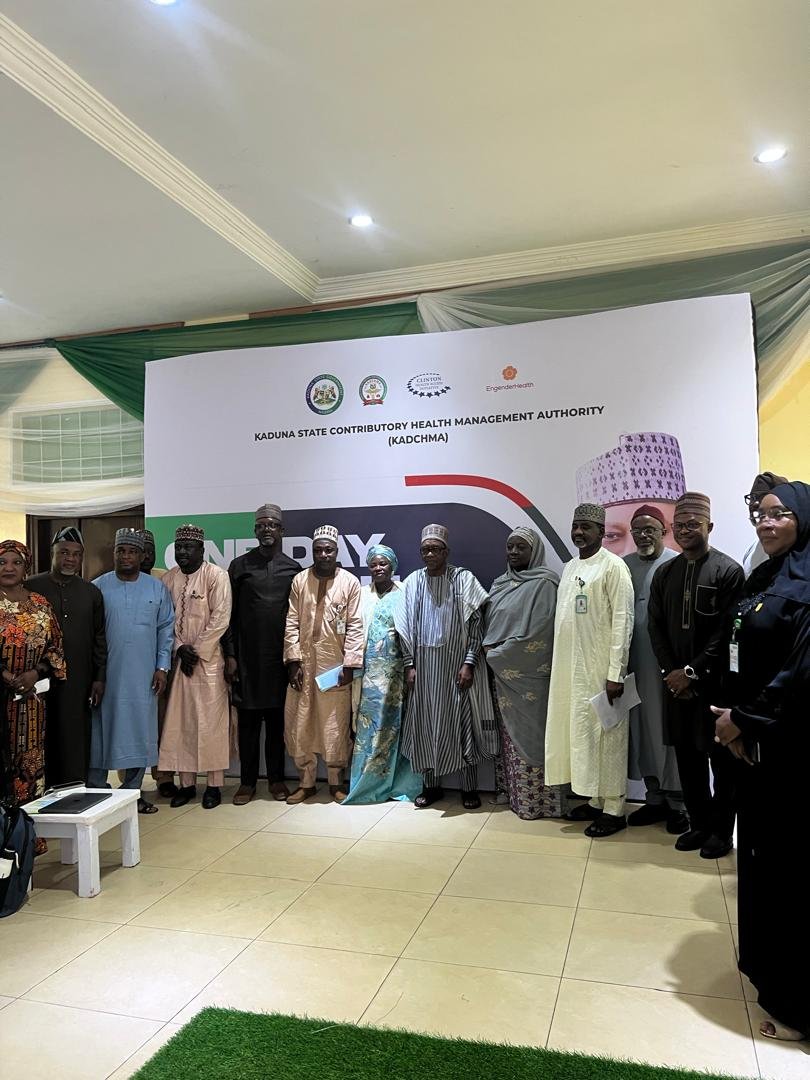
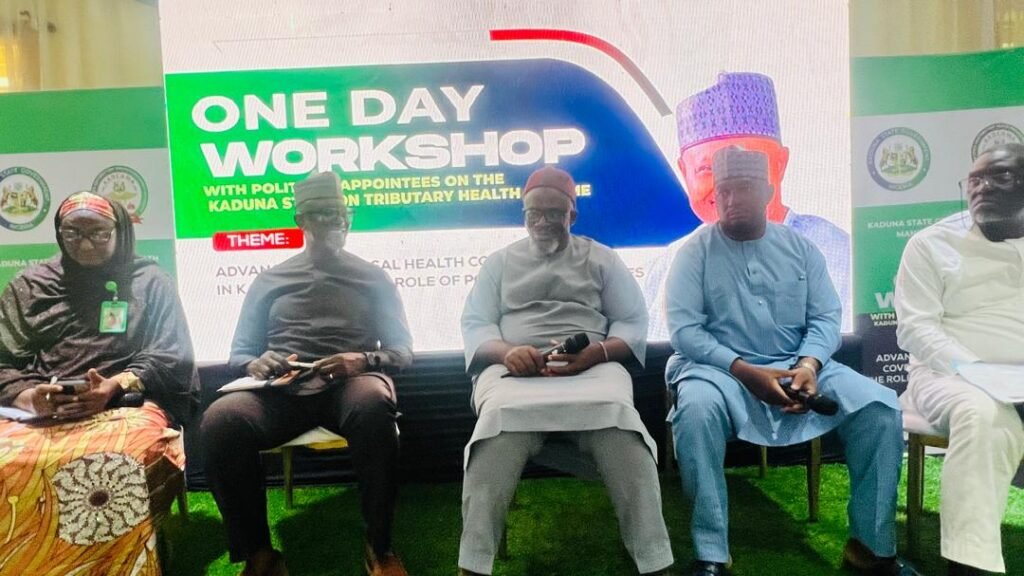
The call was made Thursday at a one-day sensitization workshop for political appointees on the Contributory Health Scheme. The workshop, themed “Advancing Universal Health Coverage in Kaduna State: The Role of Political Appointees,” was held at the Bafra Hotel in Kaduna.
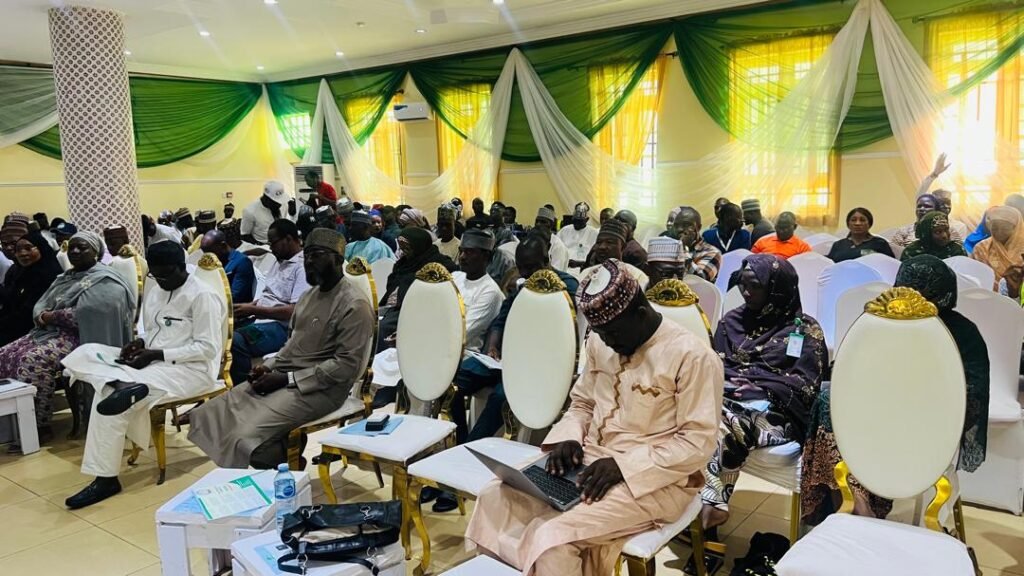
The workshop was convened by the Kaduna State Contributory Health Management Authority (KADCHMA), under the leadership of its Director-General, Malam Abubakar Sadiq Hassan. It brought together the Auditor-General, commissioners, permanent secretaries, permanent commissioners, heads of agencies and parastatals, senior special advisers, special advisers, technical advisers, development partners, representatives of financial institutions, security personnel, and members of the press.
Declaring the workshop open, the Secretary to the State Government (SSG), Dr. Abdulkadir Muazu Meyare, and the Honorable Commissioner for Health, Hajiya Umma K. Ahmed, said in their separate opening remarks that achieving Universal Health Coverage cannot be the responsibility of the Ministry of Health or KADCHMA alone.
They explained that Universal Health Coverage means every person should be able to access the quality and affordable healthcare services they need, when and where they need them, without suffering financial hardship. They noted that this principle is at the heart of the health reform agenda of the administration of Governor Uba Sani.
Both the SSG and the commissioner said that, under the leadership of His Excellency, Distinguished Senator Uba Sani, CON, the government is committed to building a health system that is accessible, equitable, and responsive to the needs of the people, particularly the poor and vulnerable. This will be achieved by strengthening primary healthcare, improving secondary facilities, strengthening the health workforce, and expanding financial protection through the Contributory Health Scheme.
They noted that building health facilities and deploying healthcare workers alone will not achieve UHC, stressing that health insurance is critical to moving away from out-of-pocket payments at the point of illness to a system in which risks are pooled. People are protected from catastrophic health expenditures.
They therefore urged political appointees to use their constituencies, communities, professional networks, and platforms to explain the benefits of health insurance in simple language, encourage families to enroll, support vulnerable people, and address misconceptions.
They particularly charged the appointees to focus on the informal sector—traders, farmers, artisans, transport workers, small business owners, and others outside the formal payroll—who constitute a significant proportion of the population, and to leave the workshop with actionable commitments on how many families they can encourage to enroll.
In his welcome address, the Director-General of KADCHMA, Abubakar Sadiq Hassan, said that almost everyone has received a call for help with medical bills, noting that, for a low-income family, a hospital bill can mean borrowing, selling assets, or delaying treatment.
He said the Kaduna State Contributory Health Scheme pools resources so that residents can access needed care without bearing the full financial burden at the point of service, adding that the scheme operates across all 23 local government areas and has an expanding network of accredited public and private facilities.
The DG disclosed that, by the second quarter of 2026, beneficiaries had utilized more than 1.7 million healthcare services under the scheme, ranging from maternity care to treatment for children and vulnerable residents.
He said the administration of Governor Uba Sani had continued to support the expansion, with more than 15,000 vulnerable people enrolled through government- and partner-supported interventions in 2025, while a development-partner intervention in 2026 was targeting more than 32,000 vulnerable beneficiaries.
Hassan encouraged those who can sponsor annual premiums for vulnerable individuals or families, such as widowed mothers, older adults, people living with disabilities, and struggling families, describing it as a practical investment in human dignity aligned with the SUSTAIN Agenda.
He urged participants to ask difficult questions, share community feedback, and help make the scheme credible, accessible, and responsive, with three commitments: understand the scheme, promote accurate information, and help eligible people enroll.
Delivering the keynote address titled “Achieving Universal Health Coverage in Kaduna State: The Role of Political Appointees,” former Managing Director and CEO of the Anambra State Health Insurance Agency, ASHIA, Dr. Simeon Onyemaechi, described UHC as a political commitment and not just a medical problem.
Dr. Onyemaechi, who observed protocol to Governor Uba Sani, Deputy Governor Dr. Hadiza Sabuwa Balarabe, Commissioner Hajiya Umma K. Ahmed, DG Malam Abubakar Hassan, and members of the State Executive Council, said UHC means a mother in Birnin Gwari or Sanga being able to deliver safely without her husband selling his land, and an older man in Kaduna North managing diabetes without choosing between medication and food.
< text> Reflecting on his eight years leading ASHIA, he said the agency had moved from zero to hundreds of thousands enrolled by relying on political will, aggressive resource mobilization, and the ASHIA Adoption Model, taking the campaign to markets, August meetings for women, town union meetings, and traditional rulers’ palaces.
He noted that Kaduna has dedicated over 15% of its budget to health, meeting the Abuja Declaration target, with over 300 primary healthcare centers revitalized, thousands of health workers recruited, medical equipment distributed, and KADCHMA fully operational.
He, however, warned that out of Kaduna State’s 11 million population, fewer than 700,000, 000- representing just 6 percent, are insured by KADCHMA. When federal civil servants and students of federal tertiary institutions are added, enrollment is close to 10 percent, meaning nine out of every ten residents remain unprotected.
To unlock UHC, he charged appointees to become UHC evangelists by promoting KADCHMA in their constituencies, leading through direct financial intervention by adopting vulnerable families, and enforcing accountability and oversight at PHCs, including ensuring the availability of drugs.
He cited examples of those who have already paid premiums for constituents, including Hon. Mukhtar Monrovia, Hon. Bello El- Rufai, Hon. Mukhtar Kauru, the Kaduna South LGA chairman, Hon. Franceesska Naymarie, the APC women leader, Engr. Simon Obadiah Nkong, and Magani Sai da Gwaji, as well as foundations such as Lifidi, Soba Waqaf, Caleb Danladi, Sanke, Ibrahim Ridwan, Isa Chikaji, Iyal, and Haj. Rabiatu Memorial Foundations.
Dr. Onyemaechi urged appointees to pay KADCHMA premiums for their people from the government’s own payments, stressing that political offices are transient and that legacies should be measured by the number of families protected from financial hardship.
The speakers collectively assured KADCHMA of continued support and called for shared ownership, broad understanding, and sustained participation to ensure that no resident of Kaduna State is denied essential healthcare due to inability to afford it.