


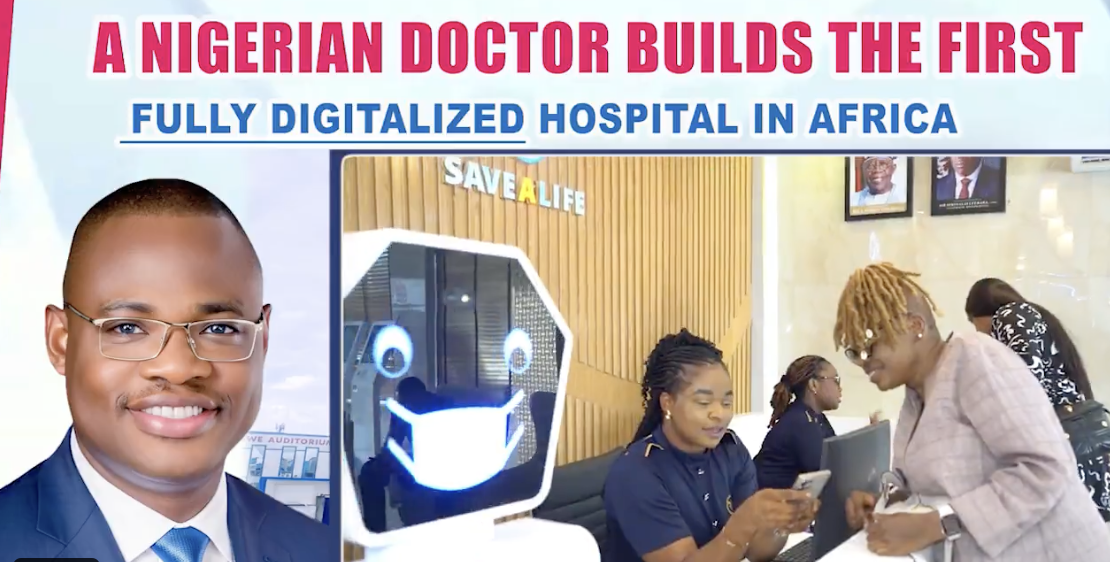
Nigerian medical entrepreneur Dr Richard Okoye has developed what his Save-A-Life Mission Hospital describes as Africa’s first fully digitalised hospital, incorporating electronic medical records, real-time patient monitoring and technology-assisted clinical decision support.
Okoye, the founder and Chief Medical Director of Save-A-Life Mission Hospital in Port Harcourt, Rivers State, has in recent years invested in integrating digital technology into healthcare delivery, with the stated aim of improving access to specialised medical services in Nigeria and reducing dependence on overseas treatment.
The hospital’s official website currently describes the facility as “Africa’s First Fully Digitalized Hospital” and says it operates a 200-bed, multi-specialty healthcare system. Its services include interventional cardiology, kidney transplantation, robotic knee replacement, IVF and fertility care, emergency services and orthopaedics.
The claim about being Africa’s first fully digitalised hospital is also made by Okoye and his organisation. Independent reports confirm that the hospital has developed and deployed a substantial digital healthcare system, although a definitive continent-wide ranking establishing it as the first has not been independently demonstrated in the sources reviewed.
Recent reports in August 2026 said the hospital uses electronic medical records, real-time monitoring and artificial-intelligence-assisted clinical decision support. According to Okoye, doctors can monitor patients’ vital signs remotely and receive alerts when measurements such as blood pressure or blood sugar reach concerning levels.
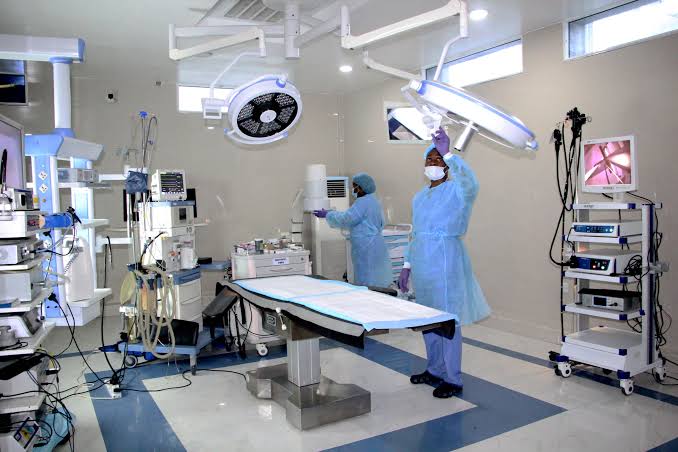
The hospital has also developed MyHomeClinic, a digital healthcare application designed to connect patients with healthcare professionals remotely. The system allows patients to provide medical information before consultations and obtain professional guidance without necessarily travelling to a hospital.
Okoye said the technology is also being adapted for underserved communities, including areas where electricity and internet connectivity are limited. The hospital has reported using solar-powered systems and satellite connectivity in some communities to allow health workers to transmit patients’ vital signs to doctors remotely.
The hospital’s technology drive is not entirely new. Reports dating back to 2021 documented Okoye’s plans to establish a fully digitalised hospital and a medical university and research institute. By 2024, reports were describing the digital hospital as having been completed, while more recent coverage in 2026 indicates that the digital healthcare system is continuing to expand.
In August 2026, Okoye also announced plans for an advanced ambulance system that would allow medical personnel to monitor patients remotely while they are being transported. The initiative is intended to support real-time monitoring, triage and referrals during emergencies.
The development comes against the backdrop of Nigeria’s continuing challenges with healthcare access, medical workforce shortages and medical tourism. Okoye has argued that greater use of technology, investment in local healthcare infrastructure and collaboration with Nigerian doctors in the diaspora can help address some of these challenges.
While the “Africa’s first” description remains primarily a claim made by Okoye and Save-A-Life Mission Hospital rather than a independently verified continental ranking, available reporting confirms that the Port Harcourt-based hospital has built a technology-driven healthcare system incorporating digital records, remote monitoring and AI-assisted tools alongside specialised medical services.
The development positions Save-A-Life Mission Hospital as part of a growing effort to use digital technology to expand access to advanced healthcare in Nigeria.