


From: Femi Mustapha in Kaduna
Key stakeholders from 16 key states have pledged to secure nutrition funding through legislation and clear policy actions, declaring that the health of Nigerian children must be protected by law, not left to chance.
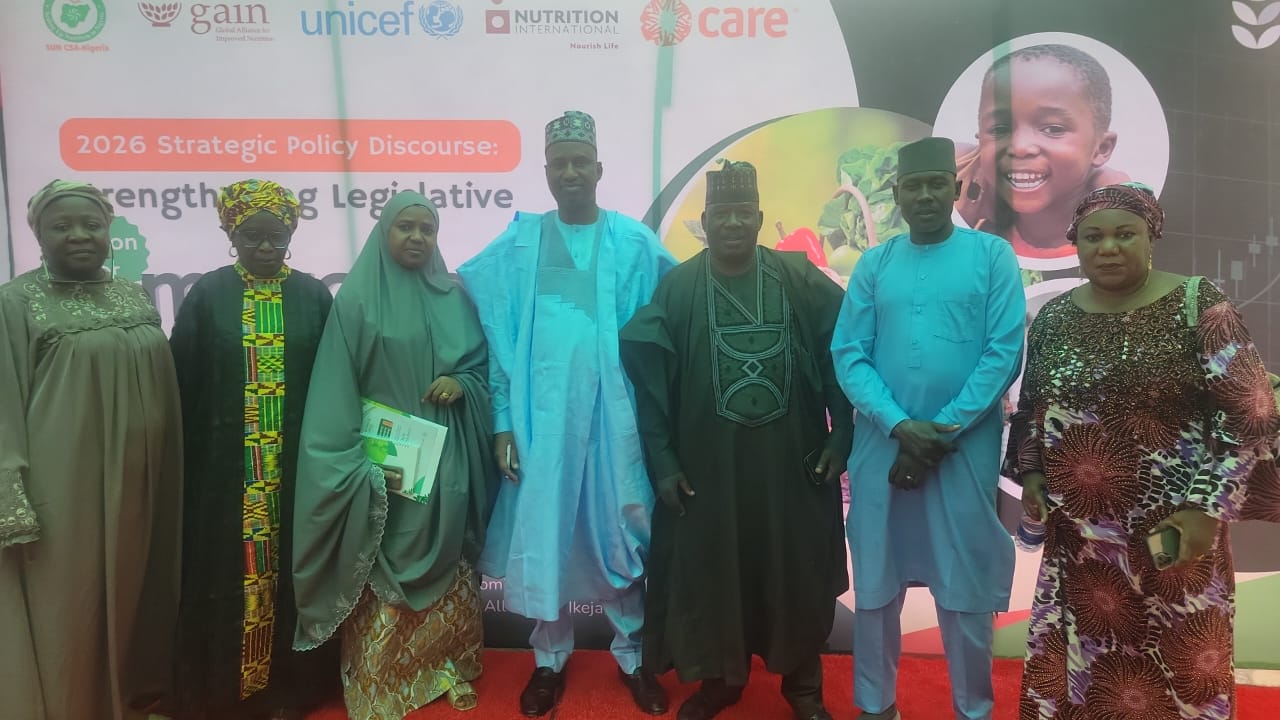
The resolution was outlined in a communiqué released at the end of Day 2 of the Strategic Policy Discourse on nutrition, where state representatives, development partners, and government officials gathered to discuss strengthening policies, boosting domestic funding, and expanding grassroots nutrition interventions.
The states agreed to finalize the National Nutrition Bill, legislate six months of paid maternity and paternity leave, establish creches in both public and private workplaces, and actively promote six months of exclusive breastfeeding.
On funding and commodities, the states committed to investing in the Child Nutrition Fund (CNF), releasing state contributions to leverage matching funds, and purchasing key commodities, including Ready-to-Use Therapeutic Food (RUTF), Multiple Micronutrient Supplements (MMS), and school feeding supplies.
They also decided to create dedicated Nutrition Departments within key ministries, implement cross-sectoral nutrition plans, establish State Councils on Nutrition for high-level decision-making, and track nutrition spending down to the Local Government Areas.
Opening the discussion on maintaining nutrition investments, Dr. Osita Okonkwo, Country Director of Nutrition International, emphasized that political goodwill alone cannot ensure results.
“Nutrition financing is built on law, not luck,” Dr. Okonkwo stated, urging states to institutionalize funding through solid legislative measures rather than depend on unpredictable budget releases.

Addressing the meeting on the Child Nutrition Fund and maternity policies, Mr. Oluniyi Oyedokun, Nutrition Specialist at UNICEF Lagos Field Office, described the CNF as a “catalytic financing match mechanism” that allows state and national governments to double their investments in essential nutrition commodities by matching funds.
“It is a big win, and we would love every state to key into this initiative,” Oyedokun said. He warned that many states still face stunting rates over 30 percent, stressing that the critical window to intervene is within a child’s first 1,000 days of life.
Data shared by the Federal Ministry of Health and Social Welfare from the 2024 National Demographic and Health Survey (NDHS) further highlighted the urgency. Chairman of the House of Representatives Committee on Nutrition and Food Security, Hon. Chike Okafor, urged states to leverage the Child Nutrition Fund to combat stunting and increase the uptake of nutrition commodities through the N774 Initiative, for better outcomes across Nigeria.
The discussion also focused on workplace support for mothers. Between 2001 and 2026, only 15 states have approved six months of paid maternity and paternity leave. Participants agreed that funding must be directed to Local Government Areas to support breastfeeding at the grassroots level.
Reaffirming their commitment, the states decided that approving 6 months of paid leave is only the first step toward ensuring the babies are exclusively breastfed during that period.
Supporting this effort, the Head of Service for Zamfara State, Yakubu Sani Haidara, Mni, noted that while most public service institutions pay nursing mothers 100% of their salaries during the six-month leave, the private sector must follow suit.
“Private institutions must not only follow suit but also establish creches. This is vital for our Human Development Index (HDI),” Haidara emphasized.
With the adoption of the communiqué, the 16 key states signaled a move toward legally backed, sufficiently funded, and locally driven nutrition initiatives aimed at reducing malnutrition and improving health outcomes for Nigerian children.