


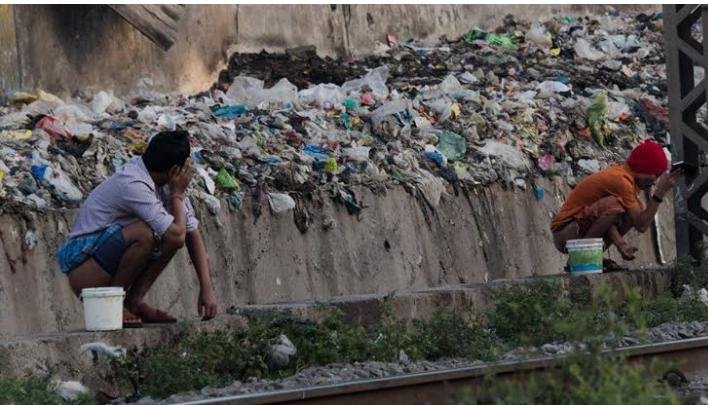
Nigeria and India account for the highest number of people practising open defecation globally.
In Nigeria, an estimated 47 to 50 million people still practise open defecation, placing the country at or near the top of global ranking. India also accounts for tens of millions despite significant progress.
To curb the menace, the Federal Government has launched campaigns, signed executive orders and partnered international organisations to build sanitation facilities and change public behaviour.
During the administration of late President Muhammadu Buhari, the Federal Government launched the Clean Nigeria: Use the Toilet Campaign in 2018 to promote hygiene and end open defecation.
The 2025 target was not met. Against this backdrop, Vice President Kashim Shettima launched a revised strategic plan to make all 774 LGAs open defecation-free by 2030.
A National Roadmap was also developed by the Federal Ministry of Water Resources with UNICEF to drive sanitation marketing, provision of public facilities and Community led Total Sanitation.
Executive Order 009 was signed to give political backing to the campaign, requiring public places such as hotels, schools, offices and markets to provide accessible restrooms.
Over 140 LGAs nationwide and Jigawa State have attained Open Defecation Free (ODF) status through state-led Water, Sanitation and Hygiene (WASH) programmes. Other state governments are deploying Rural Water and Sanitation Agencies to build community and mobile toilets and carry out reorientation campaigns.
International partners like UNICEF and WaterAid provide technical support, real-time monitoring and community mobilisation.
To close the gap, a lot of work still needs to be done.
More worrisome is the danger associated with open defecation:
- Disease Spread: Faeces contaminate water and soil, spreading cholera, diarrhoea, typhoid and dysentery.
- Child Malnutrition: Constant exposure to faecal germs causes intestinal infections, blocking nutrient absorption and leading to stunting.
- Safety Risks: Women and girls face harassment, assault and shame when seeking privacy at night.
- Environmental Damage: Rain washes faeces into rivers and lakes, polluting ecosystems and food sources.
Experts say elimination requires building affordable household and public toilets, community education to change social norms, provision of clean water for flushing and hygiene, and enforcement of sanitation laws with clear accountability.
To achieve open defecation-free status by 2030 as stipulated, government through relevant authorities must double its efforts with clear focus and accountability.