


By Femi Mustapha in Kaduna
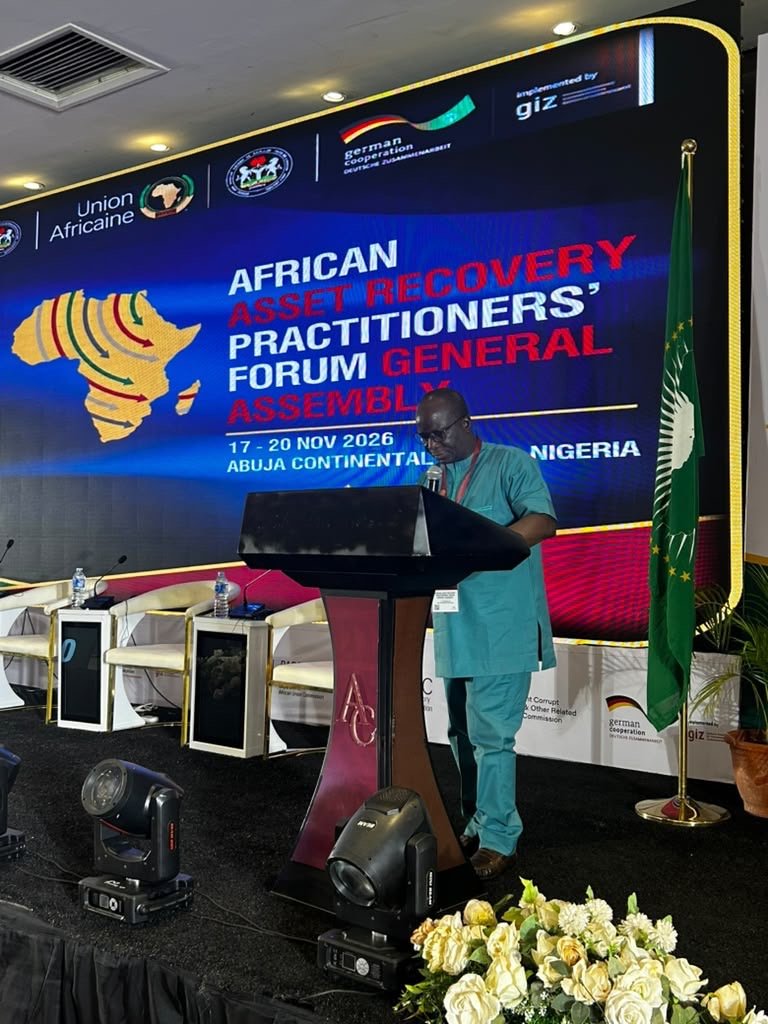
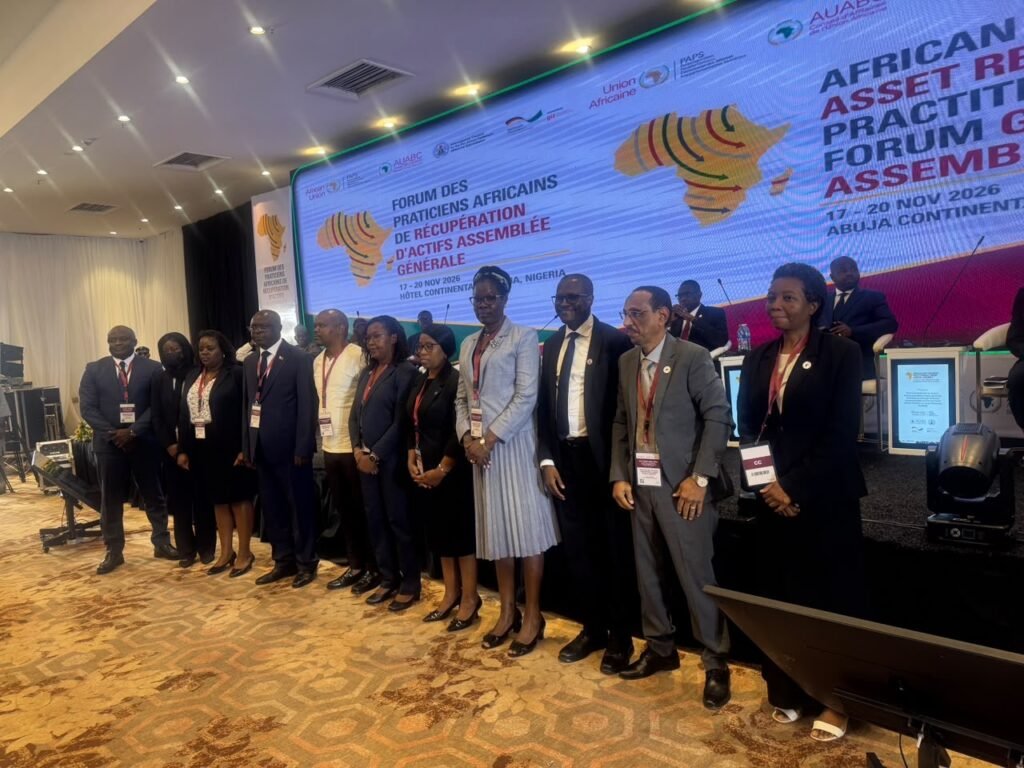
African civil society has told the General Assembly of the African Asset Recovery Practitioners’ Forum in Abuja that recovered stolen assets must no longer disappear into government coffers but must deliver visible justice and direct benefits to victims and affected communities.
The demand was contained in a statement released on Friday, November 20, 2026, by the Non-State Actors (NSA) Forum AUCPCC, together with endorsing civil society organizations and networks across the continent.
The statement was signed by Donald Omondi Deya, Chief Executive Officer of the Pan African Lawyers Union and Chairman of the Interim Council of Non-State Actors AUCPCC, and Rev. David Ugolor, Executive Director of the Africa Network for Environment and Economic Justice (ANEEJ) and Member of the Interim Council of Non-State Actors AUCPCC.
According to Deya and Ugolor, the statement was developed through the Civil Society Strategy Meeting held on November 16, 2026, and an online consultation. It was delivered to the General Assembly of the AARP Forum in Abuja to push the Common African Position on Asset Recovery (CAPAR) from paper promises into practical commitments and measurable results.
Its central message, they said, is clear: communities should be able to verify what assets were recovered, how they were managed and used, and whether the promised benefits actually reached their intended beneficiaries.
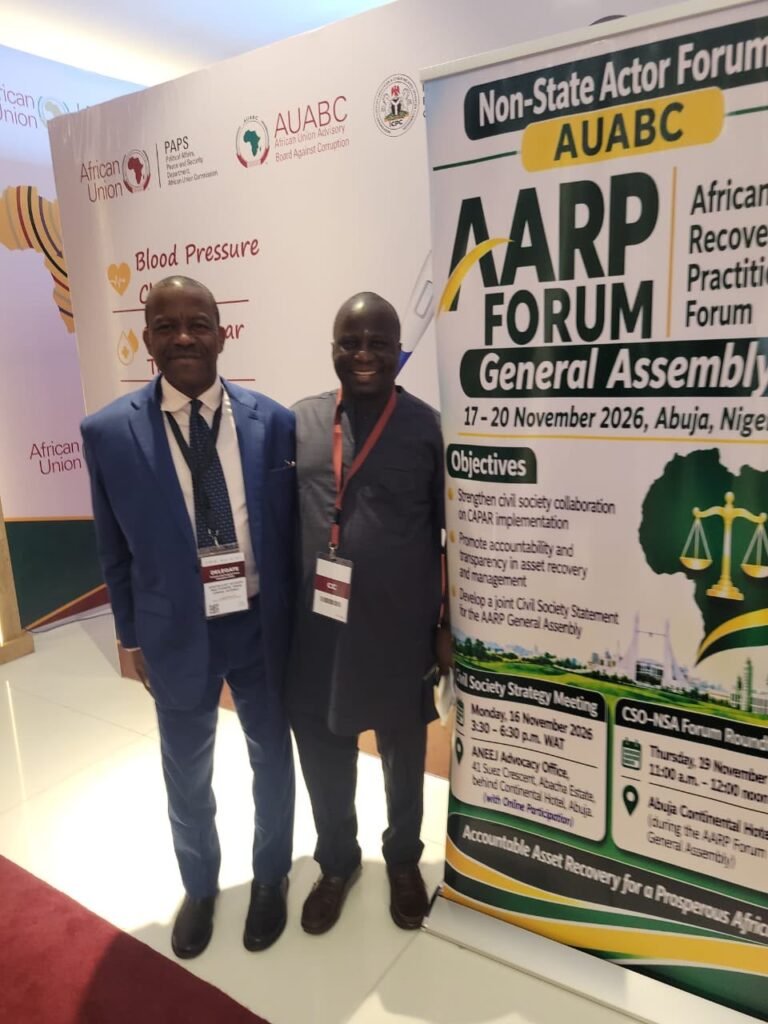
To make that possible, Deya and Ugolor called on the General Assembly to institutionalize civil society participation by requesting the AARP Secretariat, in consultation with the African Union Advisory Board Against Corruption (AUABC) and the NSA Forum, to prepare a proposed participation procedure within 90 days, consistent with the Forum’s Charter.
They also demanded strengthened transparency and reporting through the publication of information on recovered assets, management costs, disposal, return agreements, and final utilization; the inclusion of asset recovery in States Parties’ annual reports to the AUABC; and the provision of a channel for independent civil society evidence.
Beyond transparency, the signatories urged the Forum to prioritize victims. They called for affected communities to help identify priorities, monitor implementation, and verify public benefit, and insisted that oversight should extend throughout the entire asset recovery process, from tracing and recovery to management, return, and utilization.
They further demanded measurable follow-up, including the designation of an AUABC civil society engagement focal person, the convening of an initial joint meeting within 60 days, and the development of a 2027 roadmap with clear responsibilities, deadlines, and public progress updates.
In addition, Deya and Ugolor called for support for independent assessment, enabling Non-State Actors AUCPCC to contribute to the development, testing, and review of the CAPAR Assessment Tool and Reporting Template, while supporting the complementary use of CiFAR’s civil society CAPAR Assessment Tool.
They also urged the promotion of learning and responsible innovation by drawing lessons from ANEEJ’s MANTRA initiative, establishing an African Annual Conference on Asset Recovery, and exploring evaluated applications of artificial intelligence and, where appropriate, blockchain, with safeguards for privacy, due process, and human oversight.
The statement noted that the NSA Forum will facilitate collective engagement while preserving organizations’ independence and their ability to submit evidence directly to the AARP Secretariat and AUABC.
Deya and Ugolor appreciated the collaboration of CiFAR, the CAPAR CSO Network, civil society leaders, and the Chairman and members of the NSA Forum’s Interim Council. They also acknowledged the support of the AUABC Chairman, Executive Secretary, and Secretariat; the Chairman of the AARP Forum’s Interim Council; and all General Assembly delegations.
They urged the General Assembly to reflect the statement’s principal recommendations in its outcomes and Abuja communiqué, assuring that civil society remains committed to contributing credible evidence, supporting community participation, and monitoring agreed actions.
“Recovered assets must deliver justice, restore public trust and produce demonstrable public benefit,” Deya and Ugolor stated.