


By Femi Mustapha in Kaduna
Stakeholders in the health and accountability sectors have intensified calls for evidence-based budget advocacy to influence the formulation of the 2027 Kaduna State budget as part of efforts to improve health service delivery and reduce maternal and child mortality in the state.
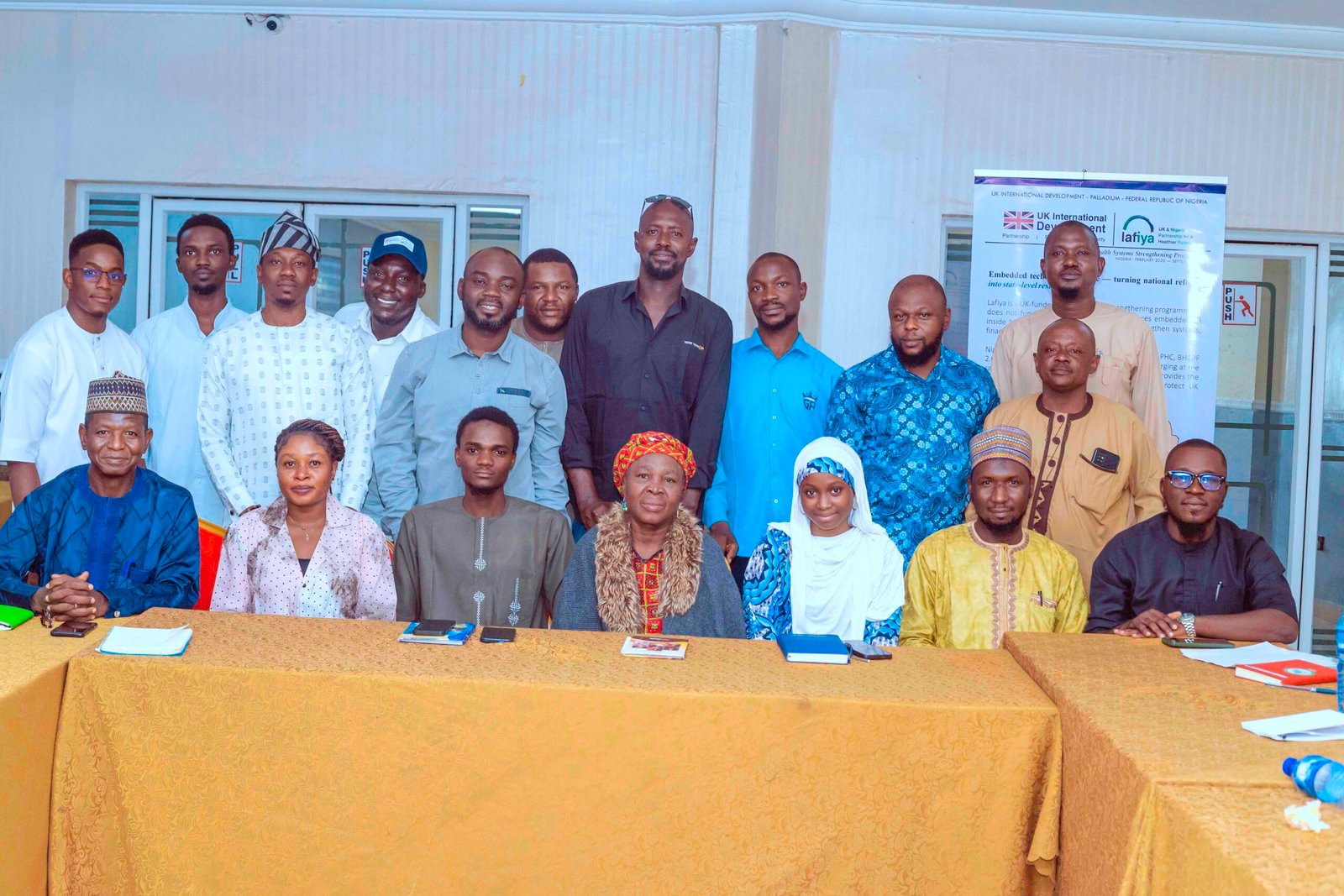
The push was made at a one-day engagement on evidence-based budget advocacy for the 2027 Kaduna State budget. The event was organized to provide technical support to the Open Government Partnership (OGP) and Sector-Level Accountability Mechanisms (SLAMs) to strengthen budget analysis, accountability, and performance tracking.
Supported by the FCDO-Lafiya Program, the engagement brought together representatives of civil society organizations, accountability mechanisms, government institutions, and development partners to analyze budget proposals and agree on a coordinated advocacy position ahead of the Executive Budget Town Hall Meeting and the Legislature’s Public Budget Hearing.
The meeting was held on Saturday, November 14, 2026, at Hotel 17 in Kaduna.
In a goodwill message, Femi Johnson, co-chair of the OGP Technical Working Group, said a budget is more than a financial document; it is a reflection of government priorities and a measure of its commitment to improving citizens’ lives.
Johnson emphasized the need for collective advocacy for adequate and sustainable financing of the health sector, with a focus on improving human resources for health, strengthening primary healthcare services, and increasing investment in sexual and reproductive health and rights (SRHR).
He noted that, beyond allocations, attention must be paid to timely releases, effective utilization of funds, and measurable improvements in healthcare delivery.
“The success of a budget is not measured by the amount allocated, but by the difference those allocations make in the lives of ordinary citizens,” Johnson stated.
He reaffirmed the OGP Technical Working Group’s commitment to strengthening collaboration among government, civil society, and development partners toward a more transparent, inclusive, and accountable governance system in Kaduna State.
Presenting a practical guide to understanding budget analysis, development expert Yusuf Ishaku Goje of KADLGAM/Civic Impact explained that budget analysis is a systematic process that enables communities to examine and compare budget choices and connect them to their real-life implications.
Goje outlined seven practical tools for budget analysis: allocation analysis, trend analysis, nominal growth rate, per capita budget, ratio analysis, comparison of budgets to costs, and comparison of budgets to expenditures.
According to him, the tools help communities ask critical questions, such as what is funded, what matters, and what changes, thereby turning budget information into a basis for public accountability.
Speaking in an interview after his presentation, Danjuma Abbas Danguwa, an advisor with the Kaduna Local Government Accountability Mechanism, said the engagement was prompted by critical gaps discovered in the health sector.
Danguwa disclosed a 57 percent deficit in the human resources for health needed in Kaduna State, describing the figure as disturbing.
“We are also seeing very low performance in sexual and reproductive health, where budget performance has been reviewed downward in recent times based on reports released,” he said.
He explained that the group is preparing to engage the executive arm of government on the approved estimates it will soon present to the public and the State House of Assembly, regarding what should be appropriated for health in line with community priorities.
Danguwa said the outcome of the engagement would be to collate findings from fact-finding reports, spot checks, and service delivery gaps in public and private healthcare, including contributory health schemes, to ensure the budget performs and meets the expectations of the people of Kaduna.
“We want to see that the budget addresses child mortality, maternal mortality, and improves the life expectancy of the people of Kaduna State,” he added.
Also speaking, Mr. Solomon Chanan Solomon, a human resources for health consultant with the Lafiya program, supported by the Foreign, Commonwealth and Development Office (FCDO), commended stakeholders for their commitment to citizen engagement.
Solomon noted that citizen engagement remains one of the top priorities of the Lafiya program in Kaduna and beyond. He appreciated participants for their sacrifices and sleepless nights in tracking health indicators and supporting accountability.
“Some of you have sleepless nights, some of you sacrifice a whole lot. I don’t think our engagement will pay you enough for that. Since we are working as partners, I will use this platform to appreciate every one of us for keeping up the time and being committed,” he said.
The convener of the meeting, Mr. Luke Seth Kuyet, said the engagement was designed to equip OGP and SLAM representatives to analyze budget proposals and agree on a coordinated health sector advocacy position on human resources for health, SRHR, and other priority interventions.
Stakeholders at the meeting resolved to sustain engagement beyond budget formulation and continue through effective monitoring of implementation, moving from advocacy to influence, from commitments to implementation, and from budgetary allocations to improved service delivery for the people of Kaduna State.