


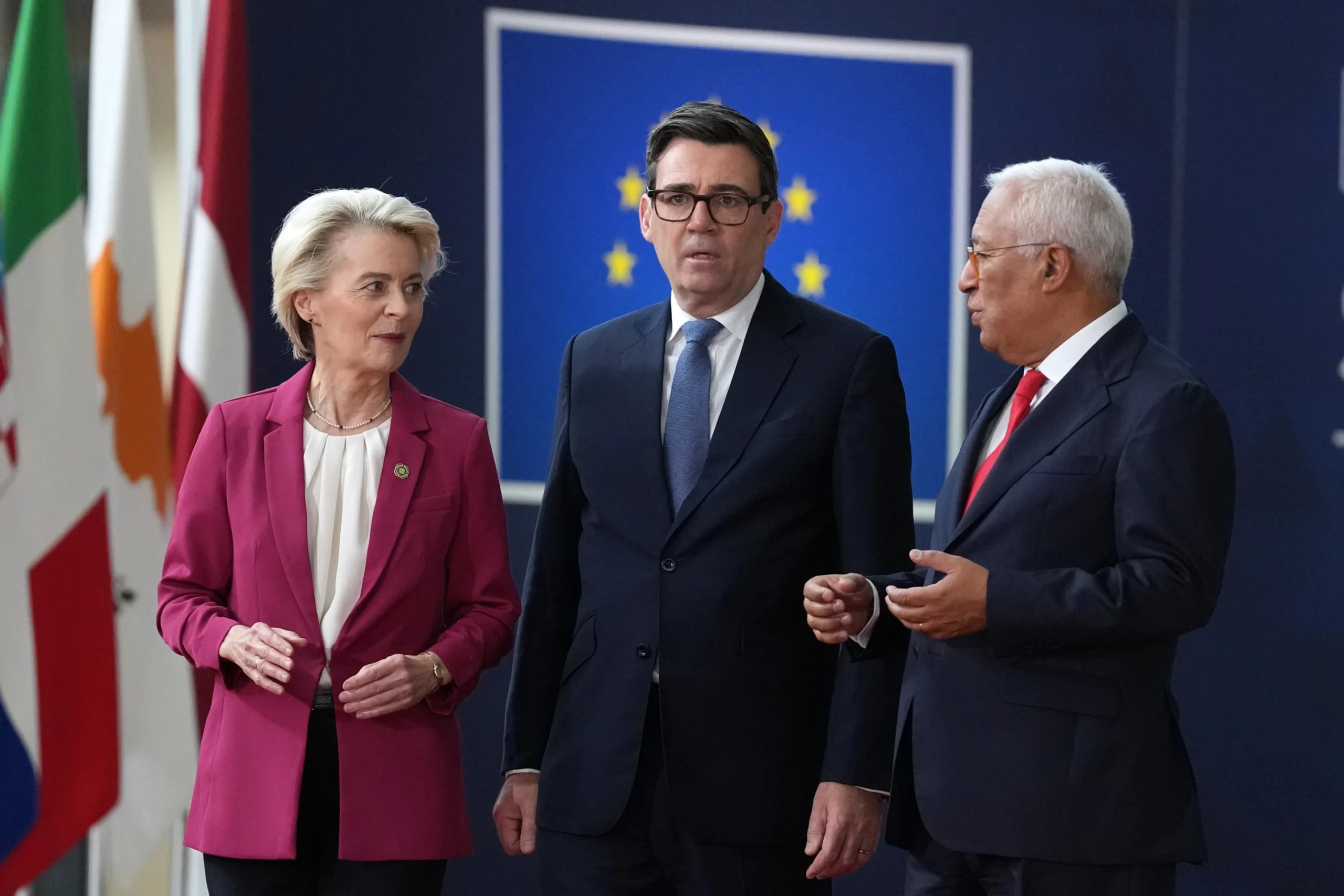
The United Kingdom and the European Union have reached agreements on trade, youth mobility and emissions trading as part of efforts to rebuild relations following Brexit, after Prime Minister Andy Burnham met European leaders at a summit in Brussels on Friday, November 20.
Downing Street confirmed that negotiations on the reset package had concluded, describing the agreements as steps towards strengthening economic cooperation and reducing barriers between Britain and the 27-member European Union.
Burnham met European Commission President Ursula von der Leyen and European Council President António Costa during the second UK-EU summit since Britain formally left the bloc.
The agreements cover three major areas: trade in food and agricultural products, a youth mobility scheme and the linking of the UK and EU emissions trading systems.
Under the proposed youth mobility arrangement, up to 100,000 young people from each side will be allowed to live, work, study and travel in the other territory for up to three years. The scheme is intended to restore some opportunities for younger Britons and Europeans that were lost following the end of free movement after Brexit.
The food and agricultural agreement is expected to reduce checks and paperwork involved in moving animal and plant products between the UK and EU. The arrangement is designed to make exports easier for farmers and food businesses while reducing trade costs.
The two sides have also agreed to link their emissions trading systems, a move expected to improve cooperation on climate policy and reduce certain carbon-related trade barriers affecting businesses operating across both markets.
However, the agreements have been overshadowed by a disagreement over university tuition fees for European students studying in the United Kingdom.
The European Union wants its students to receive the same tuition fee treatment as British students, rather than paying the higher international rates currently charged to many overseas students.
Although both sides have agreed to continue negotiations on the issue over the next six months, EU officials have indicated that the wider package should be treated as a group of connected agreements.
According to reports from Brussels, the EU considers the tuition fee arrangement an important part of the overall settlement, while the British Government has maintained that negotiations on the three principal agreements have concluded.
A Downing Street spokesperson said the deal had been completed and that both sides would now work towards implementing the youth mobility, food and drink, and emissions trading arrangements. The government also said the agreed implementation timelines would be contained in a joint statement.
The disagreement means that, despite the announcement of an agreement, important questions remain over when all the measures will take effect.
Burnham said the summit was intended to deliver practical benefits for British households, businesses and young people. He has argued that closer cooperation with Europe could help reduce costs, improve trade and create economic opportunities.
The British prime minister has also reopened discussion about the country’s long-term relationship with the EU, including the possibility of eventual membership. However, he has stressed that rejoining the bloc is not an immediate policy commitment and that different options for future relations should be considered.
The summit comes nearly a decade after the 2016 Brexit referendum, in which British voters chose to leave the European Union. The UK’s departure formally took effect in January 2020, while the transition period ended in December of the same year.
Since then, businesses on both sides have faced additional trade procedures, while the loss of free movement has changed opportunities for workers, students and travellers.
The EU and UK have continued to cooperate on security and defence, particularly in response to Russia’s war against Ukraine. Burnham also attended a meeting of the Coalition of the Willing in Berlin on Thursday, where he announced a £260 million support package for Ukraine, including 1,000 long-range drones.
Despite the progress announced in Brussels, the reset agreement does not amount to Britain reversing Brexit or returning to the EU single market.
Further negotiations are expected to address unresolved issues, including tuition fees, the UK’s relationship with European manufacturing initiatives and broader cooperation on security, migration and energy.
The outcome of the summit represents a new phase in post-Brexit relations, but the extent of the reset will depend on how quickly both sides resolve outstanding disagreements and implement the agreements reached.