


By TheDailyNewsHub News Desk | October 1, 2026
Presidential candidate of the Nigeria Democratic Congress (NDC), Peter Obi, has promised that Nigerians would begin to experience tangible improvements in their lives within the first year of his administration if elected president in the 2027 general election.
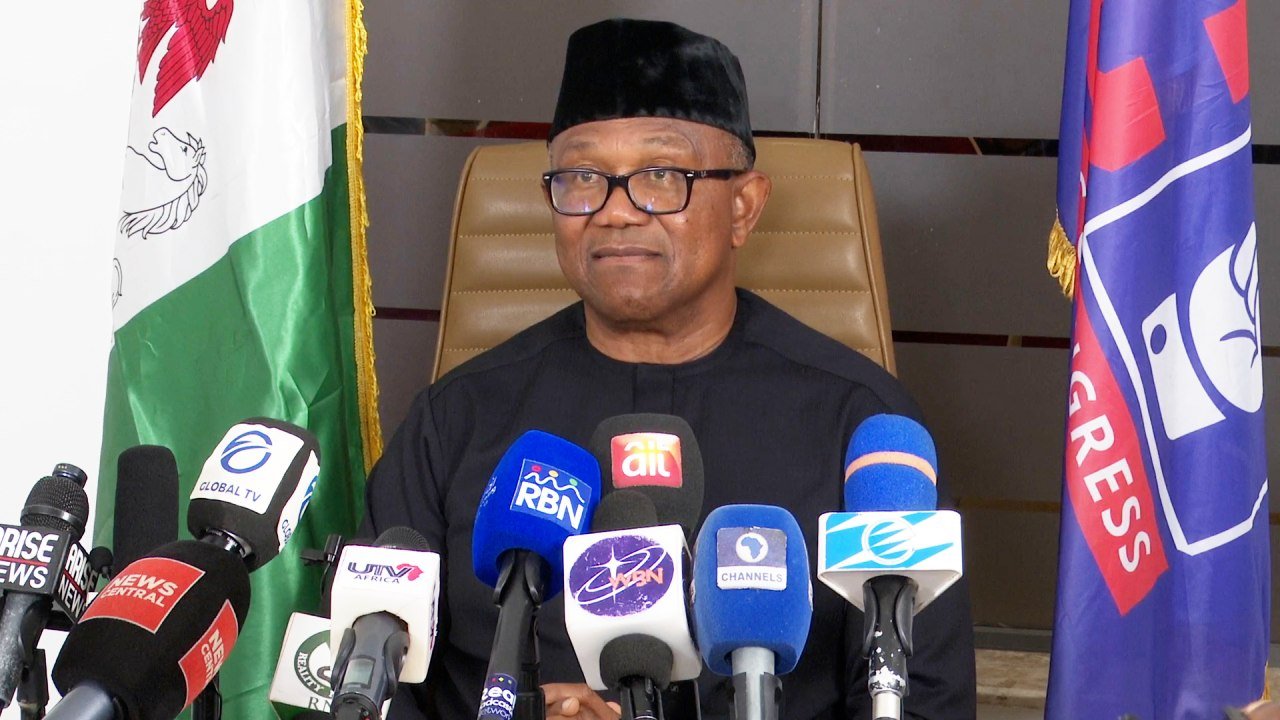
Obi made the commitment in his Independence Day address on Thursday, October 1, 2026, in which he outlined his proposed approach to governance, focusing on security, education, healthcare, job creation and economic productivity.
The former Anambra State governor said his administration would make governance measurable and accountable, with public policies and resources directed towards improving the welfare and productivity of citizens.
“My message today is not one of despair. It is a message of hope, determination and responsibility. I dare to proclaim with full assurance that a new Nigeria is possible,” Obi said.
He added: “As President of Nigeria, I will make governance measurable, accountable and centred on the welfare and productivity of our people. Within the first year, Nigerians will begin to see the tangible impact of purposeful and effective leadership.”
Obi identified insecurity as one of the major challenges requiring urgent attention, arguing that farmers, businesses, students and families could not reach their full potential in an environment where people lived under constant threat.
He pledged to confront insecurity to enable farmers to return to their farms, children to resume schooling and businesses to operate without fear.
He also promised to work towards the safe return of Nigerians displaced by violence to their communities, saying citizens should not be forced to remain in internally displaced persons (IDP) camps because of the failure to provide adequate security.
“No Nigerian should be forced to live in an IDP camp because his or her government has failed to provide security,” he said.
The NDC candidate’s address also placed emphasis on changing the structure of the Nigerian economy from what he described as consumption-driven to one built around production, job creation, agriculture, manufacturing and investment in human capital.
He argued that Nigeria’s development challenges were not primarily caused by a shortage of natural or human resources, but by the country’s inability to translate those resources into better living conditions, economic opportunities and shared prosperity.
According to him, education, healthcare, security and productive enterprise should be treated as essential foundations of national development rather than optional areas of government spending.
Obi also referred to a recent visit to Sokoto State with his running mate, Senator Rabiu Musa Kwankwaso, during which they visited the Ramin Kura internally displaced persons camp in Sokoto metropolis.
He said the visit exposed them to the difficult conditions facing displaced women and children, including challenges relating to education, healthcare and the loss of livelihoods.
Obi described the situation as an indication of the wider difficulties experienced by communities affected by insecurity across the country. He said people displaced from their homes should instead be able to live in their communities, send their children to school, farm their land and participate in economic activities.
He further listed poverty, food insecurity, unemployment, underemployment, drug abuse, maternal and infant mortality, poor health outcomes and the number of out-of-school children among the issues confronting Nigeria.
Beyond policy commitments, Obi said he would lead by example if elected, pledging not to spend his holidays outside Nigeria during his four-year tenure.
He named Zamfara, Borno, Kwara, Ebonyi, Edo and Ekiti among the states he intended to visit during his holidays, explaining that he wanted to spend time with citizens, understand their challenges and appreciate their resilience.
The pledge, he said, was part of his proposed approach to leadership, which he described as a responsibility requiring direct engagement with Nigerians rather than governance detached from their everyday experiences.
Obi also called on citizens to demand accountability from public officials, insisting that national development would require more than political promises and prayers.
“The Nigeria we desire will not be built by prayers alone, nor by promises alone. It will be built by leadership that understands that public office is a sacred trust, by citizens who demand accountability, and by all of us who refuse to accept failure as our destiny,” he said.
The October 1 address comes as political parties and candidates prepare for the 2027 general election. Obi, who emerged as the NDC’s presidential candidate in May, has been involved in preparations for the party’s campaign structure alongside Kwankwaso.
TheDailyNewsHub had earlier reported on the party’s preparations to establish its presidential campaign council and the roles assigned to Obi and Kwankwaso in shaping the campaign leadership.
While Obi’s address sets out the priorities he says his administration would pursue if elected, the proposed one-year timeline remains a campaign pledge. Its delivery would depend on the policies adopted, resources available, institutional capacity and the results of any administration he may lead.