


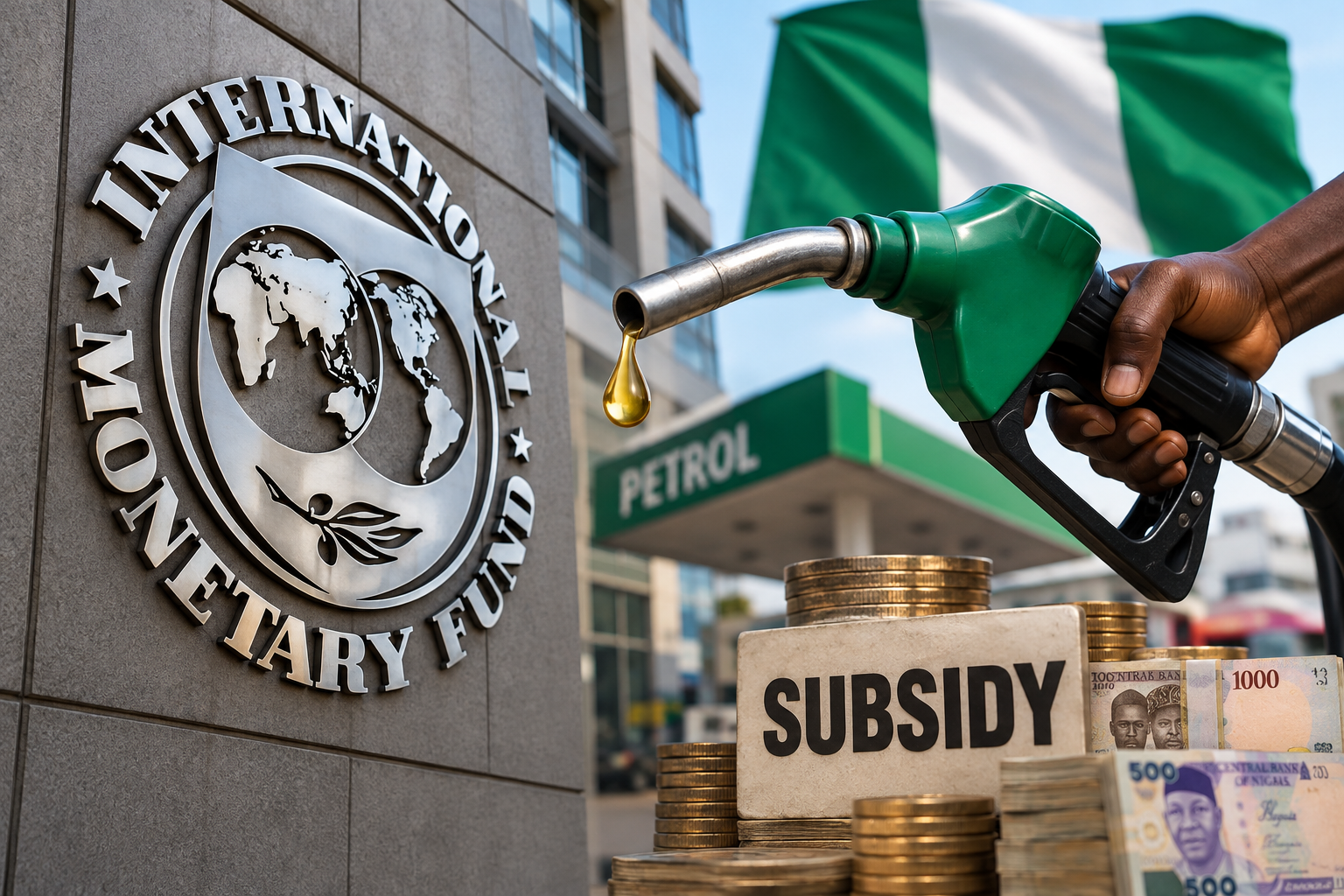
The International Monetary Fund (IMF) has advised Nigeria against restoring a broad petrol subsidy, urging the Federal Government to provide targeted assistance to vulnerable households as rising energy costs put additional pressure on living standards.
Rodrigo Valdés, Director of the IMF’s Fiscal Affairs Department, gave the advice during a press briefing on the Fund’s Fiscal Monitor at the 2026 Annual Meetings of the IMF and World Bank Group in Bangkok, Thailand, on Wednesday, October 14.
His comments followed a question about the consequences of allowing fuel prices to reflect market conditions in countries such as Nigeria, where higher petrol prices can increase transport costs, fuel inflation and deepen economic hardship. The question also referenced calls for the government to restore the subsidy ahead of the 2027 election year.
Valdés argued that governments should focus on protecting people affected by higher energy prices rather than keeping fuel prices low for all consumers.
“Protecting people is not the same as protecting the price of fuels,” he said, during the briefing.
The IMF official said broad fuel subsidies and other measures that prevent energy prices from adjusting fully to supply shocks can be expensive for governments. He put the fiscal cost of such measures across countries at between one and 1.5 per cent of gross domestic product in 2026.
Rather than subsidising petrol prices universally, Valdés recommended using social safety nets and household data to identify people most in need of assistance. Such an approach, he said, would enable governments to direct limited public resources towards households most exposed to higher energy costs.
The warning comes amid renewed debate in Nigeria over how to cushion the effects of rising petrol prices following the removal of the longstanding subsidy under President Bola Tinubu’s administration in 2023.
The policy change was intended to reduce the government’s fuel subsidy burden and free up resources for other public priorities. However, higher transport and operating costs have continued to weigh on households and businesses, strengthening calls for additional relief measures.
The IMF has acknowledged that Nigeria continues to face significant social and economic challenges despite improvements in some macroeconomic indicators. In its 2026 Article IV assessment, published in June, the Fund warned that higher global fuel, food and fertiliser prices could increase inflationary pressures and aggravate poverty and food insecurity.
The debate has become more immediate as the Federal Government pursues measures to moderate the impact of rising fuel costs. The government recently announced a temporary 30-day petrol discount at Nigerian National Petroleum Company Limited retail stations, with priority for public transport operators.
That temporary discount is distinct from a full restoration of the former broad subsidy regime. A targeted discount or support programme can be limited by duration, eligibility or beneficiary group, while a general price subsidy seeks to reduce the price paid by consumers more widely.
The distinction matters because any return to broad fuel subsidies would have implications for public spending at a time when Nigeria is also under pressure to finance infrastructure, social services and other development priorities.
The IMF’s position does not rule out government intervention to ease the effects of higher energy prices. Rather, it favours assistance directed at vulnerable households instead of measures that benefit all fuel consumers regardless of income.
Implementing that approach, however, depends on the government’s ability to identify eligible beneficiaries, deliver support reliably and ensure that assistance reaches households facing the greatest hardship. Poor targeting, gaps in household data and weaknesses in delivery systems can limit the effectiveness of social protection programmes.
For Nigeria, the policy challenge is therefore how to balance fiscal sustainability with immediate relief for households and businesses affected by expensive petrol. The government faces pressure to prevent rising transport and production costs from worsening living conditions, while avoiding a subsidy structure that could place renewed strain on public finances.
Valdés’ remarks underline the IMF’s continued preference for targeted social protection over broad energy-price subsidies as governments respond to the latest energy shock.