


By TheDailyNewsHub Reporter
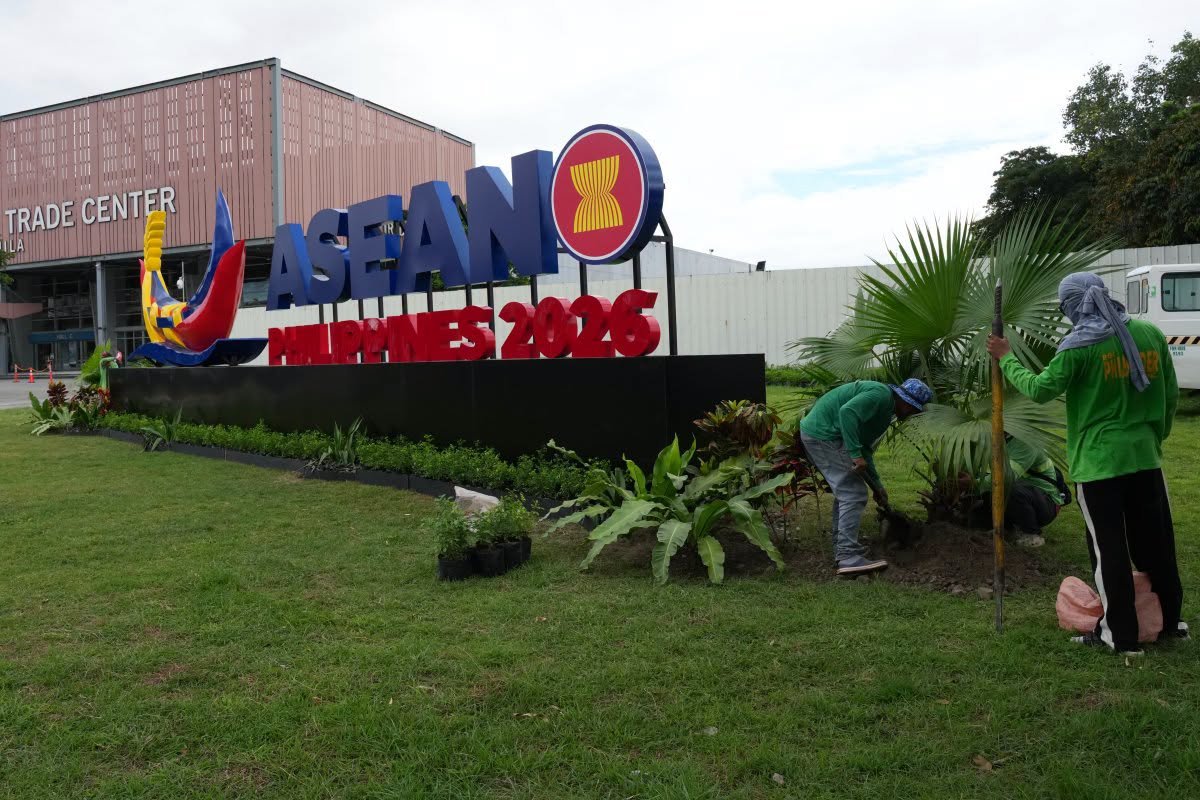
Southeast Asian leaders are preparing to meet in Manila, the Philippine capital, for the 49th Association of Southeast Asian Nations (ASEAN) Summit, with growing uncertainty over United States trade policies expected to feature prominently in discussions.
The three-day gathering, scheduled for November 15 to 17, comes as US President Donald Trump begins an Asia-Pacific trip that will include meetings with regional leaders and a visit to China for the Asia-Pacific Economic Cooperation (APEC) summit.
The timing has placed ASEAN’s economic and diplomatic priorities under renewed scrutiny, particularly as several member countries face the consequences of Washington’s changing tariff policies and the possibility of additional trade restrictions.
Trump is expected to meet Philippine President Ferdinand Marcos Jr. in Manila on November 17 before travelling to Shenzhen, China, for the APEC summit, where he is scheduled to hold talks with Chinese President Xi Jinping.
The US president’s visit comes months after his administration introduced new import duties on dozens of trading partners, including several Southeast Asian economies. The tariffs, announced in July, range between 10 and 12.5 per cent following a February ruling by the US Supreme Court that struck down earlier, higher reciprocal tariffs.
The Trump administration said the new duties were linked to concerns about forced labour practices among its trading partners. Washington has also initiated investigations into alleged national security risks and excess manufacturing capacity, developments that could lead to further trade measures affecting countries in the region.
Although Southeast Asian exports to the United States have continued to expand, analysts warn that the region’s current performance may not be sustainable if Washington introduces additional sector-specific tariffs or restrictions.
US imports from ASEAN increased by more than 29 per cent to $453.6 billion in 2025, according to figures from the Office of the US Trade Representative. The increase also widened the US trade deficit with the regional bloc to $327.4 billion.
However, much of the export growth has been driven by electronics shipments, which have benefited from exemptions from some tariff measures and rising demand associated with the global expansion of artificial intelligence infrastructure.
Trade policy specialist Deborah Elms, head of the Hinrich Foundation in Singapore, warned that the region could face greater pressure if demand for electronics weakens or Washington extends its restrictions to additional sectors.
Jayant Menon, a senior fellow at the ISEAS-Yusof Ishak Institute, also cautioned that Southeast Asian countries should not assume the current trade environment will remain favourable, pointing to the possibility of further tariffs and export controls.
For ASEAN, the challenge is to maintain access to major international markets while strengthening economic cooperation among its own members. The bloc has long promoted regional integration, but trade between its member countries remains relatively limited compared with other major economic groupings.
Intraregional trade accounts for approximately 23 per cent of ASEAN’s total trade, compared with more than 67 per cent within the European Union, according to estimates cited in discussions ahead of the summit.
Leaders are therefore expected to renew calls for stronger regional commerce and improved cooperation in areas such as digital services, investment and cross-border payments.
One anticipated outcome is progress on the ASEAN Digital Economy Framework Agreement, an initiative launched in 2023 to make digital trade easier through improved rules for cross-border data transfers, electronic payments and other digital services.
The agreement is intended to support the development of a regional digital economy estimated to reach $2 trillion by 2030. Its implementation could help businesses operate more easily across ASEAN markets and strengthen the bloc’s competitiveness in the global digital economy.
Beyond trade, the summit will address a range of regional and international challenges, including the conflict in Myanmar, tensions in the South China Sea, rising energy costs and the economic consequences of conflicts in the Middle East.
Higher oil prices have placed additional pressure on countries that depend heavily on imported energy. Philippine President Ferdinand Marcos Jr. has called for collective action to address rising costs, regional security concerns and the threat of an approaching El Niño weather phenomenon.
Energy security is expected to feature prominently, with discussions including proposals for greater regional cooperation and a possible shared oil stockpile.
The meetings will also provide an opportunity for ASEAN leaders to engage with major international partners, including the United States, China and Japan, as the region seeks to manage competing economic and strategic interests.
The Philippines currently holds ASEAN’s rotating chairmanship and is hosting the summit before handing over the leadership to Singapore.
Trump’s participation is expected to attract particular attention because of the economic relationship between Washington and Southeast Asia, as well as the region’s efforts to maintain constructive relations with both the United States and China.
For ASEAN governments, the central concern is not only the immediate impact of existing US tariffs but also the uncertainty surrounding Washington’s next trade decisions. The outcome of the Manila meetings and Trump’s subsequent discussions in China could offer further indications of how trade relations in the Asia-Pacific region may develop.