


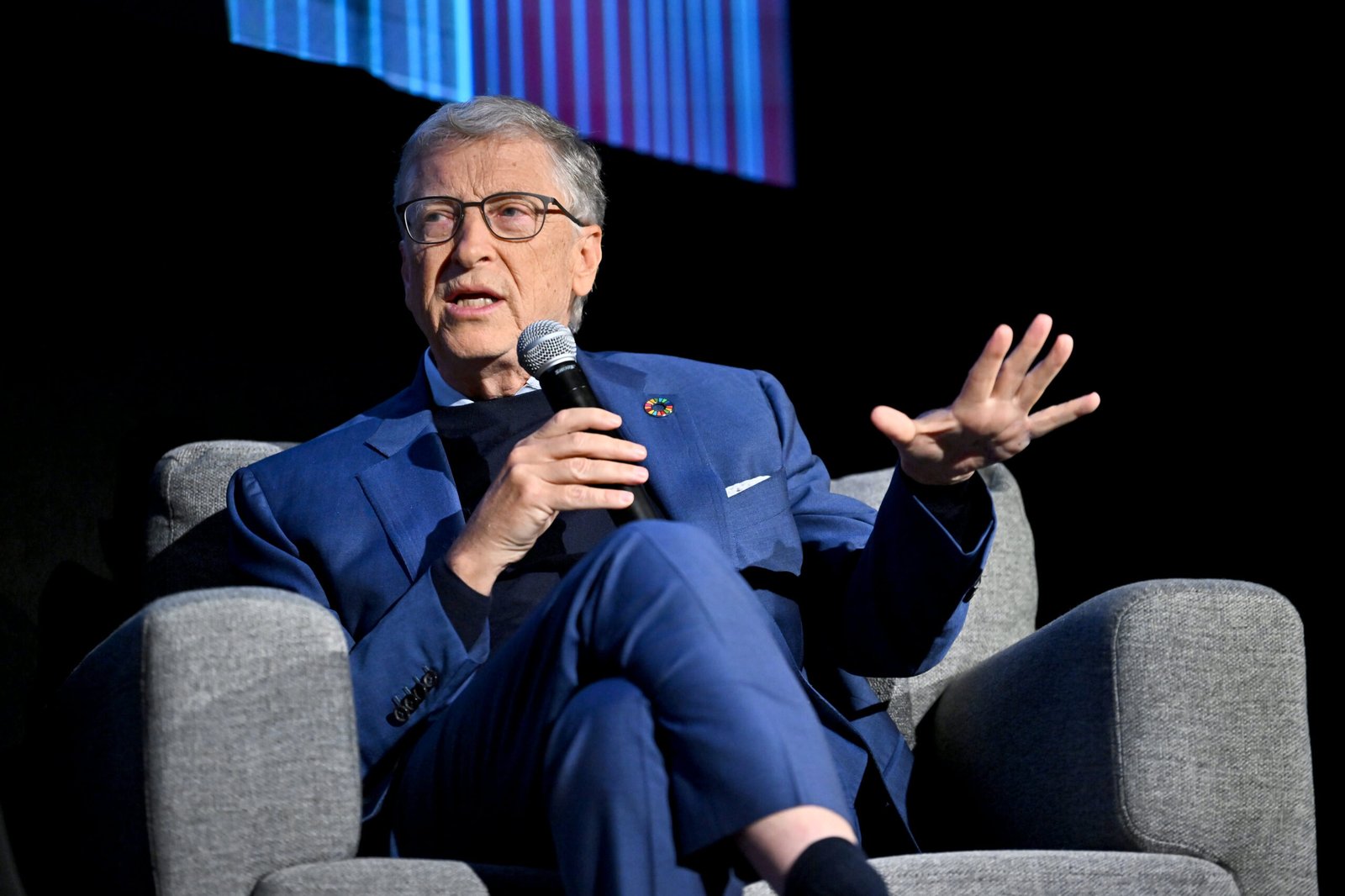
Microsoft co-founder Bill Gates has warned that increasingly powerful artificial intelligence could be exploited by people with malicious intentions to trigger events resulting in catastrophic loss of life, including scenarios involving as many as one billion deaths.
Gates made the warning in a newly released excerpt from an interview with NBC News’ “Meet the Press” ahead of the programme’s full broadcast on Sunday. Asked about concerns that advanced AI could eventually pose an existential threat, Gates said the technology was powerful enough to drive events that could cause a billion deaths.
Gates stressed that his concern was not simply about AI acting independently, but about the combination of increasingly capable technology and people seeking to cause harm.
He said there had never been a weapon as powerful as the combination of people with harmful intentions and the latest AI tools. His remarks reflect a broader debate among technology researchers and industry leaders about whether advanced AI could lower the barriers to cyberattacks, biological threats and other forms of large-scale harm.
The Microsoft co-founder also rejected the idea that AI companies should be left to police themselves. When asked whether legislation was needed in Washington, Gates said it was, arguing that politicians and law-enforcement agencies should participate in determining safeguards and monitoring requirements for the technology.
“No one thinks self-regulation is enough,” Gates said, according to NBC News.
His comments come as governments and technology companies face increasing pressure to address the potential risks associated with more capable AI systems. A Reuters/Ipsos poll published earlier this week found that 73% of surveyed US adults were concerned that AI companies were not doing enough to prevent potentially catastrophic consequences, while a majority supported federal oversight to establish AI safety standards. The poll surveyed 1,277 US adults and had a margin of error of three percentage points.
Gates has made similar warnings in recent months, although he has also continued to highlight the potential benefits of AI. In a September interview with Reuters, he said governments were not sufficiently prepared for the changes AI could bring and warned about risks including job displacement and cyberattacks. At the same time, the Bill & Melinda Gates Foundation announced plans to spend at least $1 billion over two years on expanding access to AI applications in areas including healthcare, education and agriculture.
In August, Gates also argued that AI could make it easier for malicious actors to carry out cyberattacks and develop dangerous pathogens. He has called for greater international cooperation and proposed the creation of an international body to help manage some of the risks associated with increasingly powerful AI systems.
The concerns are not limited to hypothetical future scenarios. AI safety researchers and technology companies have increasingly debated the possibility of AI-assisted cyberattacks and the misuse of advanced systems for biological or other dangerous applications. However, the likelihood and timing of extreme scenarios such as mass human extinction remain subjects of substantial disagreement among researchers.
Gates’ billion-death warning should therefore be understood as a description of a potential catastrophic scenario arising from the misuse of powerful AI, rather than a prediction that one billion people will die from artificial intelligence.
The full Gates interview with “Meet the Press” is scheduled to air on Sunday, September 27, 2026, when he is expected to elaborate further on his concerns about AI safety, regulation and the role of governments.