


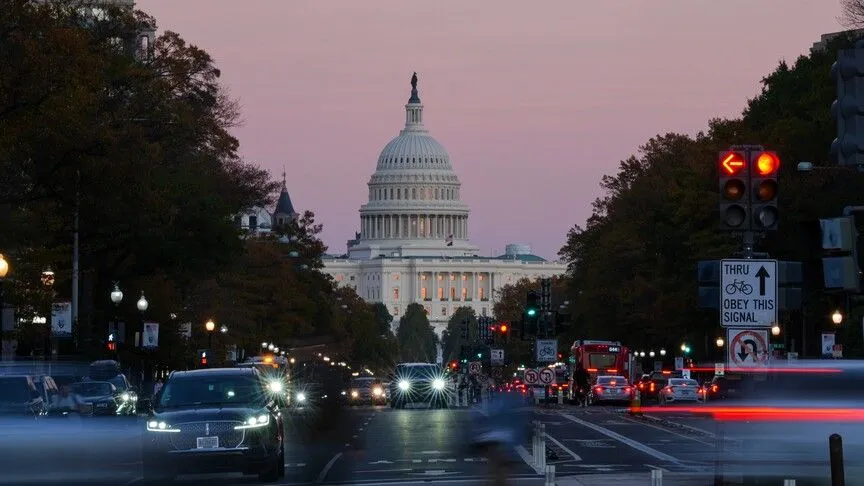
The Democratic Party has secured at least 258 seats in the United States House of Representatives, giving it the largest congressional majority won by either party in a general election in more than three decades.
The milestone was reached on Sunday, November 22, following Democrat Chuck Hubbard’s victory over Republican incumbent Virginia Foxx in North Carolina’s 5th Congressional District.
Hubbard’s victory increased the Democratic tally to 258 seats in the 435-member House, surpassing the party’s 257-seat result in the 2008 election and matching its 1992 performance.
According to reports by the Associated Press, four House races remained unresolved, meaning the Democratic total could still increase as the remaining results are determined. Republicans had secured at least 173 seats.
The outcome represents a major shift in the balance of power in Washington, with Democrats also securing control of the Senate following the November 3 midterm elections.
The victories mean the party will control both chambers of Congress when the new legislative session begins in January 2027, while Republican President Donald Trump remains in the White House.
North Carolina victory delivers historic milestone
Hubbard’s victory came after a closely contested race against Foxx, who had represented North Carolina in the House since 2005 and previously chaired the House Rules Committee.
The contest attracted national attention, particularly after the initial results prompted a recount.
Following the recount, Hubbard emerged victorious, with Foxx conceding the election and congratulating her challenger.
The result added another Republican-held seat to the Democrats’ growing congressional majority and reinforced the scale of the party’s gains during the midterm elections.
Democrats have gained 44 seats so far, exceeding the 40 seats they won during President Trump’s first midterm election in 2018.
House Democratic Leader Hakeem Jeffries celebrated the development, describing it as the largest majority any party had secured in the US Congress during the 21st century.
The new majority also places Jeffries in line to become the first Black Speaker of the House when the 120th Congress convenes, subject to a vote by members of the chamber.
Voter concerns shaped the midterm outcome
The Democratic gains followed an election campaign dominated by concerns about the cost of living, economic conditions, immigration, government accountability and the administration’s handling of the conflict involving Iran.
Several Republican candidates lost in districts that had previously been considered relatively safe for the party, while Democrats recorded victories across different regions of the country.
Reports by US media attributed the scale of the Democratic gains partly to voter dissatisfaction with rising living costs, President Trump’s economic policies and the consequences of the war against Iran, which contributed to higher fuel prices.
However, the results also reflect individual state and district contests, with local candidates and campaign issues playing important roles in determining outcomes.
The party’s success has created an opportunity for Democrats to pursue their legislative priorities while increasing congressional scrutiny of the Trump administration.
Democrats prepare to exercise congressional control
With control of both chambers, Democrats are preparing an agenda focused on economic affordability, healthcare and oversight of the federal government.
Party leaders have indicated that they intend to examine decisions and activities of the Trump administration, using congressional investigative powers to scrutinise government policies and spending.
They have also discussed efforts to reverse Republican-backed reductions to Medicaid and restore Affordable Care Act tax credits that were allowed to expire.
Jeffries is expected to lead the House Democrats as they assume the majority, while Republican lawmakers prepare to operate as the minority party.
Republican Representative Jim Jordan has vowed that his party will continue to challenge the incoming Democratic leadership and work towards regaining congressional control.
Despite the scale of the Democratic victory, the party will face the challenge of managing a diverse caucus whose members may not agree on every legislative priority.
The remaining House races, including contests heading to December runoffs in Louisiana, will determine whether the Democratic majority expands beyond its current 258 seats.
The outcome also places additional political pressure on Democrats to demonstrate progress on their campaign promises ahead of the next major federal election cycle.
TheDailyNewsHub previously reported on Elon Musk’s reaction to Republican defeats in the 2026 US midterm elections, as well as his admission that he regretted spending hundreds of millions of dollars supporting Republican candidates.
With the new Congress scheduled to begin in January, the Democratic victories are expected to reshape legislative priorities and oversight of the Trump administration for the remainder of the president’s second term.