


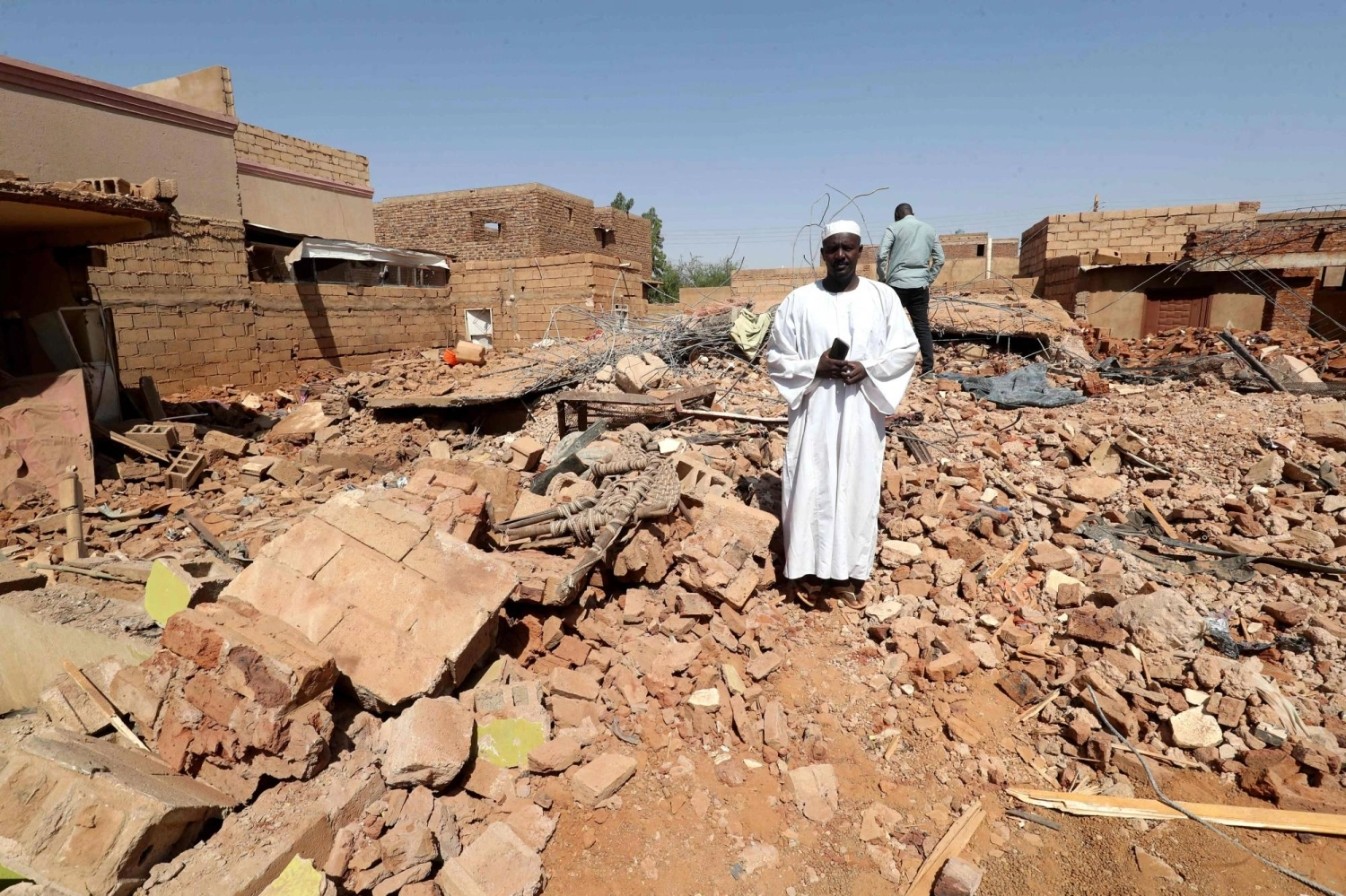
Drone strikes have hit residential neighbourhoods and damaged a United Nations facility in Sudan’s capital, Khartoum, raising fresh concerns about the safety of civilians and humanitarian workers as the country’s war continues.
The attacks occurred in the early hours of Sunday, November 22, with explosions reported around Khartoum airport and other parts of the city between approximately 2:00 a.m. and 4:30 a.m. local time.
Witnesses said several residential areas were affected, including a house that was completely destroyed. Images from the scene showed a building reduced to rubble, with household belongings scattered across the area.
One resident, Al-Nour Adam, told Agence France-Presse that he found an injured person inside a damaged house after the strike. The victim had sustained injuries to the left arm, chest and head.
Adam described the attacks as indiscriminate, warning that residents could be struck while sleeping or going about their daily activities.
Another resident, Yasser Hassan, said some of the people affected had only recently moved into the house after struggling to find accommodation. He questioned where civilians could seek safety as residential communities continued to come under attack.
The United Nations confirmed that one of its premises in Khartoum was damaged during the strikes while UN personnel were inside the building.
In a statement issued on Sunday, UN Resident and Humanitarian Coordinator in Sudan, Denise Brown, said the attack occurred in a civilian neighbourhood and condemned the danger posed to humanitarian workers.
“Civilians are not a legitimate target in a war,” Brown said, stressing that humanitarian personnel and their facilities are protected under international humanitarian law.
She added that UN humanitarian workers were in Sudan to assist people across the country and described the risks they faced as unacceptable.
The UN did not identify those responsible for the attack or provide details about the extent of the damage to its premises.
Sudanese military sources, however, alleged that the drones were launched from Ethiopia’s Bahir Dar airport. An army source told AFP that the attack represented a continuation of what it described as Ethiopian aggression against Sudan.
Sudan has repeatedly accused Ethiopia of allowing its territory to be used for attacks linked to the conflict. Ethiopia has denied the allegations, and the latest claims about the launch location have not been independently verified.
Reports also indicated that drones targeted areas around Khartoum airport and other locations in the capital, with Sudanese air defences attempting to intercept them.
Sudan Tribune reported that at least four people were killed in drone attacks across Khartoum on Sunday. It said three members of the same family were killed when a drone struck their home in the north-western outskirts of Omdurman, while another child was reportedly killed in an attack in Jebel Aulia, south of the capital.
The casualty figures have not been fully reconciled across the available reports, and authorities had not released a comprehensive official account of the attacks.
The strikes come as drone warfare becomes increasingly prominent in Sudan’s conflict between the Sudanese Armed Forces and the paramilitary Rapid Support Forces (RSF), which began in April 2023.
Both sides have increasingly deployed drones capable of striking targets hundreds of kilometres away, exposing civilian communities and critical infrastructure to attacks far from the main battlefronts.
A recent report by the United Nations Human Rights Office warned that drone attacks were causing a growing number of civilian casualties. According to the UN, more than 1,100 people were killed by drone strikes during the first half of 2026.
The civilian impact has been particularly severe for children. UNICEF warned earlier this month that approximately two-thirds of children killed or injured in Sudan between January and September 2026 were casualties of drone attacks. The agency reported that 410 children were killed or injured during the period, with about 270 casualties linked to drones.
The latest attacks also highlight the continuing vulnerability of Khartoum despite the Sudanese army’s recapture of the capital from the RSF in May 2025. Although thousands of residents have returned, insecurity and attacks on civilian infrastructure remain major concerns.
The war has displaced millions of people, disrupted essential services and contributed to widespread hunger. Humanitarian organisations have repeatedly warned that attacks on residential areas, electricity facilities, health services and aid operations are worsening conditions for civilians.
The damage to the UN facility is particularly concerning because humanitarian personnel and infrastructure are protected under international humanitarian law. The UN has repeatedly called on both parties to the conflict to protect civilians and ensure safe access for humanitarian organisations.
As investigations into Sunday’s attacks continue, the question of who launched the drones remains unresolved. The allegations involving Ethiopia have also raised concerns about the possibility of the conflict extending further into the region.
For civilians in Khartoum, however, the immediate concern remains personal safety, as renewed drone attacks threaten homes, families and the humanitarian workers trying to assist people affected by the war.
TheDailyNewsHub previously reported on UNICEF’s warning that drone strikes were responsible for two-thirds of child casualties in Sudan, highlighting the growing danger posed by unmanned weapons to children and other civilians across the country.