


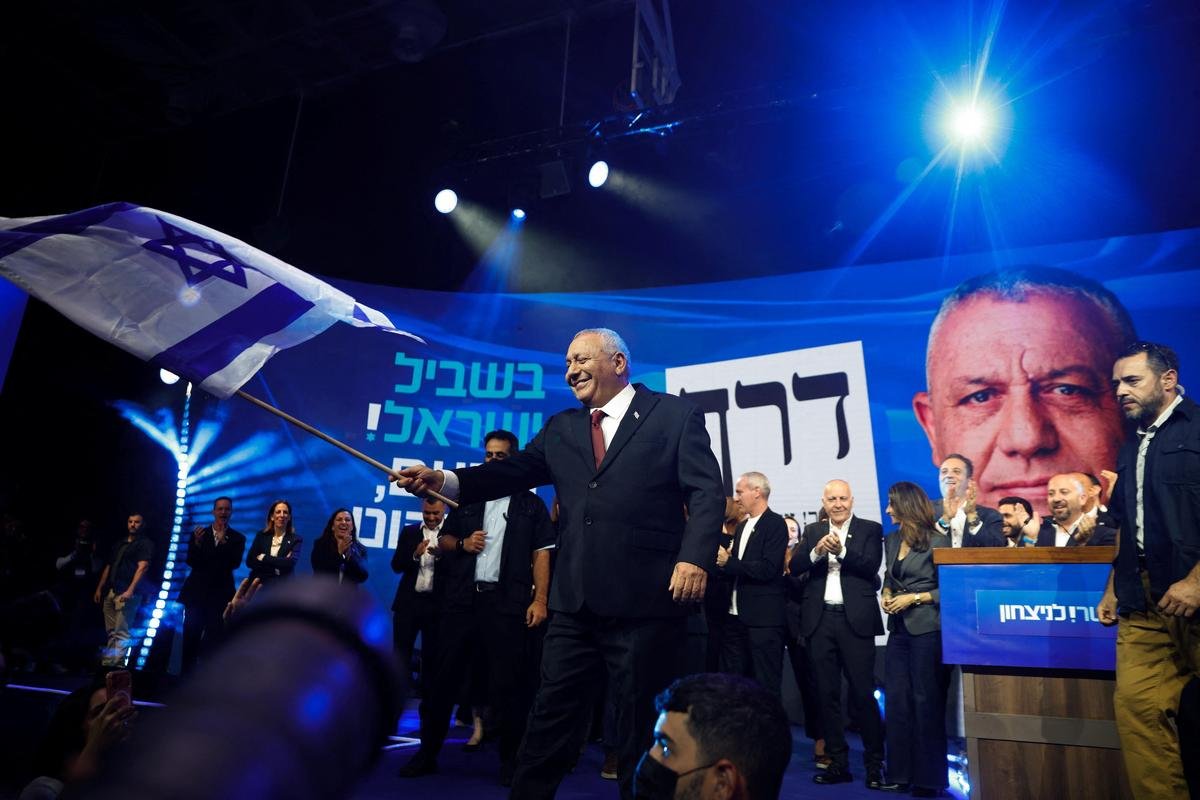
Israel’s first election exit polls showed opposition parties holding a narrow lead over Prime Minister Benjamin Netanyahu’s bloc after voting ended on Tuesday, October 27, but neither side appeared to have secured the majority needed to form a government.
Projections from Israel’s three main television networks, Channels 11, 12 and 13, initially gave the opposition bloc between 52 and 53 seats in the 120-member Knesset, compared with about 50 seats for Netanyahu’s bloc. His Likud party was projected to remain the largest single party, with 24 or 25 seats.
The opposition bloc is led by Gadi Eisenkot, a former Israeli military chief whose Yashar party was projected to win between 21 and 23 seats. Other opposition parties include Naftali Bennett’s Beyahad, Yair Golan’s Democrats and Avigdor Lieberman’s Yisrael Beiteinu.
However, the initial projections did not establish a clear path to government for either side. A party or coalition needs at least 61 seats to command a majority in the Knesset, meaning coalition negotiations could prove decisive in determining who leads the next government. Subsequent exit-poll updates also showed the contest tightening, with some projections putting the two main blocs level.
Israeli Arab parties also appeared to make significant gains. The first exit polls projected the Raam party and the Joint List to win a combined 17 to 18 seats. Although they are not formally part of the main opposition bloc, their potential support could influence efforts to assemble a governing majority.
The election drew heightened attention as Israel’s first national vote since the Hamas-led attacks of October 7, 2023. Netanyahu campaigned on security issues, including confronting Hamas and Iran, while his opponents challenged his leadership and record.
Eisenkot said the initial exit polls indicated a lack of confidence in Netanyahu’s government, while the final outcome remained uncertain as votes were counted. Exit polls are estimates rather than official results, and the distribution of seats and subsequent coalition negotiations will determine whether Netanyahu remains in office or a new government is formed.
TheDailyNewsHub has also reported on the regional context surrounding the vote, including Iran’s position that Israel’s election outcome would not change Tehran’s stance and Netanyahu’s warning to Iran ahead of election day.