


By: Femi Mustapha in Kaduna
The Executive Director of the Africa Network for Environment and Economic Justice, Rev. David Ugolor, has urged stronger accountability and transparency in subnational spending, noting that increased funds allocated to states and local governments haven’t led to better services for citizens.
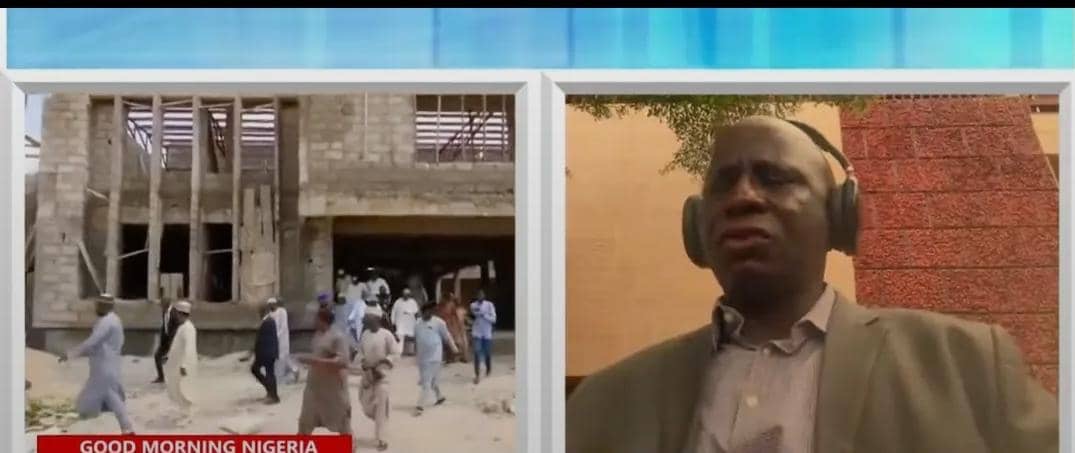
Rev. Ugolor made these remarks earlier today during a panel on NTA’s Good Morning Nigeria program, discussing “Rethinking Subnational Spending Priorities.”
He pointed out what he described as a growing disconnect between rising Federation Account allocations and the realities Nigerians face, especially at the grassroots.
“More resources have not necessarily translated into better healthcare, education, roads, agriculture, social protection, or improved livelihoods,” he stated.
The ANEEJ leader described the situation as the result of weak accountability and institutional failure, emphasizing that citizens often lack access to transparent information on how funds released to subnational governments are spent.
To address this issue, Rev. Ugolor called for stronger accountability institutions and for citizens to be equipped with publicly available financial information so they can hold the government accountable.
He specifically recommended greater transparency regarding Federation Account allocations, including clear and timely details on what each local government receives and how those funds are used.
He also urged governments to reconsider their spending priorities, shifting away from expenditures with limited direct benefits for citizens toward investments that generate jobs, bolster rural economies, and reduce poverty.
Rev. Ugolor listed the strengthening of institutions such as the EFCC, ICPC, NFIU, and NEITI as crucial for accountability and oversight.
He emphasized the importance of making spending information accessible to citizens to promote effective scrutiny,
“Ensuring funds reaching local governments lead to tangible development,
“Prioritizing primary healthcare, education, rural roads, agriculture, and social protection.
“Reviving existing agricultural and industrial facilities instead of continuously investing in new projects with limited impact.
“Developing clear and consistent spending plans that focus on citizens’ welfare and economic opportunities.
“Empowering citizens, CSOs, community leaders, farmers’ organizations, and other stakeholders to demand accountability.” He said
His central message, he said, is that the challenge is not simply the amount of money governments receive but how it is spent and whether citizens can feel the impact.
“The issue is not simply how much money governments receive, but what they do with it and whether citizens can feel the impact,” Rev. Ugolor concluded.