


By TheDailyNewsHub Reporter
The Nigerian National Petroleum Company Limited (NNPC Ltd.) has received a Certificate of Occupancy (C-of-O) for its proposed Oredo Refinery and Petrochemical project in Edo State, marking a fresh step towards the development of the facility.
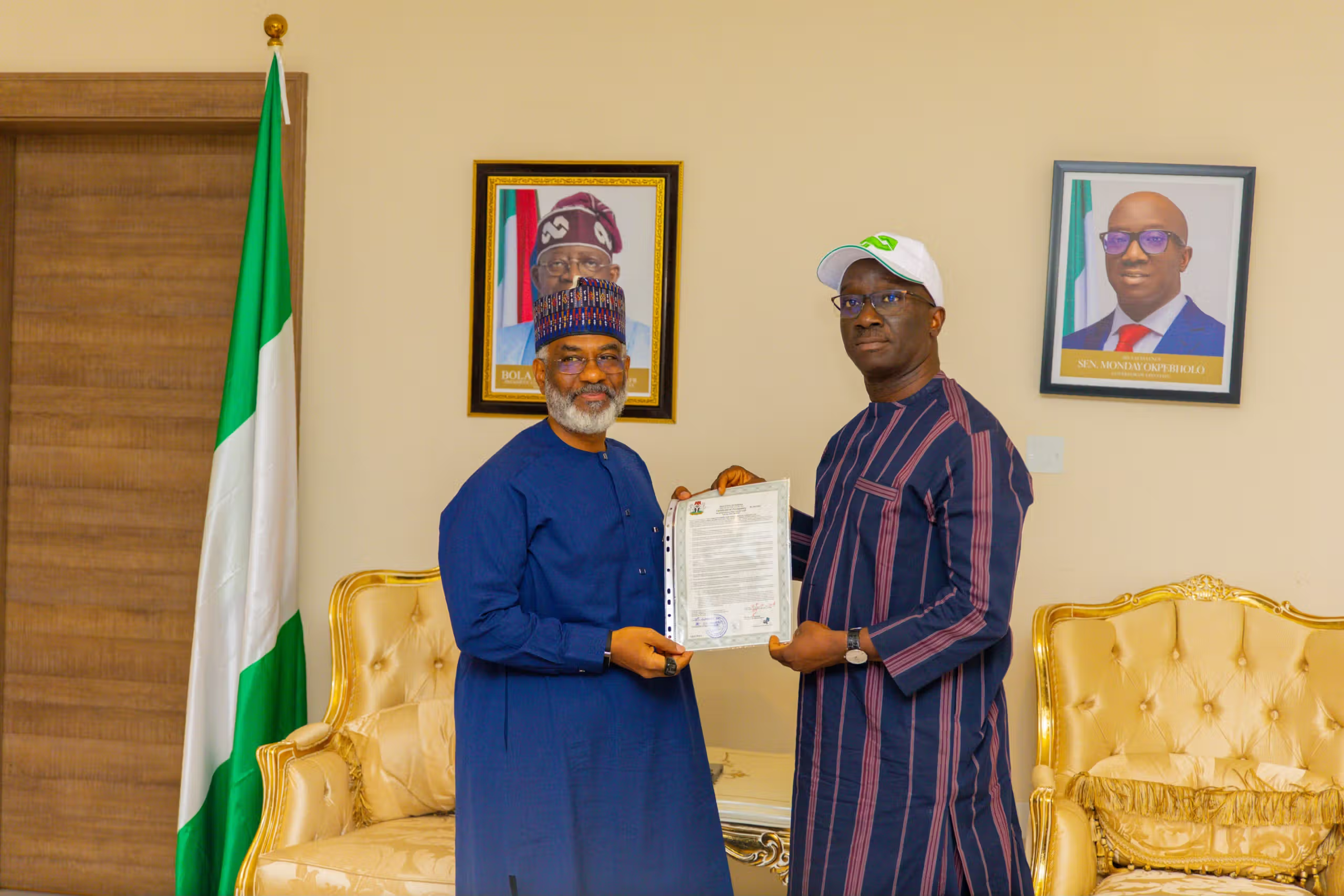
The certificate was presented by Governor Monday Okpebholo during a meeting with an NNPC delegation at the Edo State Government House in Benin City on Friday, November 13. The company’s Executive Vice-President, Downstream, Alhaji Mumuni Dagazau, received the document on its behalf.
Dagazau commended the governor for providing the land and the necessary documentation, describing the gesture as evidence of the state government’s commitment to attracting investment and supporting industrial development.
He said the proposed refinery was consistent with the Federal Government’s Renewed Hope Agenda, particularly its objectives of improving domestic energy security, reducing dependence on imported petroleum products and increasing value addition within Nigeria’s petroleum industry.
According to Dagazau, the project is expected to expand the country’s refining capacity, generate employment, encourage technology transfer and create opportunities for businesses across the downstream petroleum value chain.
He assured the Edo Government that NNPC would work with relevant stakeholders to support the project’s development and eventual delivery.
Read Also:
- Nigeria Lacks Enough Crude to Supply Dangote Refinery at Full Demand, Says Oyedele
- House of Reps Seeks 90-Day Strategic Fuel Reserve by 2027
Presenting the certificate, Okpebholo said his administration remained committed to creating an enabling environment for investors. He explained that providing land for the refinery formed part of efforts to attract productive investments, expand the state’s revenue base and create employment opportunities for residents.
The governor also expressed confidence that the proposed facility would strengthen Edo’s commercial and industrial base, while reaffirming his administration’s support for the investment.
The development follows an agreement announced in February 2026 between the Edo State Government and NNPC to establish a 10,000-barrel-per-day condensate refinery. At the time, the proposed facility was expected to be located across Oredo and Orhionmwon Local Government Areas, with a projected completion period of between 24 and 36 months.
The earlier announcement also indicated that the refinery could produce approximately 20 truckloads of Premium Motor Spirit (petrol) and 10 truckloads of Automotive Gas Oil (diesel) daily once operational. These were projections presented by the state government and should not be interpreted as current production figures or evidence that the facility has commenced operations.
The February agreement had identified land provision, security and other logistical support as responsibilities the Edo Government would undertake to facilitate the project. The issuance of the C-of-O now represents a further administrative step in fulfilling those commitments.
The project comes amid broader efforts to strengthen Nigeria’s domestic refining capacity and reduce the country’s exposure to imported petroleum products. However, the country continues to face challenges involving crude oil production and feedstock availability. In an earlier report, TheDailyNewsHub examined concerns that Nigeria lacks sufficient crude oil to supply the Dangote Refinery at full demand, highlighting the importance of securing reliable crude supplies for domestic refining operations.
The proposed Edo facility therefore adds to discussions about the role of local refining in improving energy security and supporting industrial growth. NNPC’s ability to move the project from land documentation to construction and eventual operation will be important in determining its contribution to the state’s economy and the country’s petroleum supply.
The latest announcement did not provide a new construction commencement date or an updated completion schedule for the Oredo project. Further details on the implementation timeline, financing and construction arrangements are therefore expected to clarify the next stages of development.