


By TheDailyNewsHub Reporter
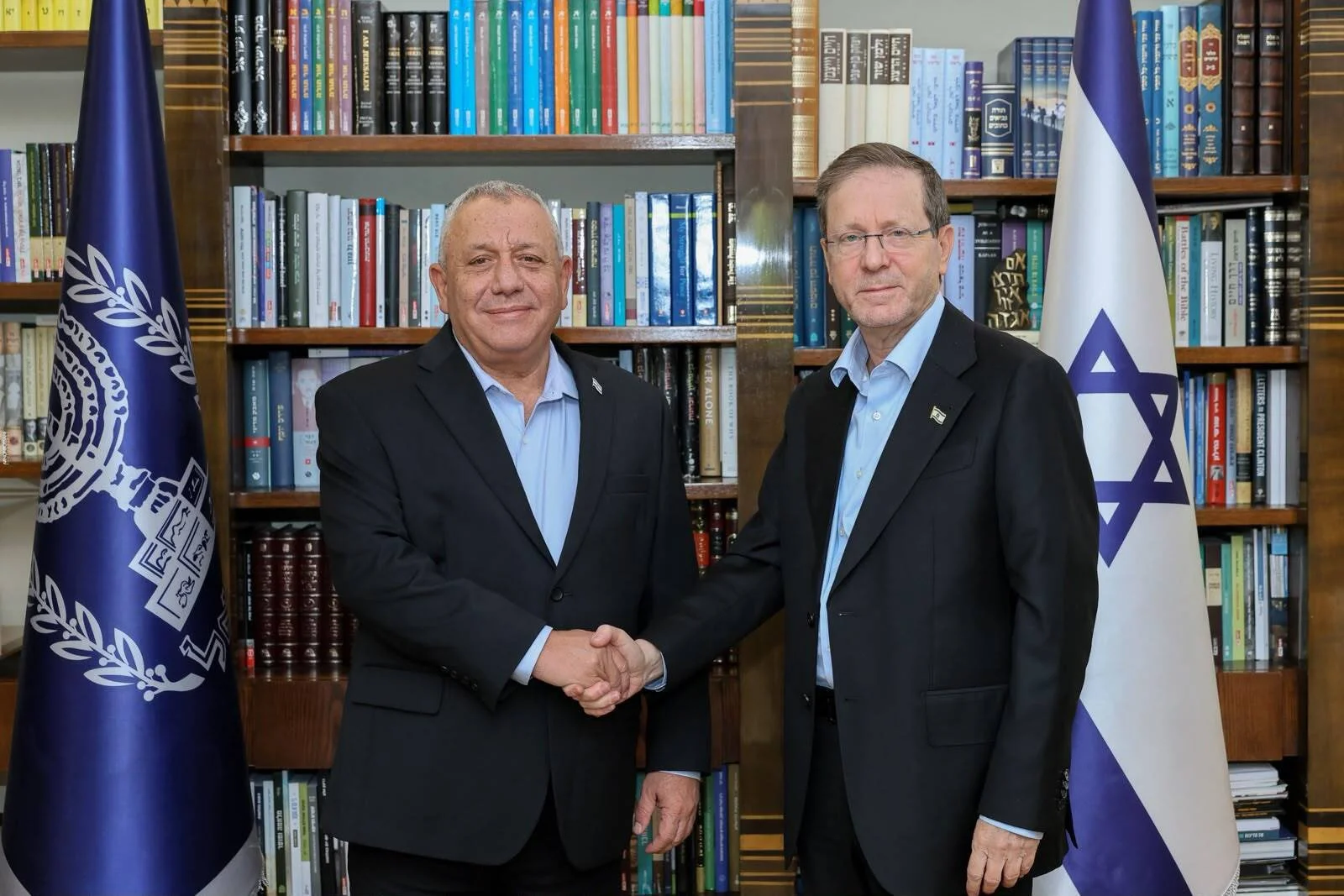
Israeli President Isaac Herzog has formally tasked opposition leader Gadi Eisenkot with forming the country’s next government, giving the chairman of the Yashar party the first opportunity to assemble a governing coalition following the October 27 parliamentary elections.
Herzog handed Eisenkot the mandate on Sunday, November 8, during a ceremony at the President’s Residence in Jerusalem, after announcing his intention to appoint him the previous evening.
The decision followed consultations with political factions elected to the 26th Knesset. A total of 67 lawmakers recommended Eisenkot for the task, while 46 backed incumbent Prime Minister Benjamin Netanyahu. One faction, comprising seven members, declined to recommend either candidate.
Eisenkot, a former chief of the Israel Defence Forces, now faces the challenge of bringing together parties with differing political positions to secure the support of at least 61 members of the 120-seat Knesset.
Under Israel’s Basic Law: The Government, he has 28 days to form a government. Herzog may grant an additional 14 days if the initial period proves insufficient.
Speaking after receiving the mandate, Eisenkot said he intended to pursue the formation of a national emergency government, arguing that Israel faced serious security and diplomatic challenges.
He acknowledged that the task would require what he described as creative and extraordinary political moves, and appealed to political leaders to put aside differences in the interest of forming a government.
The election produced a divided parliament, with neither the bloc supporting Netanyahu nor the opposition grouping securing the 61 seats required for a majority. Netanyahu’s bloc won 53 seats, while parties opposed to his continued leadership secured 48. Arab-led parties won a combined 19 seats, making their support potentially significant in coalition negotiations.
Although the 67 recommendations received by Eisenkot give him the strongest backing in the presidential consultations, they do not automatically guarantee that all supporting parties will join his government. Negotiations are expected to be complicated by disagreements over security policy, religious-party demands and the role of Arab-led parties.
Netanyahu has also called for a national unity government, leaving open the possibility of negotiations involving parties from both political camps.
If Eisenkot fails to form a government within the permitted period, Herzog may assign the task to another lawmaker. If the subsequent attempts also fail, Israel could face another parliamentary election.
The development marks a major step in Israel’s post-election political process, but the country’s next government will depend on Eisenkot’s ability to translate parliamentary recommendations into a workable coalition.
TheDailyNewsHub previously reported on Herzog’s receipt of Israel’s official election results and his call for political parties to compromise, as negotiations over the next government began.