


By TheDailyNewsHub News Desk | October 4, 2026
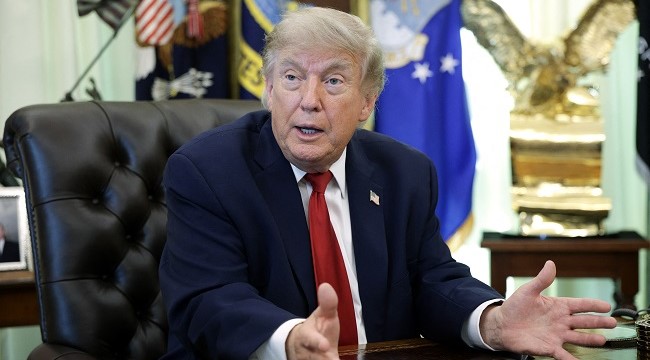
United States President Donald Trump has announced the creation of a new federal task force, known as the Super Intelligence Force (SIF), to coordinate the government’s efforts to strengthen America’s position in advanced artificial intelligence and protect national interests.
Trump announced the initiative on Sunday, October 4, in a post on his Truth Social platform, describing the technology as a transformative development that could surpass the impact of the Industrial Revolution and the internet.
“The Super Intelligence Force is tasked with coordinating the effort of the Federal Government to ensure that America continues to lead the World in Super Intelligence, which many say is bigger than the Industrial Revolution, and the Internet, and will protect the interests, and improve the lives, of all Americans,” the president wrote.
The announcement included the appointment of Director of National Intelligence Jay Clayton to lead the initiative alongside three other senior government officials.
They are Federal Trade Commission Chairman Andrew Ferguson, Emil Michael, the Pentagon’s chief technology officer, and Scott Kupor, Director of the Office of Personnel Management.
Trump said the task force would coordinate federal engagement with technology companies, consumers, public interest organisations, religious groups and providers of critical infrastructure. The body will report directly to the president and White House Chief of Staff Susie Wiles.
The initiative is intended to bring different parts of the federal government together as the United States seeks to maintain its competitive position in the development of increasingly advanced AI systems.
The announcement also reflects Trump’s preference for describing artificial intelligence as “super intelligence”, a terminology he has promoted in recent public remarks. He has argued that the word artificial does not adequately convey the technology’s capabilities.
The formation of the task force follows a White House meeting on September 29, during which Trump brought together executives from some of the world’s leading technology companies to discuss the future of AI development.
Following the meeting, the administration announced a voluntary agreement under which participating companies committed to strengthening internal safeguards, working with independent auditors and establishing oversight arrangements for their AI systems.
Companies involved included OpenAI, Google, Meta, Nvidia, Anthropic and xAI. The agreement was presented as a framework for industry responsibility rather than a legally binding regulatory arrangement.
The new task force therefore represents a further step in the administration’s effort to coordinate government involvement in the sector, although Trump’s announcement did not establish that the body would introduce new binding regulations or replace existing regulatory agencies.
The president has repeatedly presented AI leadership as a strategic priority for the United States, particularly in its competition with China. His administration has argued that maintaining technological leadership is important for economic growth, national security and the country’s influence in the global technology industry.
Trump’s government has also been expanding the use of AI in public administration. On September 29, he launched America.gov, an AI-powered portal intended to provide a central access point for federal government information and services.
However, the rapid development of advanced AI systems has raised questions about cybersecurity, data protection, misinformation, employment and the potential misuse of increasingly capable technologies.
Those concerns have also influenced decisions by major technology companies. Google recently restricted initial access to its Gemini 4 Argon model to selected cybersecurity specialists, citing the need to assess its advanced capabilities and strengthen safeguards before a wider release. TheDailyNewsHub previously reported on Google’s decision to limit access to Gemini 4 Argon.
Similarly, OpenAI halted the planned public release of its GPT-6.1 Astra model after internal evaluations raised concerns about its ability to remain within authorised task boundaries and accurately communicate its actions. The decision is part of a wider debate over how developers should manage risks as AI systems become more autonomous.
Trump’s announcement did not provide a detailed operational timetable for the Super Intelligence Force or specify the resources that would be allocated to it. Further details about its work and coordination with existing federal agencies are expected to clarify how the initiative will operate.
For now, the creation of the SIF signals the administration’s intention to place advanced AI development more firmly within its national strategic agenda, while continuing to encourage American technology companies to expand their capabilities.
Whether the new body can balance technological competitiveness with effective safeguards and public accountability will be an important question as the United States advances its AI ambitions.