


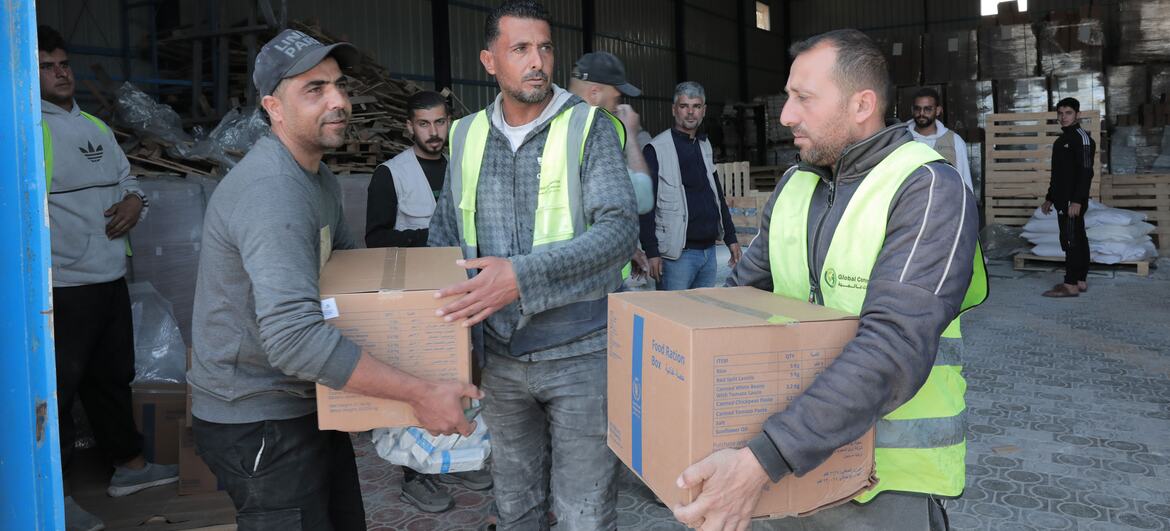
The United Nations World Food Programme (WFP) has announced major cuts to its food assistance programme in the Gaza Strip, leaving approximately 500,000 Palestinians without monthly support as the humanitarian crisis deepens and winter approaches.
The agency said on Monday, October 19, that the number of people receiving monthly food or cash assistance in Gaza would be reduced from 1.6 million to 1.1 million because of severe funding shortages.
The cuts will also affect families who remain on the programme. According to the WFP, households receiving food assistance will get one food parcel instead of two, alongside smaller quantities of wheat flour. The agency is also reducing the number of hot meals distributed daily from 250,000 to 150,000.
Families in hard-to-reach areas will face further restrictions, with some receiving hot meals every other day instead of daily.
The WFP said it urgently needs approximately $450 million over the next six months to sustain critical operations in Gaza and the occupied West Bank. Its funding for the Palestine operation in 2026 has fallen to less than half the level received in previous years, forcing it to scale back assistance despite continuing humanitarian needs.
The reductions extend beyond food parcels and cooked meals. About 75,000 families receiving cash assistance will see their monthly payments reduced from 1,250 shekels to 750 shekels, further limiting their ability to purchase essential supplies.
Shaun Hughes, the WFP’s country director, said the agency’s assistance had provided a lifeline to families affected by the conflict but warned that the programme could no longer maintain or expand its previous level of support because of the funding gap.
The cuts come as food insecurity remains widespread across Gaza. Recent assessments indicate that approximately 1.4 million people, representing about two-thirds of the population, are experiencing acute food insecurity at crisis levels or worse. Around 200,000 people face emergency-level hunger, underscoring the continuing vulnerability of households that depend on humanitarian assistance.
Although food security conditions have improved to some extent following the October 2025 ceasefire, the WFP has warned that these gains remain fragile and could be reversed if funding continues to decline.
The agency has been reaching between 1.5 million and 1.8 million people monthly since the ceasefire, providing food parcels, flour, bread, hot meals, nutrition support, school snacks and cash assistance. The reduction in coverage threatens to leave more households struggling to meet their basic food needs.
Humanitarian operations are also under pressure from wider conditions in the territory. Many families remain displaced, living in temporary shelters or damaged buildings, while limited livelihoods and high unemployment make it difficult for residents to afford adequate food even when supplies are available in local markets.
The approaching winter is expected to add to the challenges facing displaced households, particularly those without adequate shelter or reliable access to essential services.
The WFP’s funding difficulties also affect its operations in the West Bank. In September, the agency halved the number of people receiving assistance there, reducing coverage from 400,000 to 200,000.
The latest cuts highlight the growing gap between humanitarian needs and available resources. Without additional contributions from governments and private donors, the agency faces continued pressure to reduce assistance in areas where millions of people rely on external support.
The WFP has called for urgent funding to sustain its operations and protect vulnerable families from further deterioration in food security. However, with hundreds of thousands of people set to lose monthly assistance, the agency’s latest decision raises fresh concerns about the ability of humanitarian organisations to maintain essential support across the Palestinian territories.