


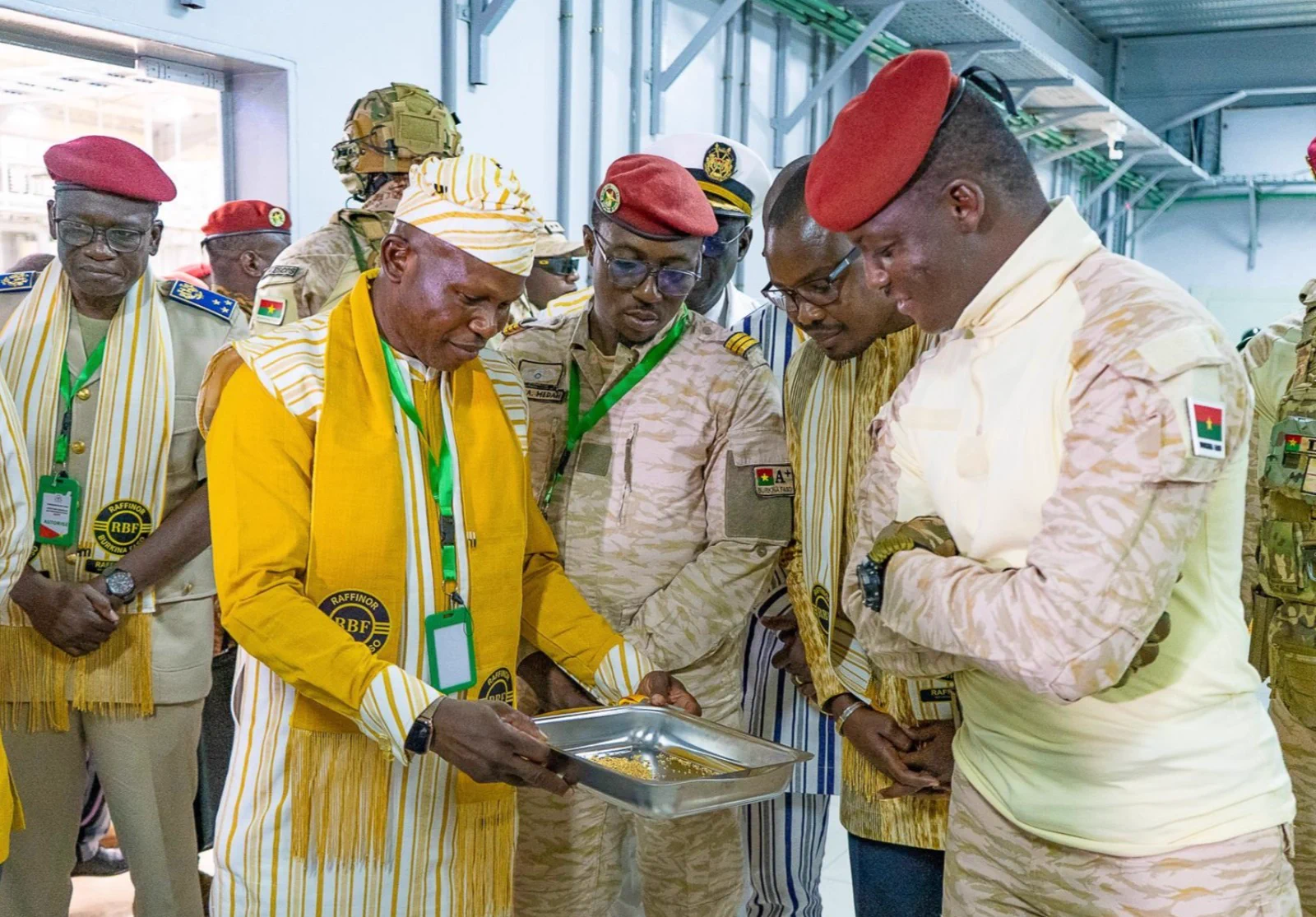
Burkina Faso has inaugurated its first national gold refinery as the West African country seeks to process more of its mineral resources domestically and retain greater value from its mining sector.
President Ibrahim Traoré inaugurated the Raffinerie Nationale d’Or du Burkina Faso (RAFFINOR-BF) in Ouagadougou on Monday, September 28, 2026, marking the beginning of a new phase in the country’s efforts to expand local mineral processing.
Speaking during the inauguration, Traoré said Burkina Faso no longer wanted to operate primarily as an exporter of raw mineral resources. He said the country’s ambition was to refine its metals locally and develop the expertise and infrastructure needed to control the wider value chain.
The refinery was developed with an investment of more than 11 billion CFA francs, according to Burkina Faso’s government. The project was financed by the state through the National Precious Substances Company (SONASP), alongside national private-sector partners.
RAFFINOR-BF has an initial refining capacity of 164 tonnes of gold per year, while authorities envisage eventually increasing the capacity to 515 tonnes annually. The facility includes refining and analytical capabilities, secure storage and other infrastructure linked to the processing and handling of gold.
The refinery is expected to allow Burkina Faso to carry out more of the processes involved in refining, assaying and certifying gold within the country. Before its opening, gold produced in Burkina Faso was largely exported in less-processed form, with additional processing and certification taking place outside the country.
The government has presented the refinery as part of a broader strategy to increase national participation in the mining industry, improve oversight of gold production and retain more economic value from the country’s mineral resources.
The development is significant for Burkina Faso because gold is a major source of export earnings. The country is among Africa’s major gold producers, with more than 94 tonnes produced in 2025, according to figures cited in reports on the refinery’s inauguration.
The refinery project itself dates back to November 2023, when Traoré laid its foundation stone in Ouagadougou. At the time, Burkina Faso’s mining ministry said domestic refining was intended to reduce the export of unprocessed gold, increase government revenue and strengthen efforts to address fraud in the artisanal and semi-mechanised mining sectors.
The government now hopes the facility will support the development of technical skills and related industries around gold processing. Officials have also indicated that the refinery’s capacity can be expanded as production and processing requirements increase.
For Traoré’s government, the refinery represents a move toward greater domestic control over Burkina Faso’s mineral resources. Whether it ultimately captures a larger share of the value generated by the country’s gold industry will depend on production volumes, the extent to which domestic gold is processed through the facility, and the effectiveness of the country’s broader mining-sector reforms.