


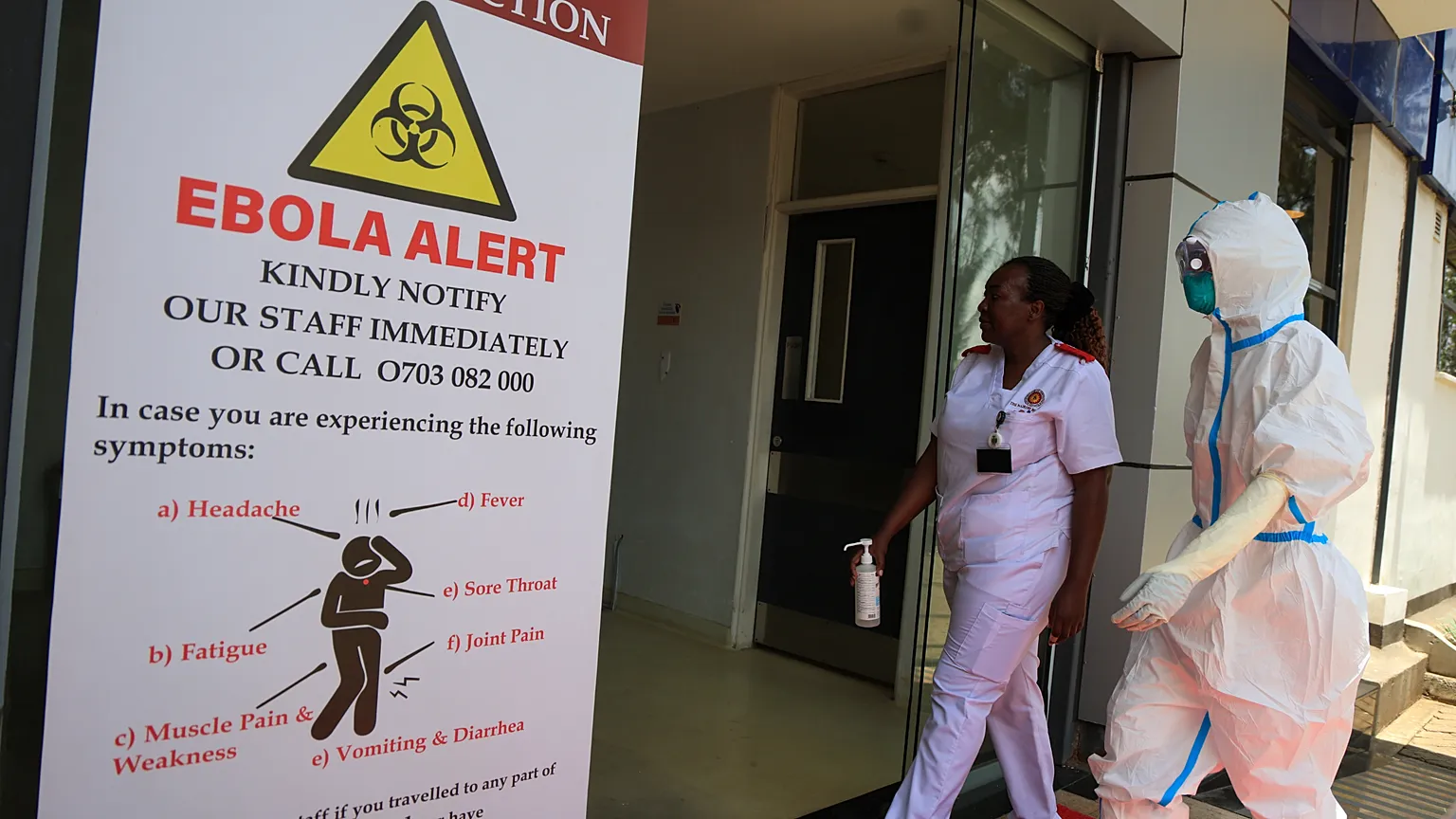
Kenya has confirmed four additional cases of Ebola, bringing the country’s total to seven, including its first patient who died earlier this month. The new cases involve three healthcare workers who treated the first patient and a male relative of the deceased. All four were already in quarantine when they tested positive, according to the Kenyan Ministry of Health.
The ministry announced the latest infections on Saturday, October 17, 2026, identifying the disease as Bundibugyo virus disease, a rare strain of Ebola. The new cases were confirmed by the National Virology Reference Laboratory and the Kenya Medical Research Institute (KEMRI), the country’s health authorities said.
The three healthcare workers comprise two men, aged 29 and 35, and a 32-year-old woman. They had treated the first patient at a hospital on October 3 and 4 and had been placed in quarantine on October 9. The male relative of the deceased had been in quarantine since October 6.
Kenya’s Director-General for Health, Patrick Amoth, said all four patients developed fever before testing positive. They have been isolated and are receiving supportive medical care.
The latest infections are the first known cases of local transmission in Kenya during the current outbreak. However, health authorities said there was no evidence of wider community transmission and maintained that the risk to the general public remained low.
The ministry said health teams had identified 130 people who came into contact with the first patient. Of those, 128 had been traced and placed in quarantine, while efforts continued to locate the remaining two contacts.
Kenya’s first confirmed case involved a 40-year-old Kenyan man who had been living in the Democratic Republic of the Congo (DRC), where a major Ebola outbreak is ongoing. He travelled overland to Uganda before flying to Nairobi on October 3. He was admitted to hospital after arriving in Kenya and died on October 5.
The man’s infection was confirmed on October 5, making it the first recorded case of Ebola in Kenya. Two close relatives subsequently tested positive, including a 39-year-old man and a 65-year-old woman, before the four latest cases were announced.
The World Health Organization (WHO) has been supporting Kenya’s response through contact tracing, surveillance and other public health measures. Authorities have also strengthened screening at border crossings and airports to identify suspected infections and reduce the risk of further spread.
The outbreak is linked to the Bundibugyo strain circulating in the DRC. According to health reports published this week, the outbreak there has resulted in more than 9,000 confirmed cases and over 4,000 deaths since it emerged in May 2026, making it one of the largest Ebola outbreaks recorded.
Bundibugyo virus disease is a severe illness that can spread through direct contact with the blood and other bodily fluids of infected people, as well as contaminated materials. Symptoms may include fever, fatigue, muscle pain, headache and sore throat, followed in some cases by vomiting, diarrhoea and other serious complications.
There is currently no approved vaccine or specific treatment for the Bundibugyo strain, making early detection, isolation, supportive care and contact tracing central to efforts to control the outbreak.
Kenyan authorities have urged the public to follow official health guidance and report suspected symptoms or possible exposure to health professionals. Officials say the rapid identification and isolation of the new patients are helping limit the risk of further transmission.
The government continues to monitor contacts and strengthen surveillance as the 21-day monitoring period for exposed individuals progresses. Health authorities have not announced general travel restrictions or bans on public gatherings, saying current measures are focused on containing the infections and preventing wider community spread.